Mysterious black skin lesions found on catfish in parts of Canada and the U.S. are a transmissible type of skin cancer, according to a new study. Spreading from fish to fish like a parasite, the disease is only the fourth form of transmissible cancer ever documented in the wild.
“By studying how cancers survive and spread outside their original host, we can learn a great deal about what keeps cancers contained—and what happens when those boundaries break down,” said Julie Dragon, University of Vermont scientist and study co-leader, in a news release. “These fish provide an opportunity to look at evolution of cancer.”
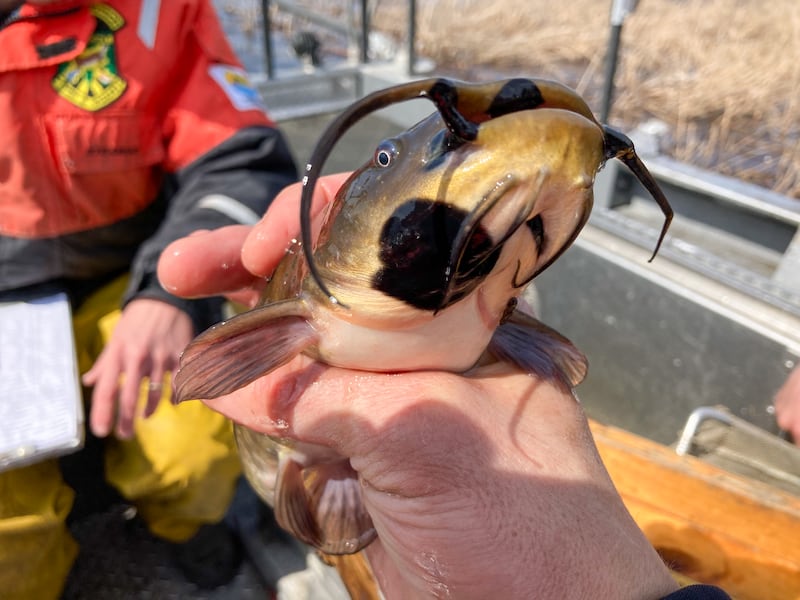
Researchers began their investigation at Lake Memphremagog, which straddles both Quebec and Vermont. Since at least 2012, anglers and biologists have been reporting an increase in brown bullhead catfish with raised black skin patches from the lake.
Although researchers expected a virus or pollution-linked contaminant was the cause, they soon learned that the fish were suffering from melanoma, an aggressive form of skin cancer.
“We actually looked for viruses, and that was the first hypothesis,” Dragon said in interview with CTV News Channel on Wednesday. “We did genomic sequencing and could not find the virus that associated with the diseased fish.”
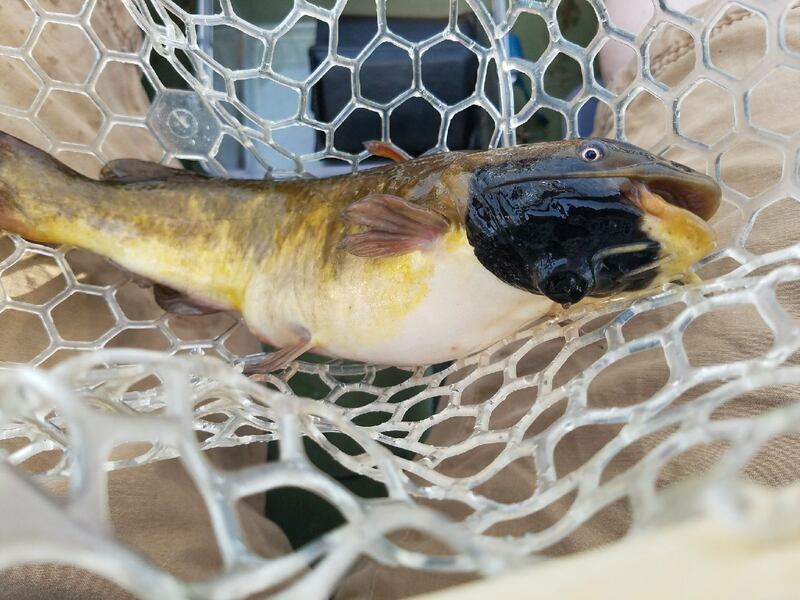
Instead, researchers sequenced the genomes of both the fish and their tumours, making an unexpected discovery.
“All the tumours were very similar to each other. They share hundreds of thousands of mutations and were different from the fish that they came from. It was very unexpected.”
When Dragon and her team analyzed DNA from tumours as well as infected fish, they discovered that the cancer cells were much more closely related to each other than the host fish, signalling that the tumour cells themselves were spreading the disease.
“An indicator of a transmissible cancer is when cancer genomes are more closely related to each other than they are to the genome of the host they are found in,” the study, published Wednesday in the journal Nature, explains. “Alternatively, conventional cancers will closely match their host genomes, and most mutations will be unique to that individual tumour.”
Researchers suspect naturally occurring arsenic in the region’s soil could play a role, and that the cancer cells could spread as fish cluster together in shallow waters as they spawn. While long-term effects are still unknown, heavily-diseased fish have been noted to survive for years.
“It seems to only happen in larger fish that are of spawning (age),” said Mark Henderson, University of Vermont fish biologist and study co-leader, in the news release. “Maybe some part of spawning behaviour leads to the spreading of the cancer between animals.”
Fourth transmissible cancer ever identified
The latest discovery is only the fourth transmissible cancer ever recorded in the animal world. It is also the first time a transmissible cancer has been identified in any fish or freshwater species.
Other known transmissible cancers that can spread from one host to another via living cancer cells include a facial tumour disease that affects Tasmanian devils, a type of venereal tumour that impacts dogs, and a leukemia-like disease that infects mollusks like clams and mussels.
In humans, transmissible and contagious cancers remain extremely uncommon and have only been documented in very rare cases including organ transplants and mother-to-fetus transmission. Humans can however spread viruses that are linked to cancer, such as human papillomavirus (HPV).
With Lake Memphremagog providing drinking water to more than 175,000 people, the researchers emphasize that there is no known risk to humans. The cancer cells cannot infect or survive in other species, they say, and the fish are safe to handle.
Dragon told CTV News Channel that researchers have also not seen the disease spread to other catfish species living in Lake Memphremagog, reinforcing evidence that it appears limited to brown bullhead catfish.
But Henderson notes, “Personally, I wouldn’t eat the ones with tumours.”
With similar black lesions reported on catfish in nearby Massachusetts in the journals of 19th-century American naturalist Henry David Thoreau, scientists believe the condition and other transmissible cancers could be more common than we realize. Further investigation in New Brunswick and New England have already led to the discovery of more affected catfish in other lakes and ponds.
“Our contention is that maybe it’s not as rare as everyone thinks. We’re just not seeing it,” Dragon said. “In the case of transmissible cancers, it may be that we don’t see many simply because we aren’t looking for them.”
With files from CTV News’ Archie Niari

