


Several U.S. senators grilled trade czar Jamieson Greer on tariffs Wednesday after U.S. President Donald Trump lobbed new threats at Canada.
Those threats loom large as Canadian premiers meet in Charlottetown, in part to calculate next steps.
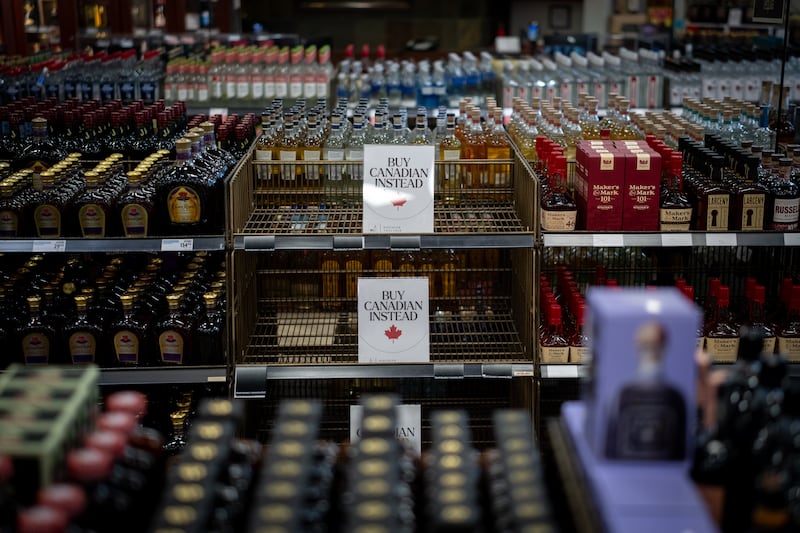
The president plans to impose 50 per cent levies on a range of Canadian goods in retaliation against various provinces’ bans on selling U.S. liquor – itself a response to Trump’s trade regime and annexation threats. The president also cited Canada’s protections on its domestic dairy industry.
- Trump tariffs: Which goods in Canada are on the list?
- Carney spoke with U.S. president Tuesday
- Trump’s tariffs target Canadian dairy sector
Unlike other tariffs imposed on Canadian goods, these duties have no exemptions for goods protected by the Canada-U.S.-Mexico Agreement on trade, better known as CUSMA. They are set to begin on Aug. 19.
Follow for key updates:
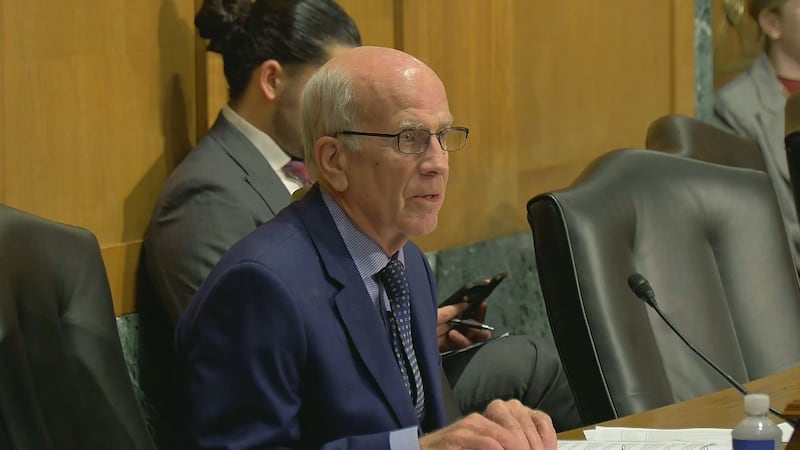
Vermont senator on rhetoric against Canada
Democratic Vermont Sen. Peter Welch appealed to Greer to improve relations with Canada after he said tourism to his state dropped 40 per cent.
“A lot of that has to do with the rhetoric that the president has used,” he said, referring to Trump’s threats to turn Canada into the 51st state and repeatedly calling the prime minister “governor.”
The effects of Trump’s tariff regime have been widespread, he said. He referenced layoffs at a local auto repair shop, a cheesemaker and a brewery that have seen their overhead costs double and a sporting outlet that closed half its stores.
“We really value our relationship with Canada both emotionally and financially, and economically.”
“We’re fighting against a ban on American liquor on shelves,” Greer responded. “Were fighting against hard caps on export of American cars. … we’re fighting against caps on American cheese."
Luca Caruso-Moro, CTVNews.ca journalist
Greer says his Canadian counterpart ‘did not say they were going to retaliate’
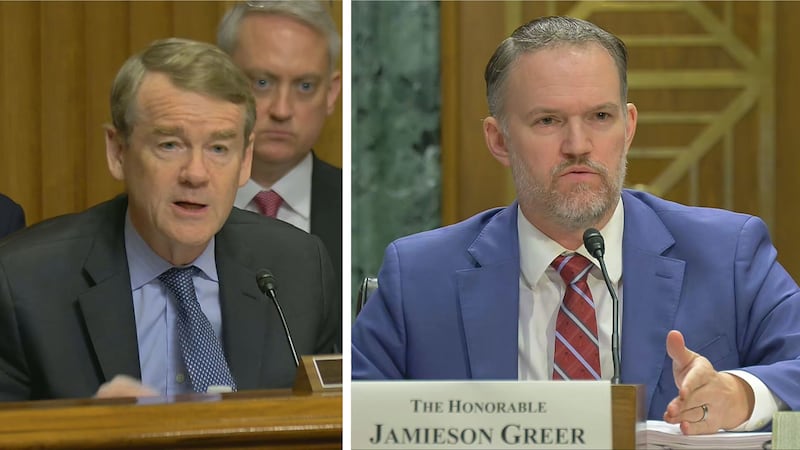
Colorado Democratic Sen. Michael Bennet grilled Greer on how Trump’s handling of CUSMA will affect U.S. farmers.
“How are you approaching the risk of retaliatory tariffs from Canada now that you’ve imposed 50 per cent duties on a wide range of products that were previously exempt?” Bennet asked Greer.
Greer said he spoke with his “Canadian counterpart” yesterday, adding “they did not say they were going to retaliate.”
“We’re keeping the market access in Canada and Mexico.”
Luca Caruso-Moro, CTVNews.ca journalist
Who faces higher tariffs, Canada or China?
Greer is testifying at a U.S. Senate Finance Committee in Washington on Wednesday morning.
“Yes or no, when the new tariff on Canada takes effect, will Canada have higher tariffs than China on some products?” asked Oregon Sen. Ron Wyden, a Democrat.
Greer responded to say overall tariffs on China are “by far” higher than those applied to Canada. “No question.”
“Let me work through that math. The 50 per cent tariff is higher than a number of tariffs on China,” Wyden continued.
Greer highlighted the 100 per cent tariff on Chinese electric vehicles and promised to provide a report on the overall value of stacking tariffs against China. Wyden maintained his staff believes Canadians will face higher tariffs in some areas than the Chinese, and asserted “that’s not right.”
Luca Caruso-Moro, CTVNews.ca journalist
Consider retaliation if talks fail: Union head
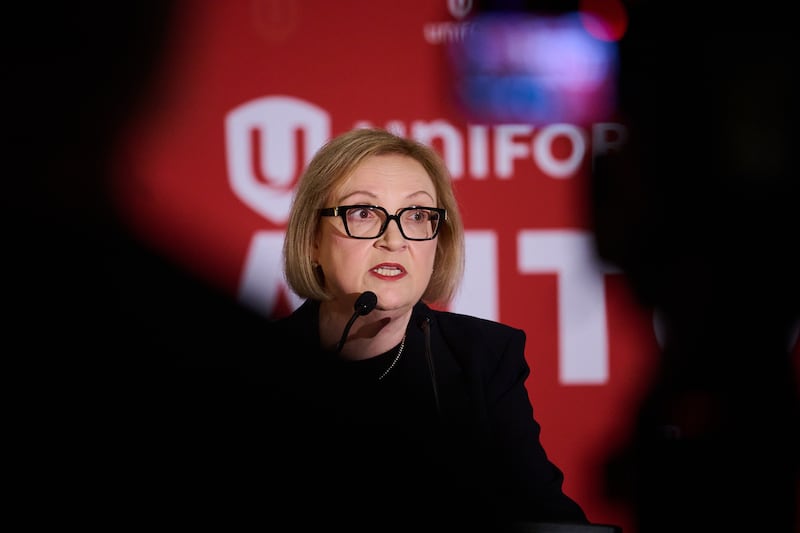
Unifor national president Lana Payne says Canada should be prepared to consider a wide range of retaliatory measures if trade talks with the United States fail.
“We have to put all of what we can on a list of what it is we’re willing to do to push back in all forms,” said Payne, who also serves on the prime minister’s advisory council on Canada-U.S. relations.
“That can be anything from export taxes to not using our procurement dollars to spend any money in the United States,” she added.
Payne said Canada should still use the time before the latest U.S. tariffs are set to take effect to test whether the Trump administration is prepared to negotiate.
“We have to give it a shot in the next few days, we have until early August before these new tariffs come in,” she said.
“Let’s see if they’re serious about getting to a negotiating table. Let’s see if the president is serious about intensifying trade talks, and if he is, let’s try and get this deal done.”
Tammy Ibrahimpoor, CTVNews.ca journalist
CUSMA ‘options’ by end of year
Greer says he hopes to provide “options” by the end of the year to Trump, Canadian and Mexican officials on renewing the continental trade pact.
At the start of July, Greer said the United States would not renew CUSMA.
That decision triggered annual rolling reviews that could continue for up to a decade, after which the agreement would expire unless all three countries agree to an extension.
Uncertainty about the future of the trade agreement has caused anxiety in business communities in all three countries even as negotiations continue.
During a Senate finance hearing today, Greer described the options as interim arrangements with Canada and Mexico.
Greer also is facing tough questions from Democrats about Trump’s latest threat to impose 50 per cent tariffs on an array of Canadian goods.
The Canadian Press
Premiers support ‘strong and united Canada’: P.E.I.’s Lance
At a meeting of Canada’s premiers in Charlottetown, P.E.I. Premier and Council of Federation Chair Rob Lance opened the Wednesday press conference by addressing the recent announcement of new U.S. tariffs, saying “we’re living in a time when uncertainty is the new norm.”
“Decisions made beyond our borders have real impacts on Canadian workers, businesses and families,” he said, noting that Canadians want governments to work together to make decisions and deliver results on the issues that matter most to them.
“I’m pleased to say we achieved that goal today. Throughout our discussions, one message remained clear: premiers support a strong and united Canada,” Lance said.
Lance added that over the past two days, premiers had constructive conversations about strengthening Canada’s economy, improving internal trade, building critical infrastructure, enhancing public safety and ensuring Canadians continue to have access to the services they rely on.
“While each province and territory has its own priorities, we’ve demonstrated that we have far more in common than what divided us.”
Kayla Thompson, CTV News journalist
‘Everything is on the table’: Ontario’s Ford
Ontario Premier Doug Ford says that “everything is on the table” when it comes to the response to the latest tariff threats from U.S. President Donald Trump.
Ford made the comment during a meeting with fellow premiers in Charlottetown on Wednesday.
“I will just speak for Ontario. Everything is on the table. We can’t keep rolling over for Donald Trump. That is what I believe in, standing up strong,” Ford said.
“You negotiate through strength; you don’t negotiate through weakness, especially with President Trump.”
Ford said that while he is pushing for a strong response to the latest tariff threats, it will ultimately be Prime Minister Mark Carney who “needs to lead the way and come up with a strong plan over the next 29 days” prior to the tariffs going into effect.
Chris Fox, Managing Producer for CP24.com and CTVNewsToronto.ca
‘The enemy is not Canada’: Ontario’s representative in Washington
Ontario’s representative in Washington D.C. says all of the questions that Greer received in Congress on Wednesday are focused on how tariffs are driving up costs for Americans and how it’s hurting the country’s agricultural sector.
“We’re their number one customer and I think that’s now really starting to be noticed as well,” David Paterson said in an interview with CTV News Channel.
“It’s time to sit down and wrap this up.”
Since the Trump administration backed out of extending the free trade deal between Canada and Mexico, Paterson says the U.S. has grown impatient “to bring (up) some of the issues that frustrate them.”
“I go back to the fact that trade is a two-way street, and whether it’s bringing automobiles into Canada, bringing any number of U.S. products into Canada, Canadians have really responded badly to the approach of the United States,” Paterson said.
He pointed to fewer Canadians travelling to the U.S. and the removal of American alcohol from most provinces as examples of economic impact.
“I feel there’s motivation on the U.S. side to get this brought together, and I think that’s part of why we saw these Section 338 tariffs, which are so offensive.”
Ultimately, Paterson says Canada and the U.S. need each other, and are better served by negotiating than escalating the dispute.
“The enemy is not Canada, the enemy is China, and let’s work together to build our economy,” Paterson said. “There would be a really positive impact in all our economies if we would just put the silliness behind us and get on to an agreement.”
Alex Arsenych, CTVNewsToronto.ca journalist
No ‘concessions’ to Trump: Former Mulroney chief of staff
Canada should not yield to U.S. President Donald Trump’s tariff threats, said a former Mulroney staff member.
“We should not be giving any concessions now,” David McLaughlin told CTV News Channel on Wednesday. McLaughlin served as chief of staff to former prime minister Brian Mulroney, whose government negotiated the Canada-U.S. Free Trade Agreement that later become the basis of NAFTA.
Carney, he said, was successful in rallying Canadians to stand up against Trump and ergo, has little “maneuverability” to offer to his U.S. counterpart without upsetting his voters.
He, however, also advised against an approach of “tit-for-tat retaliation.”
“This is the price of standing up to Donald Trump,” McLaughlin said of the tariffs.
“It’s meant to hurt Canada and it’s meant to force some kind of trade deal but it is in response to us and I think that should be what guides our response,” he said.
The focus should be on getting a deal “done,” he said. “Because frankly, everyone pays and that means Canadians as well.”
Devika Desai, CTVNews.ca journalist
Canada ‘looking at strategies where we can apply pressure back’: O’Toole
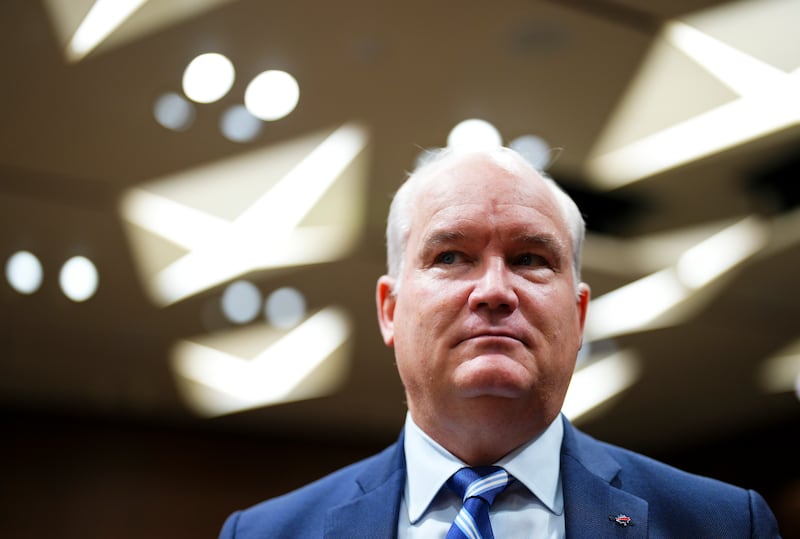
Canadian officials are looking at ways to apply pressure on the U.S. administration to get some tariff relief, according to former Conservative leader and current member of the prime minister’s 24-person Canada-U.S. Advisory Committee, Erin O’Toole.
In an interview on the Vassy Kapelos Show on Wednesday, O’Toole said Canada’s chief negotiator Janice Charette and Ambassador to the U.S. Mark Wiseman are considering the upcoming midterm elections as one such possibility.
“They are trying to co-ordinate with the provinces, and I do think (they) are looking at the looming elections in the United States and where some of these cost of living crises are maybe causing a narrowing of races for Congress,” O’Toole told Kapelos.
“This is something that I think a lot of Republican members of Congress will start applying pressure on the White House to say, ‘Look, we’re in a tight race here, Canada is an important export market for my state and my district, and a lot of my constituents believe that tariffs and higher gas prices are the result of Trump policies,’” he added.
O’Toole added the focus is on taking a Team Canada approach and negotiating a good deal, with retaliation being a last resort.
“Sometimes when we retaliate, it feels good emotionally, but it can hurt our workers even more, and it can divide one part of the country versus another,” he said. “But if the U.S. continues on this almost irrational course on tariffs and on bringing down the overall North American economy, we do have to work together to see what areas of pressure can be applied as we’re negotiating for a comprehensive deal.”
Spencer Van Dyk, writer & producer, Ottawa News Bureau, CTV News
Industry minister defends negotiations
Industry Minister Melanie Joly defended her government’s handling of the Gordie Howe Bridge deal and current discussions towards the U.S. tariff announcement on Wednesday.
“There’s a lot of unpredictability ... felt by the Canadian government and all governments around the world,” she said.
The strategy’s objective is two-pronged, she added: to help businesses affected by Trump’s actions and to develop projects that will attract investment and trade opportunities.
She refused to share her opinion on whether to retaliate aggressively towards the U.S. tariffs.
“My job is to give (my opinion) to the prime minister and my job is not to negotiate in public,” she said. “The prime minister will do that negotiation.”
She said questions on the Gordie Howe Bridge deal should be directed to Dominic Leblanc, minister of Canada-U.S. Trade, Intergovernmental Affairs and One Canadian Economy.
“It’s a key link between Ontario and Michigan,” she said. “It is at the core of the auto sector economic zone.”
Devika Desai, CTVNews.ca journalist

‘Crazy and wrong and unjustified’: Former U.S. ambassador to Canada
The former U.S. ambassador to Canada said of the latest tariffs that he believes most Americans are against “treating Canada this way.”
James Blanchard said in an interview with CTV News Channel Wednesday, “(Trump) has no one that will stand up to him and tell him these things are crazy and wrong and unjustified... It’s a real problem.”
In Blanchard’s opinion, there’s no rational policy behind these decisions and Canadian officials are doing everything they can to not escalate the matter. If Canada wanted to, it could shut down the electricity and “cripple oil and gas,” he added.
“You have cards and assets that we need, and we’ve always needed,” Blanchard said, calling Canada and other American allies critical to U.S. world affairs.
“That’s true, whether it was in the 40s or today. It won’t change, and you don’t treat your friends the way we’re treating Canada,” he said.
Blanchard said the auto industry tariffs in particular have a negative impact on both countries, leading to fewer jobs and higher vehicle prices.
Aarjavee Raj, CTVNews.ca journalist
Manitoba to maintain booze ban
Manitoba Premier Wab Kinew told reporters Wednesday morning, “It’s clear that the booze bans are having an impact.”
“We’re going to continue using those tools that give us leverage. And the booze bans are one of those tools,” he also said.
Asked if he was open to Canada leveraging its significant energy exports to the U.S. in trade talks, Kinew said Trump’s war in Iran has already increased gas prices “more than we could ever raise by changing our exports.”
Instead, he said, Canada needs to “pick our battles,” and alluded back to the booze ban and “other measures the federal government wants to put on the table.”
Pushed to give specifics, he refused, saying he was “not going to make news on that today.”
Luca Caruso-Moro, CTVNews.ca journalist
‘National unity is important’: Kinew
Manitoba premier Wab Kinew was asked whether the separation referendum in Alberta and the rise of separatist politicians in Quebec is fraying national unity among premiers.
“There’s that old saying,” he responded. “A single arrow can be broken easily but a bundle of arrows cannot be snapped.”
“And so, national unity is important especially when we’re going up against a much larger opponent like the American economy.”
Luca Caruso-Moro, CTVNews.ca journalist
Canadian firefighters will help U.S. ‘no matter what’
Before threatening tariffs on Canada this week, Trump mused on social media that Canada should pay fees on wildfire smoke spreading from Ontario into Michigan and other U.S. states.
Smoke from those fires contributed to deteriorated air quality in several American communities. Detroit, for example, had the worst air quality in the world at one point, according to IQAir rankings.
“The United States is being unnecessarily invaded by filthy, polluted, and unhealthy air,” wrote the president, accusing Canada of “Willful Negligence.”
Manitoba Premier Wab Kinew pushed back, alluding to those who were forced to evacuate their homes in wildfire zones.
“Anybody who is making comments like that is not showing basic human decency,” said the premier.
“And I would remind our American friends that Manitoba had wildfire fighters in your country this wildfire season helping to put out American wildfires. And we’ll continue to do that no matter what the Trump administration says because that’s what decent people do.”
Luca Caruso-Moro, CTVNews.ca journalist
Premiers meeting is ‘good timing’: former NB premier
The annual premiers meeting comes at a “good timing” following the latest U.S. tariff announcement, giving leaders an opportunity to quickly strategize on a response, according to New Brunswick’s former premier.
“They get to brainstorm right away,” Brian Gallant told CTV News Channel on Wednesday.
The premiers are divided on how to respond to the tariffs, with some advocating for aggressive retaliation and others cautioning diplomacy.
Gallant said he believed the premiers will be “forthright” in their communication with Prime Minister Mark Carney.
“Brief each other, share some intel and start to strategize,” he said. He suggested opting for a response that would get the U.S. to shift its stance.
“What will make the Trump administration move?” he said. The response should focus on mitigating impact on the communities most affected and move towards the long-term goal of “freer trade,” he added.
Devika Desai, CTVNews.ca journalist
Affordability a priority for tariff response: expert
Canada needs to keep affordability in mind as it weighs retaliation measures against the latest round of tariffs imposed by the U.S., according to the Canadian Chamber of Commerce’s executive vice-president and chief of public policy.
“If an eye for an eye makes the whole world blind, a tariff for a tariff is going to make us all a lot poorer,” Matthew Holmes told CTV Your Morning from P.E.I.
He referenced a 2025 study by the New York Federal Reserve Bank that stated 90 per cent of the new tariffs “are going directly to consumers and families.”
“It’s costing everybody more,” he said.
He called on the government to focus efforts on renewing the CUSMA agreement which he said has continued to be respected by all three partners, despite the tariff threats.
“We need to really get behind that and try to get this new renewed deal done,” he said.
Devika Desai, CTVNews.ca journalist
Trump used depression-era law
Trump is ramping up pressure on Canada by threatening to use an obscure Great Depression-era legal tool to impose new tariffs — and it’s not clear whether there are any guardrails to rein in the president’s power.
Trump on Monday signed orders to use Section 338 of the Tariff Act of 1930 to slap 50 per cent tariffs on a wide array of Canadian goods, ranging from hockey sticks and wine to cement.
“Because Section 338 is an untested authority from the Great Depression era, we do not have a road map for how this will play out,” said Ryan Majerus, a Washington-based partner in the international trade team at the law firm King & Spalding.
United States Trade Representative Jamieson Greer has said the measure is a response to provincial bans on U.S. liquor, Canada’s supply managed dairy system and quotas on certain U.S. vehicles.
But this latest tariff threat may also put heavy pressure on Canada as the negotiations on the trilateral trade pact continue.
Prime Minister Mark Carney said Tuesday that he spoke with Trump earlier in the day and they agreed to intensify trade talks.
The Canadian Press. Read the full story here.
Details of Gordie Howe Bridge deal released
Amid conflicting messaging and questions surrounding the agreed-upon revenue sharing between Canada and the U.S., details of the deal to open the Gordie Howe International Bridge were released late Tuesday.
The official details come more than 10 days after the federal government announced the delayed bridge would open on July 27, and contrasts previous comments made by Prime Minister Mark Carney.
According to the online release, the deal is described as a “proposed agreement in principle” that runs parallel to the original Canada-Michigan Crossing Agreement signed in 2012.
The deal states that Canada will share 50 per cent of net bridge and crossing-related revenues with the U.S. for the first fifteen years.
Stephanie Ha, CTV News journalist. Read the full story here.
A timeline of Donald Trump’s trade war with Canada
Trump was elected to a second term in 2024 and it’s been a roller-coaster ever since for Canadian leaders and businesses. He has threatened, enacted, modified and delayed multiple rounds of tariffs, only to announce additional protectionist trade policies are to come.
Here’s a timeline of the key dates in Trump’s tariff journey.
November 2024
Trump pledges to impose a 25 per cent tariff on all Canadian and Mexican imports, saying they would come into force when he takes office. He says in a post on Truth Social, a social media site he owns, that the tariffs would remain until both countries stop drugs, particularly fentanyl, and people from illegally crossing American borders.
January 2025
Jan. 20 -- In an early sign of Trump’s penchant for changing timelines, he says on inauguration day that tariffs will likely come on Feb. 1 rather than taking immediate effect.
He also signs an executive order to enact an “America First Trade Policy,” calling for his trade and commerce officials to report back to him by April 1 on a sweeping review of U.S. trade policy and relationships.
February 2025
Feb. 1 -- Trump signs an order on a Saturday imposing blanket tariffs of 25 per cent on virtually all goods entering the U.S. from Canada and Mexico, and a reduced 10 per cent tariff on energy, set to take effect Feb. 4. These tariffs are variously known as the IEEPA tariffs, or fentanyl tariffs, so named for the International Emergency Economic Powers Act that Trump invoked and his justification for using them.
Later, then-prime minister Justin Trudeau outlines Canada’s planned retaliation strategy, including immediate counter-tariffs. Over the weekend, Canadian provinces start pulling American alcohol from liquor-store shelves at provincially owned distributors.
Trump later pauses the implementation of tariffs on Canadian goods for one month after Ottawa pledges action to secure the border. He does the same for Mexico.
Feb. 10 -- Trump signs a plan to institute a new set of 25 per cent tariffs on all steel and aluminum entering the U.S. starting March 12. Trump previously imposed tariffs on the metals in 2018 but later exempted Canada and Mexico. These sector-specific tariffs are separate from the previous set, and based on a different rationale.
March 2025
March 4 -- Trump’s tariffs on Canadian and Mexican goods go ahead after the month-long pause, despite hopes that border security measures Canada took could stave them off. In response, Trudeau announces broad retaliatory tariffs on U.S. food, alcohol, furniture, paper and more.
March 6 -- Dominic LeBlanc, finance minister at the time, says Ottawa will suspend its second wave of retaliatory tariffs until April 2, after Trump signed an executive order to pause some new duties on Canada and Mexico and reduce potash levies to 10 per cent.
The White House says the duties would not apply to goods compliant under the Canada-U.S.-Mexico Agreement on trade, better known as CUSMA.
March 10 -- Ontario Premier Doug Ford announces a 25 per cent surcharge on electricity exports to the U.S. Trump responds aggressively, saying he will double the rate on steel and aluminum tariffs. Ford then agrees to suspend the province’s export tax.
March 12 -- The 25 per cent tariffs on steel and aluminum take effect. Canada hits the U.S. with a second tranche of retaliation, enacting 25 per cent tariffs on $29.8 billion in U.S. goods, targeting steel and aluminum as well as other products including computers, sports equipment and cast iron goods.
March 14 -- Mark Carney succeeds Trudeau as Canada’s prime minister.
March 26 -- Trump announces 25 per cent sector-specific tariffs on automobile imports, which he says will take effect April 3. The White House says automobiles imported under CUSMA will only be taxed on the value of content not made in the United States. Vehicle parts that fall under the trade deal also escape duties.
April 2025
April 2 -- Calling it “Liberation Day,” Trump unveils 10 per cent tariffs on imports from all countries and higher rates on dozens of nations that have trade surpluses with the U.S., including 34 per cent for China and 20 per cent for the European Union. None of the new measures affect Canada or Mexico.
April 3 -- Trump’s 25 per cent auto tariffs take effect, prompting Prime Minister Mark Carney to say Canada will hit back with matching levies. Carney says Canada’s counter-tariffs will hit all vehicles that do not comply with the Canada-U.S.-Mexico Agreement, along with any non-Canadian content in compliant vehicles.
April 15 -- Ottawa says automakers that continue to manufacture vehicles in Canada will see some exemptions from retaliatory tariffs.
May 2025
May 6 -- Trump and Carney strike a mostly genial tone in their face-to-face meeting in the Oval Office, but Trump gave no indication he plans to drop tariffs in the near future.
May 28 -- The U.S. Court of International Trade strikes down Trump’s broad-based tariffs, saying he doesn’t have the authority to impose tariffs on nearly every country using the International Economic Emergency Powers Act. An appeal of the decision will later go before the U.S. Supreme Court.
The decision blocks both the “Liberation Day” duties as well as the fentanyl tariffs on Canada. A day later, a federal appeals court issues an emergency stay on the tariffs.
June 2025
June 4 -- Trump’s 50 per cent tariffs on steel and aluminum from Canada come into effect on June 4. Carney called the tariffs “unlawful and unjustified.”
June 19 -- Carney announced pending retaliatory tariffs, depending on how trade talks go. The response is panned by industry.
June 27 -- Trump announces he’s halting all trade talks because of Canada’s impending digital services tax. Two days later, the government announces it is rescinding the tax and will resume negotiations.
July 2025
July 31 -- Trump signs an executive order pushing tariffs on Canada to 35 per cent from 25 per cent, following through on a threat to raise duties if Ottawa didn’t make a trade deal.
The White House confirmed the tariffs would not hit goods compliant with CUSMA.
August 2025
Aug. 1 -- Higher duties on Canadian goods take effect. Trump’s new 50 per cent tariffs on copper imports also kick in.
Aug. 8 -- The U.S. Department of Commerce more than doubles countervailing duties on Canadian softwood lumber imports to 14.63 per cent. The increase brings the total duty level for Canadian softwood to 35.19 per cent.
Aug. 22 -- Canada announces it would drop some retaliatory tariffs on American products to match U.S. tariff exemptions for goods covered under CUSMA, effective Sept. 1.
The change came after Carney said he received assurances from Trump on a call that the move would help kick-start trade negotiations with the U.S.
Aug. 29 -- Low-value imports coming into the U.S., including from Canada, lose their duty-free status with the end of the “de minimis” rule.
September 2025
Sept. 25 -- Trump announces a raft of new tariffs on pharmaceutical drugs, kitchen cabinets and bathroom vanities, upholstered furniture and heavy trucks, starting on Oct. 1.
Sept. 30 -- Trump issues an additional 10 per cent tariff on softwood timber and lumber imports. The B.C. Lumber Trade Council says softwood lumber entering the U.S. will now see total import taxes exceeding 45 per cent.
October 2025
Oct. 7 -- Carney meets with Trump at the White House. During a meeting in the Oval Office, Trump lavishes praise on Carney and says the prime minister would leave the meetings “very happy,” but he leaves without a deal in hand.
Oct. 24 -- Trump says he is ending trade talks with Canada because of an Ontario government television advertisement pushing back on his tariffs. Ford later says he will stop running the ad after that weekend.
February 2026
Feb. 20 -- The U.S. Supreme Court concluded it was not legal for Trump to use the International Emergency Economic Powers Act, better known as IEEPA, for his “Liberation Day” tariffs and fentanyl-related duties on Canada, Mexico and China.
July 2026
July 1 -- On the final day for all three signatories of the CUSMA trade pact to extend the agreement for 16 years, United States Trade Representative Jamieson Greer says the country would not renew the agreement “in its current form.” It remains in place for now.
July 20 -- In a series of executive orders, Trump announces new 50 per cent tariff on a range of specific Canadian goods, ranging from honey to hockey sticks, to take effect in 30 days. Unlike with the fentanyl tariffs, this new round has no exception for CUSMA-compliant goods.
The Canadian Press. With files from The Associated Press

