CASCUMPEC, P.E.I. - Researchers on P.E.I. are testing whether cattle can help create healthier soil for potatoes while saving farmers time and money.
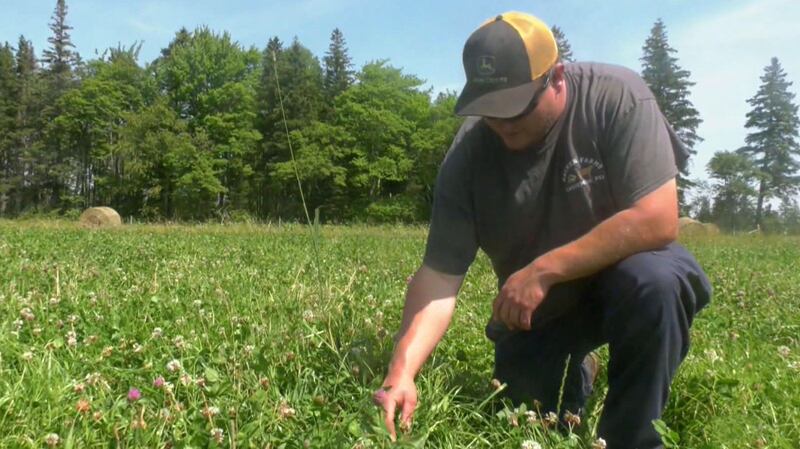
The project uses rotational grazing on forage fields before potatoes are planted. The cattle eat the grass and deposit manure and urine, returning nutrients to the ground. Researchers are studying whether repeated cycles can improve soil health and eventually increase potato yields, while lowering feed and fuel costs.
“Manure is really rich in nutrients,” said Judith Nyiraneza, a soil scientist at Agriculture and Agri-Food Canada.
She said cattle deposits both macronutrients and micronutrients, including potassium, phosphorus, magnesium, zinc, calcium and iron.
Cutting costs
For cattle farmers, the practice gives them an opportunity to put their cows to work.
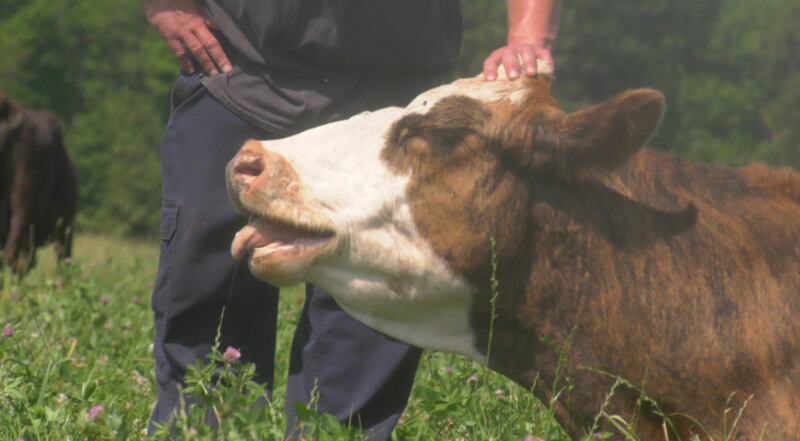
Cattle are moved from one strip of forage to another, giving the grass time to regrow between visits. As the animals move through the field, they spread manure themselves, reducing the need for machinery and labour.
“It will save money by cutting the cost of fuel down,” farmhand Levi Rayner said.
Farmer Glen Rayner said it’s also good for the herd.
“There’s less disease when they’re out here in the field, compared with being stuck in a barn,” he said.
Both farmers said they’ve noticed small changes, including greener, darker patches of grass around older manure.
Ryan Barrett, research and agronomy specialist with the P.E.I. Potato Board, said instead of farmers mowing and baling the forage to transport to cattle, the animals could eat directly off the field.
“We just put the cows out here, let them feed themselves,” Barrett said. “So there’s additional benefits and reduced costs.”
Soil science
P.E.I.’s sandy soils are well suited to grow potatoes, however they’re inherently low in organic matter and vulnerable to erosion, Nyiraneza said.
The Island also receives heavy rain in the spring and fall, presenting challenges, when fewer crops are growing, as they protect soil and take up nutrients. A lack of crops protecting the soil, can accelerate erosion and strip away topsoil rich in organic matter.
Researchers collect soil samples before and after the cattle move through, then return before potatoes are planted and throughout the growing season.
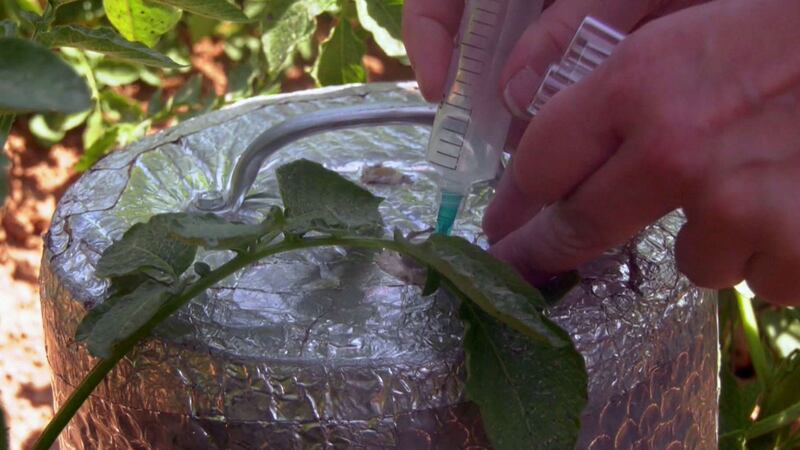
During the potato-growing phase, they also collect gas released from the soil to measure methane, carbon dioxide and nitrous oxide emissions.
Sensors track soil moisture and air humidity, along with temperatures of both.
What researchers have found so far
Researchers have found comparable potato yields and greenhouse gas emissions in fields with and without cattle. Nyiraneza called it an encouraging result.
“That’s a good story, that grazing is not actually causing any yield penalty or any degradation of soil,” she said.
The study has not yet shown an increase in the number of potatoes produced, but Nyiraneza said the data so far has come from sites that had only been grazed once.
Researchers hope the benefits will build over time as fields go through the process repeatedly.
“We hope to see more improvement of soil properties and eventually (an) increase potato yields,” Nyiraneza said.
Next steps
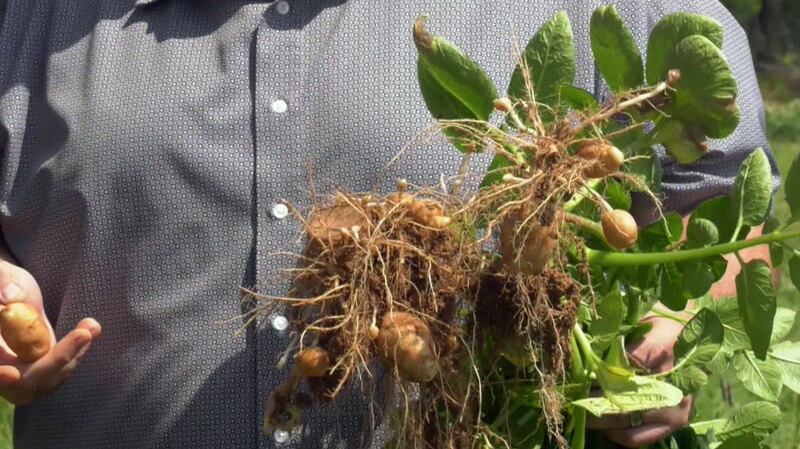
Barrett stood in a field where most of the land was grazed for two years before potatoes were planted this season.
“The crop is looking good, the soil is looking pretty healthy,” he said.
A small section was left ungrazed, giving researchers a side-by-side comparison.
In October, Barrett plans to fly a drone over the field to capture images of both sections. Researchers will also take multiple potato and soil samples from each area to determine whether there is a difference in potato yield or soil conditions.
Even if the project doesn’t produce more potatoes, Barrett said the practice could still benefit both livestock and crop sectors by using farmland more efficiently.
“Forty or 50 years ago, everybody who grew potatoes also had cattle. Now that’s very much not the case,” Barrett said. “I’m not saying everybody that grows potatoes has to have cows, but we can have more co-operation between those farms.”
There are seven grazing trials underway across the province. The goal is to build a bank of data that can show whether there is a consistent trend and help producers decide whether the approach makes sense on their farms.
The project in Cascumpec will continue for another growing season, while researchers hope to secure additional funding to follow the science over more cycles.

