Melina Tsagaropoulos was 37 years old when she died from ovarian cancer last month, a disease often referred to as the “silent killer” because it rarely causes symptoms until it has reached an advanced stage.
She was 29 years old when she was diagnosed with stage 3 high-grade serous carcinoma (HGSC) ovarian cancer, an aggressive type of cancer that originates in the fallopian tubes.
“She was like a light; she was a joy. To me, she was everything,” Marco Makrymanolakis, Melina’s husband of nearly 11 years, told CTV News.
Melina enjoyed writing, painting, travelling and the outdoors.
When the leaves changed colours in the fall, Melina would insist on driving around her neighbourhood in Île-Perrot, west of Montreal, and later Laval, to admire the autumn scenery.
When the weather began to turn a little chilly, Melina loved sitting outside with a blanket in the morning, drinking the coffee she always enjoyed preparing herself.
When summer arrived, Melina always wanted to travel to a beach and feel the warmth of the sun.
“The things some people may take for granted, she always looked forward to,” Marco says. “She always said she never felt like she was dying.”
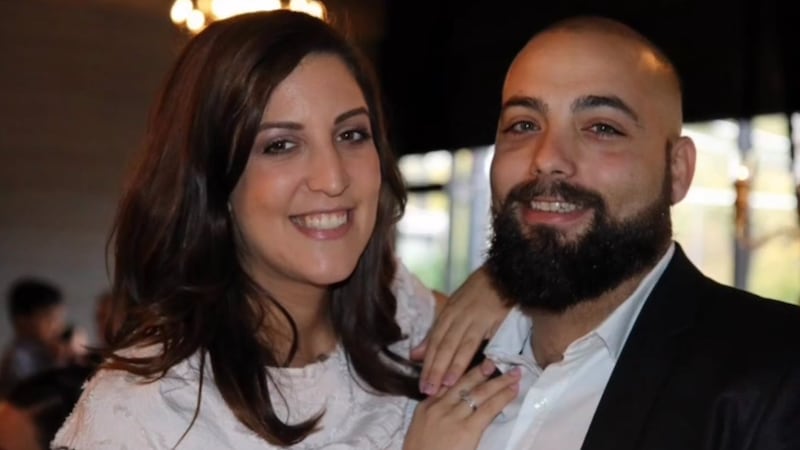
Melina loved kids
But above all, Melina loved kids. She was a daycare educator and always wanted kids of her own.
Melina and Marco started trying for a family in 2017, two years after they got married.
Melina found out she had ovarian cancer after several months of trying to get pregnant.
Doctors initially thought Melina had endometriosis that was making it difficult to get pregnant. However, an eight-hour surgery at the end of that year confirmed she had cancer, and that it had already spread beyond her reproductive organs.
During that surgery, she underwent a total hysterectomy with bilateral salpingo-oophorectomy, which removed all of her reproductive organs, her belly button, and some of the cancer that had spread beyond its initial origins.
Doctors were not able to retrieve her eggs during the surgery, meaning she would no longer be able to conceive a child naturally.
“All I was thinking was, ‘How long do I have with her?’” Marco told CTV News. “We were newlyweds; we wanted to start a family.”
“But she was a person who never backed down from anything. Anything she wanted, she got it. She was always able to bring her dreams to life. She wanted a child, and she brought him into our life.”
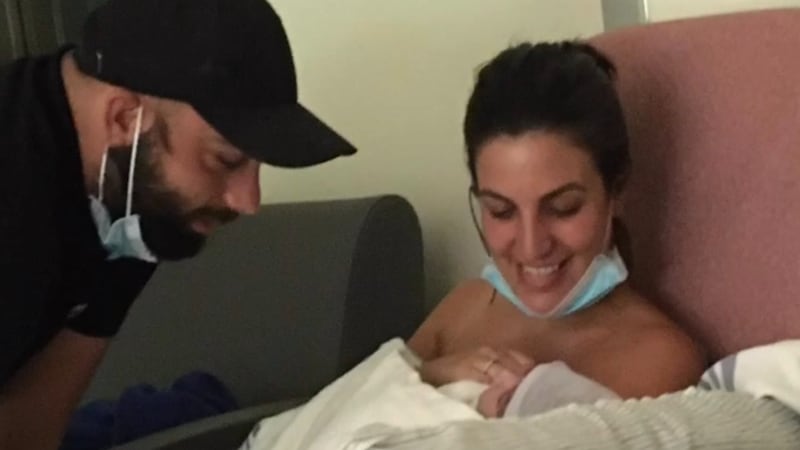
Community helped Melina and Marco
Melina underwent several rounds of chemotherapy beginning in 2018 following her surgery, and she was declared cancer-free a few months later following treatment.
The same year, Melina launched a GoFundMe campaign to help cover the costs of starting a family through adoption or surrogacy.
The campaign raised nearly $20,000. Eventually, one of Melina’s friends donated her eggs, while a coworker volunteered to serve as the couple’s surrogate. The surrogate became pregnant in 2019, but around the same time, tests confirmed that Melina’s cancer had returned. Their son was born in 2020.
“She raised him for the last six years and instilled everything that she has into him, and he is just a constant reminder of the joy and the light that she was for me,” Marco says.
Melina continued to undergo multiple surgeries and various types of treatment. Although the cancer and its treatment impacted her quality of life through ongoing side effects, she continued to travel and make the most of every moment.
“I feel every time she did something, she came back healed. It healed her to a point where she felt like the cancer was never going to take her; we all felt that cancer was never going to take her,” Marco says.
Ovarian cancer
While the incidence rate of ovarian cancer is relatively low, it is the fifth leading cause of cancer death among women in Canada, according to the Canadian Cancer Society.
An estimated 3,000 women are expected to be diagnosed with ovarian cancer in Canada in 2026, and about 1,950 will die from it.
In Quebec, about 680 women are expected to be diagnosed with ovarian cancer in 2026, and 490 are estimated to die from it.
A woman’s lifetime risk of developing it is about 1 in 70.
According to the Society of Gynecologic Oncology of Canada, ovarian cancer is difficult to detect because its symptoms are often vague and may not appear or become severe enough to prompt medical attention until the disease has reached an advanced stage.
Symptoms can also be mistaken for gastrointestinal issues, which include bloating, abdominal/pelvic pain, difficulty eating or feeling full quickly, urinary and bowel changes, and fatigue.
There is also no screening test for ovarian cancer.
“Very few women are identified at an early stage, and stage identification is certainly associated with survival,” says Dr. Jacob McGee, president of the Society of Gynecologic Oncology of Canada.
“Just over half of our patients are still alive at the five-year mark (...) and most of those patients will still go on to recur, or they’ve already recurred, and that’s primarily because we do not have a screening test.”
Unlike ovarian cancer, other reproductive cancers have screening tests or symptoms that present much earlier on, McGee says.
Screening and HPV vaccination can help detect and prevent cervical cancer, reducing mortality. In addition, most endometrial (uterine) cancers — the most common gynecological cancers among women — often present with vaginal bleeding in their early stages.
But some endometrial cancers, whose incidence and mortality have been increasing in Canada, also don’t show symptoms until they reach advanced stages.
“We often use the word ‘fight’ when it comes to cancer, but as clinicians, we know that it’s not a fair fight. The tools we have are often not sufficient to deal with what we are up against,” McGee says.
That’s why a screening test that could make it possible to intervene at earlier stages of ovarian cancer, before symptoms appear, is critical, McGee says.
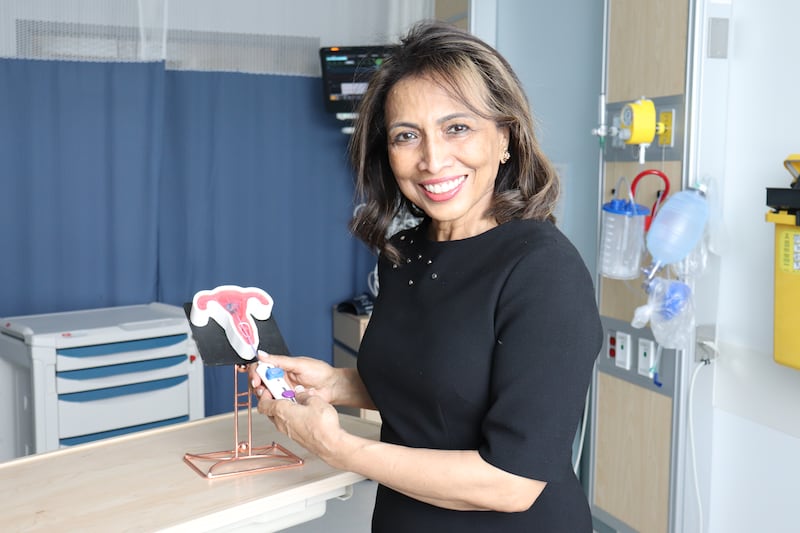
Screening for ovarian cancer
In Montreal, Dr. Lucy Gilbert, director of the McGill University Health Centre’s Gynecologic Oncology Division and Women’s Health Research Unit, developed the first test of its kind capable of detecting ovarian or endometrial cancers through DNA analysis before symptoms appear.
The DOvEEgene test has been 13 years in the making and is in its eighth iteration. It has been tested in clinical trials on over 5,000 women and is ready to be made publicly available.
Gilbert says the test needs regulatory approval by Health Canada for commercial use. She is also looking to have it approved in the U.S. as well.
“When you have a screening test for early detection, cancers are discovered when it’s confined to the place it started,” Gilbert says.
Once the test becomes publicly available, it will be offered to women aged 45 to 75. The next step will be to seek reimbursement through Health Canada.
Gilbert says it will be a “game-changer” for women’s health-care once it becomes available to the public.
“If we have early detection, you save society funds, you save the health-care system funds, and you save lives and alleviate suffering, keeping women, mothers, sisters, grandmas and wives still here, contributing to society,” Gilbert says.
Father’s Day without Melina
Melina died on June 19, two days before Father’s Day. It was Marco and their six-year-old son’s first one without her.
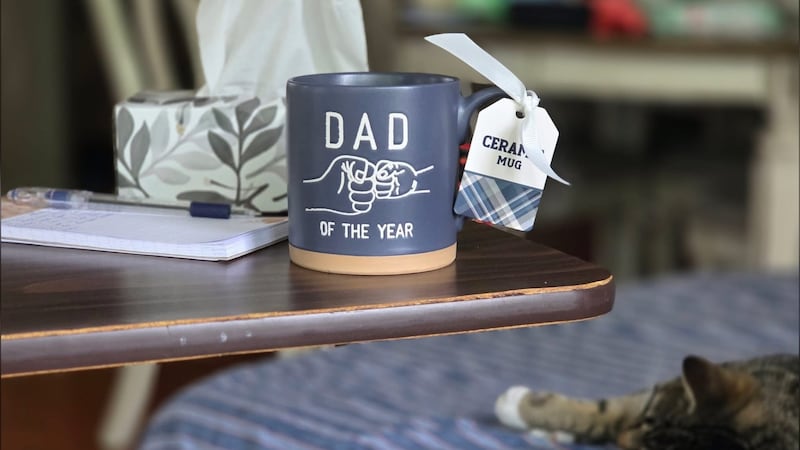
That day, Marco was cleaning up Melina’s medication around the house when he found Melina’s Father’s Day gift she was going to give Marco: a mug that said “Dad of the Year.”
“I loved her every day for the last 14 years, and it’s going to be hard not having her around,” Marco says.
“These years were the best to me. It doesn’t feel like it was 14 years; it feels like it’s only been a day. It’s crazy how fast time goes, and you don’t really notice it until it’s gone.”
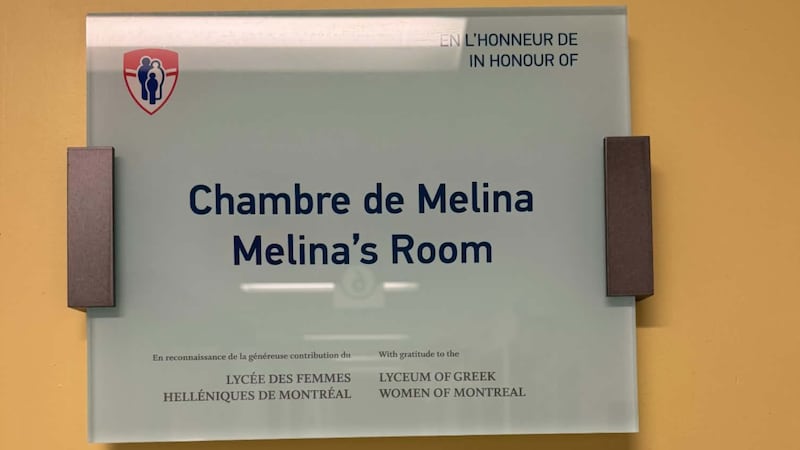
Melina was a member of the Lyceum of Greek Women of Montreal. In her honour, the organization donated nearly $600,000 to Gilbert’s research. A room at the McGill University Health Centre was named after Melina to honour her.
“I have a big support group, but I’ve never felt so lonely in my life,” Marco says. “We had a routine where we would text and call each other every moment of the day to share our highlights.”
“The other day, I took our son to the park, and he was playing with his cousins, and I took pictures of them, and I just thought to myself, ‘Who am I going to send these to now?’ Who do I share these memories with?’ It’s like there’s a void that grows bigger each day.”

