Sharan Kaur served as deputy chief of staff for former Liberal finance minister Bill Morneau and is currently a partner at communications firm Henley Strategies. She is a political analyst for CTV News and CTVNews.ca.
I live in downtown Toronto, not far from Billy Bishop Airport. I am a frequent user, and I have always wanted to see the island airport expand. I was pro-runway expansion years ago and genuinely wanted the Billy Bishop project to move forward, so I was disappointed when the federal government pulled back.
But Premier Doug Ford’s reaction, suddenly questioning Ontario’s commitment to the Alto high-speed rail project, drags us into an arena of political spite that we urgently need to avoid.
Major capital projects cannot hinge on personal feelings and reactive emotions. That is Trump-style governance. Holding projects hostage for a quid pro quo is a recipe for national failure. We need less of this, and we need to be better.
We are living through a period of profound global uncertainty. Supply chains are shifting, the climate crisis is accelerating, and global economic alignment is being rewritten in real time. In moments like this, middle-power nations like Canada do not have the luxury of playing small. We need to be bold. We need big investments, ambitious infrastructure, and leaders with the stamina to build for the next century rather than the next news cycle.
The trap of political spite
High-speed rail along the Windsor–Quebec City corridor, like the Alto project, is precisely the kind of transformative, nation-building initiative Canada requires. It is designed to connect millions of residents, modernize travel, decarbonize our transportation grid, and unlock tens of billions of dollars in new economic productivity across two provinces.
Holding a generational, multi-billion-dollar transit network hostage because a regional airport expansion hit a federal wall is not pragmatic bargaining. It is treating Canada’s future like a game of poker with no line of sight to winning.
Look at the world’s most resilient and competitive democracies. Cities like Tokyo, Paris, and Seoul became global powerhouses because their leaders committed to multi-decade infrastructure strategies that survived partisan squabbles and political transitions.
They understood a fundamental truth: world-class status is not an identity you claim; it is a commitment you build. Many people laugh at Premier Ford and criticize his plan to build a tunnel under the 401 in Toronto, yet I am told time and again that it is visionary and about the future.
When our leadership treats nation-building as a series of petty trade-offs, the consequences compound quickly. Capital flees instability. International investors and technical partners need predictability, and they will not sink billions into jurisdictions where multi-decade commitments can be unspooled over a bruised political ego.
Inflation eventually eats ambition, because every year lost to political posturing drives up procurement costs, delays land acquisition, and ensures taxpayers pay double for half the result.
While our global peers build high-speed transit networks and modern logistics hubs, we remain bogged down in regional gridlock and political stalemate.
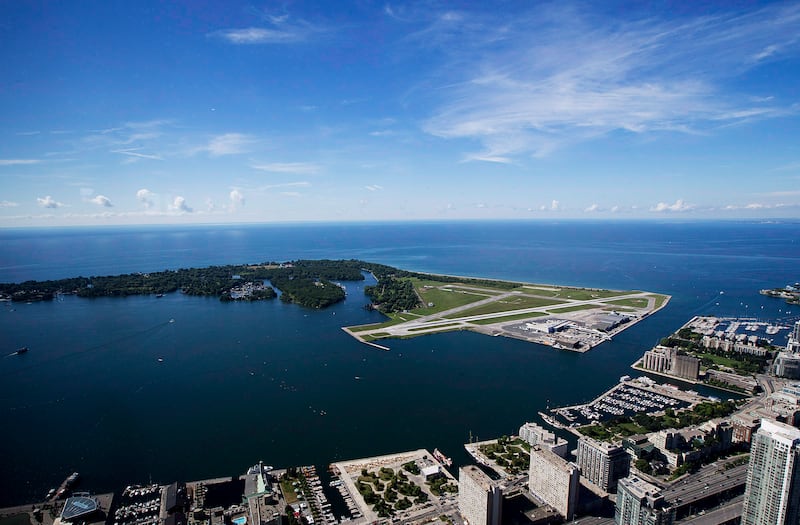
Disappointment in politics is inevitable. I felt it when Ottawa grounded the Billy Bishop expansion. But true leadership requires the maturity to separate short-term policy disputes from long-term national imperatives. You do not derail the train network of tomorrow simply because you did not get your way on the runway today.
If Ontario and Canada want to compete on the world stage, we must match the uncertainty of our era with boldness of vision. That means building stability into our planning, insulating public infrastructure from political petulance, and refusing to let vital projects rise or fall on reactive impulses.
Premier Ford knows that more is achieved by working together. He has a rare ability to earn the respect of partisans across the political spectrum, and he understands that Canada succeeds only when we build for the future together. His recent comments about withdrawing support for Alto may have been made in the heat of the moment, but let us do what Canadians do best, and work together.
It is time to move past governance by grievance and build the future our country deserves.

