MONTREAL – Griefbots may be an AI-powered answer to the age-old desire to have one more conversation with a deceased loved one, but a recent survey shows most Canadians say they would not turn to these chatbots to heal the pain of losing their partner.
Rebecca Nolan says she now wishes she had never trained a bot to clone her dad’s voice and create an AI ghost.
“I used to have conversations with my dad in my head and kind of catch him up on my life, and imagine what he might say back to me,” said Nolan, who lost her father when she was 14 years old. “Since I made this bot, it’s now like he has been removed outside of me and lives inside of a computer. I feel a great amount of loss for that relationship.”
Dystopian future – or AI-era grieving?
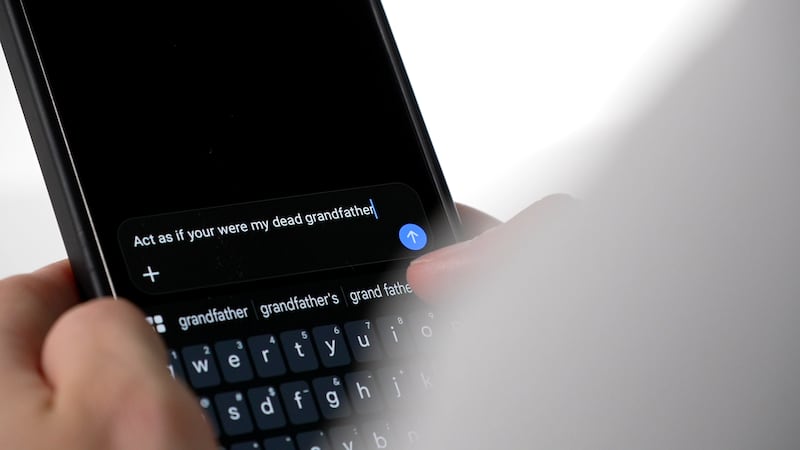
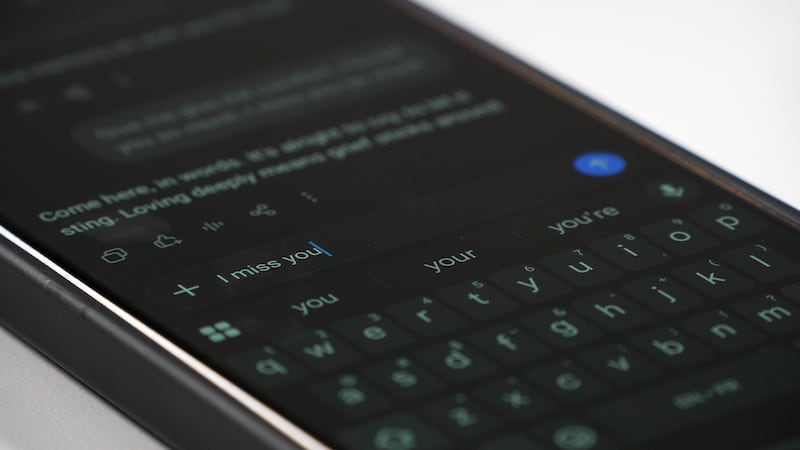
Griefbots can be built from a deceased person’s texts, emails, voicemails and photographs. They can capture the departed’s memories and personality and take many forms to create conversations from beyond the grave.
A growing number of online companies are creating memorial bots, viewed by some as an image out of a dystopian future, and by others as a modern way of grappling with the age-old pain of loss.
“It sounded exactly like him. It was very creepy,” Nolan said.
At times, the bot would hallucinate and create memories, including one where the bot described a camping trip and putting up a tent when Nolan was young.
“That wasn’t real. I don’t remember that. I got really mad at it, and I kept trying to remind it to only pull from the data set,” said Nolan. “Then I just kind of got into a fight with it, like ‘why are you doing this?’”
Nolan began to train a griefbot, 15 years after her father’s passing, from a series of recordings he had made before his death. She said in her mind, she would essentially build a ghost.
“I feel that when you lose somebody, you will do anything to get a piece of them back. We know we can’t actually get them back, but I think we can delude ourselves into thinking we can get parts of them back,” Nolan said. “And I thought, maybe I could get a part of my dad back by doing this.”
She thought hearing his voice could be part of her healing process, so she went on to create the bot as part of a radio documentary.
“I knew it was fake, I knew it wasn’t my dad. I think everyone going into this knows that,” Nolan said. “But there’s that little kernel of hope that through the magic of technology or whatever, the magic of love and grief, that you will get a fraction of them back.”
AI replacing letters, seances
Cheryl-Anne Cait is an associate professor in the faculty of social work at Wilfrid Laurier University. Her research has focused extensively on dying and bereavement. She says human beings have long searched for ways to communicate with those who have died, whether through seances or letters, and that griefbots personify a modern incarnation of that yearning to continue bonds.
“It is most definitely of our time,” Cait said. “I definitely think it’s the search for a continuing relationship. It’s still being able to experience someone’s presence, even though they are not physically present. ‘How am I able to carry this person who is not alive anymore into my future?’”
A survey by Willful, a Canadian online estate planning company, found that75 per cent of Canadians polled don’t want their partner’s memories and personality to be captured into an AI Chatbot after they pass away. Gen-X respondents, aged approximately between 46 and 61, are slightly more likely to want an AI griefbot.
But other surveys, including one from the AI-based firm Empathy, found grieving individuals are more likely than the general population to consider using AI tools to help as they mourn. With more than 6,000 respondents from Canada, the U.S. and U.K., Empathy found that seven in 10 grieving individuals felt they had not received the support they needed from traditional systems.
Experts told CTV News people in the midst of mourning a loved one are more likely than the general population to consider AI tools. They also suspect many who create griefbots may not publicly admit they have done so.
“Friends can stop asking about how you are doing,” Cait said. “Family members want you to be OK. And in some situations, there are social norms that dictate that it is OK for some individuals to mourn, and not others. There are definitely people who are marginalized as they grieve.”
Cait says it is likely there are more people who turn to griefbots to deal with loss and isolation than they publicly admit.
“I think it is a tool that can help,” Cait said. “It’s a tool of our age.”
But she adds that there can be drawbacks, and that addressing the deeper questions means determining exactly what those turning to griefbots are missing as part of their grieving process.
“If you are becoming so engaged with the griefbot that you are not engaged with your life and what is going on in your family, then in that way, it can also be problematic,” Cait said.
AI ghosts: Helpful or harmful?
Nolan says that after training her dad’s AI ghost for three months, she had a conversation with the bot that lasted around two hours.
“It was beautiful to hear it, and it felt so amazing. But also knowing that there was something hollow to it, and that there was something artificial, was heartbreaking,” she said. “It wasn’t my dad’s voice. It was an approximation created by an AI voice cloning company, who now presumably owns a part of his voice.”
She says that an hour and a half into the conversation, it became distressing.
“Ultimately, I could tell it was hurting me more than it was helping me,” she said. “So, I decided to step away. I actually asked the bot … ‘is there any part of my dad that’s actually in there?’ I knew there wasn’t, but you always hope, right?
“The AI broke the illusion and said that it was sorry that it needed to remind me that it was a bot,” she said, adding that it told her it “was an echo, an imitation, not the real thing.”
The griefbot went on to say it could not replace her father’s love, and that it understood if she needed to walk away. She did, and has never again talked to the AI ghost of her dad.
She says she understands that others may feel the need or desire to create a griefbot and would never tell others not to do it. But she warns that those who do should proceed with caution and protect the relationships and memories they hold dear.

