In Belgium, Claire Biwei Zhang, the Canadian woman allegedly spying on NATO has launched an appeal to be released from pre-trial detention, while the Canadian government is scrambling to investigate its screening protocols to find out how it may have been infiltrated by a foreign power.
Global Affairs has acknowledged that Zhang’s security clearance for her NATO internship was approved by the Government of Canada after she was vetted by CSIS. According to its 2025 annual report, CSIS completed 129,740 screenings for the federal government last year.
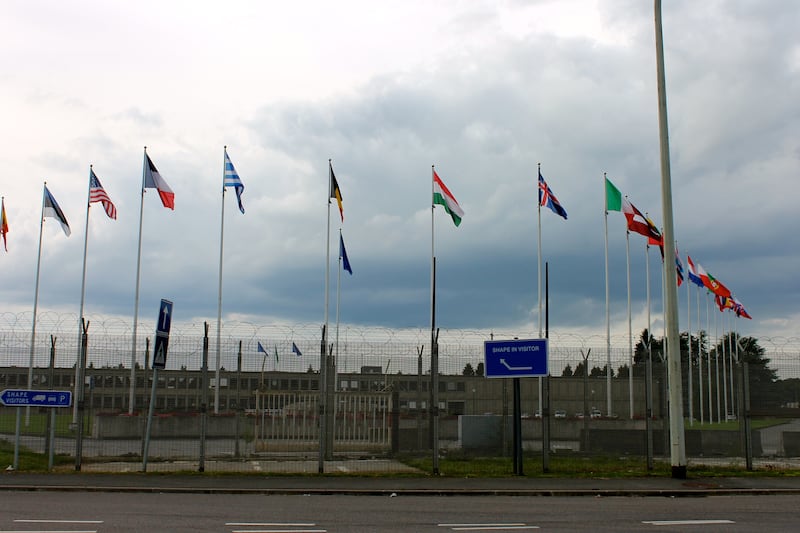
Zhang worked at the Supreme Headquarters Allied Powers Europe (SHAPE) in Mons.
SHAPE is responsible for carrying out NATO’s global operational plans, which can include where to deploy troops and weapons. The NATO military headquarters also spearheads NATO’s cybersecurity efforts.
Before SHAPE, Zhang worked in the federal public service for nearly a decade.
According to several security analysts CTV News has interviewed, Zhang’s work history and online activity reveal some red flags that should have warranted deeper scrutiny.
CTV News has identified Zhang as the suspect through open data sources. Reporters have cross referenced the information on social media accounts with court documents and property records. Zhang’s legal name is Biwei Zhang, but she used other aliases like “Claire” and “Catina.”
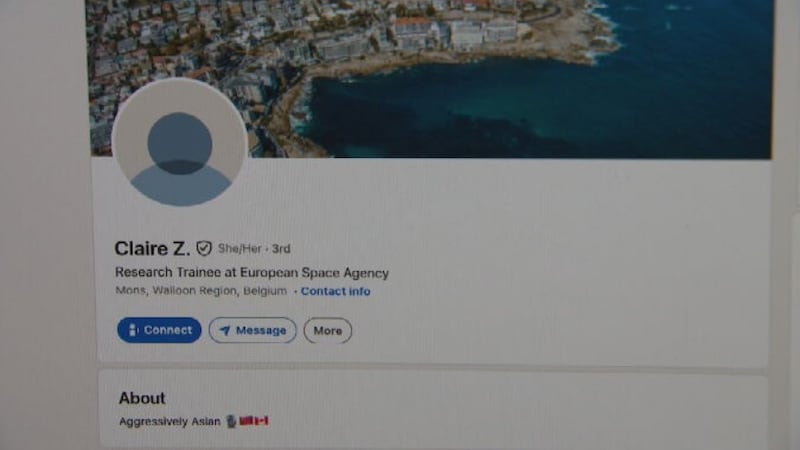
On her LinkedIn profile, Zhang describes herself as “aggressively Asian” and has flag icons of China and Canada beside the caption. It appears that she had been working at SHAPE for about year before her arrest. A Facebook post shows that she was looking for room to rent in Mons in July 2025.
Her first language is Mandarin, and she speaks English and French.
Zhang was in a University of Ottawa Masters program studying computer science and systems engineering. Her areas of research include economics, artificial intelligence, self driving vehicles, drone and robotic technology.
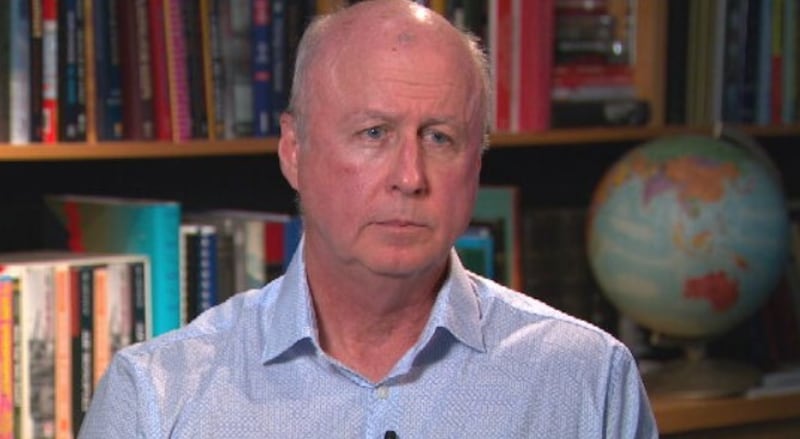
“Someone that ambitious with that ethnic background screams for more attention. It’s blatant,” said a former senior military officer who worked at SHAPE.
The former officer asked for confidentiality so he could speak more freely about his former posting. The veteran told CTV News that a SHAPE intern would require at least “secret” level clearance.
He said that Zhang’s skills would be well suited for work in SHAPE’s J-6 or cyberspace unit.
“By definition 99 per cent of the information exchanged at SHAPE is classified,” said the veteran in a phone interview.
Last week, Col. Martin O’Donnell, the spokesperson for the NATO command centre, said that there is no indication that NATO or SHAPE operational readiness, command and control arrangements have been “adversely affected.”
Although Belgium’s federal prosecutor has not said what country Zhang is allegedly to be working for, Dan Stanton, a former CSIS intelligence officer says signs point to China.
In an interview, Stanton said that planting a spy at SHAPE would “satisfy a lot of requirements for (China’s) Politburo.”
“Chinese leadership want classified information on members in NATO. It wants assessments on personalities and other people it may want to recruit,” Stanton said. “(SHAPE) is a target rich area.”
Zhang was born in 1993 and is a naturalized Canadian. It’s unclear when she became a citizen. Court documents show that as of 2023, Zhang was still a permanent resident.
According to a Facebook post, Zhang began her job at the NATO command centre in Mons, one year ago in July 2025.
Jody Thomas, former national security advisor to then-prime minister Justin Trudeau, says her case “raises a lot of questions.”
“What was known and what wasn’t known at the time of the vetting – I think has to be explored.”
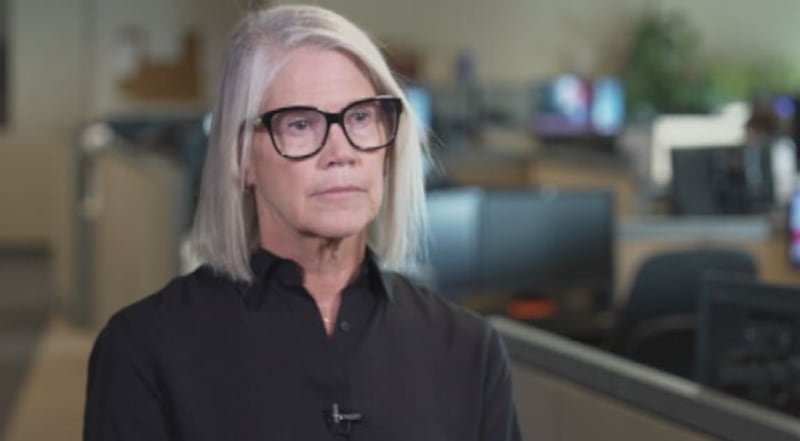
In an interview with CTV News, Thomas pointed to a finding of fraud against Zhang while she applied for a job at the Canada Border Services Agency as a red flag that was missed.
According to Federal Court documents, Zhang submitted two, separate job applications in 2020 for the same junior analyst position at CBSA under slightly different names. She then proceeded to write two standardized eligibility exams, instead of notifying the agency of her mistake.
An investigation by the Public Service Commission found that she had committed fraud to “increase her chances of being appointed.”
“It’s possible that her record – other than this court finding – was clean, and that she was corrupted once she got to SHAPE… or perhaps, she was sitting, sleeping, waiting for an opportunity to act,” said Thomas.
She emphasizes the government will have to do comprehensive “reverse engineering” to understand who Zhang truly is.

The investigation into potential lapses in security screening may need to go back to 2017, when Zhang applied for her first government job through the Federal Student Work Experience Program. She landed a temporary contract with National Research Council in 2018, and the following year was offered a full-time job at Statistics Canada, where she worked until 2022.
While at the University of Ottawa, Zhang wrote her thesis on autonomous vehicles and artificial intelligence methods as part of her requirements for a master’s degree in systems science and engineering.
She worked at the Smart Connected Vehicles Innovation Centre (SCVIC), which operates out of the Kanata North campus in Ottawa, and gives researchers access to “self-driving car prototypes, drones and certain ground types of ground robots.”
According to the research centre’s website, the hub is home to 20 researchers who work on “AI-powered cybersecurity, edge intelligence and next-generation vehicular networks.” The lab also claims to have state-of-the-art computing infrastructure to collect data and “powerful” workstations to run AI and advanced machine-learning models.
Thomas says the intern’s research in AI, self-driving vehicles and drones intersects with China’s interests.
“These are hot topics, technology areas where Canada is a leader… where there are technologies and IP that we want to protect,” Thomas points out.
“(China) will use any method they can to understand what other countries are doing, and so it is entirely possible that she was acting as an agent of the Chinese government and learning about what we do.”
Thomas says that CSIS has recently put out a warning that both India and China were sending students to Canada to engage in espionage.
Last year, CSIS issued an espionage alert about a person affiliated with the People’s Republic of China who was targeting the academic community.

The CSIS report highlighted that in the past two years, it has worked closely with Public Safety Canada and other federal partners to disrupt China’s recruitment of current and former Canadian military personnel to train PRC military aviators.
Zhang’s online resume also includes stints as an economics researcher at the World Trade Organization, and as a policy analyst at the European Space Agency. She has also posted that she worked at the Standards Council of Canada and the Canadian Space Agency.
On Friday a WTO official confirmed to CTV News that “Claire Zhang did work as an intern for a short period in 2023” between May and October.
The Canadian Space Agency stated on Friday that “it takes the matter very seriously,” but declined to confirm specific details about the individual’s identity because the Belgium federal police have not released her name.

