VERNON, B.C. — The chief of the Okanagan Indian Band says he barely recognized the community where he was born and raised after taking a helicopter tour over the devastation left behind by the Bradley Creek wildfire near Vernon.
“It looked like a war zone,” Chief Dan Wilson said.
The Bradley Creek wildfire has destroyed about 230 homes near the northern end of Okanagan Lake, including about 30 homes belonging to band members and roughly 200 non-band homes on reserve, making it one of the most destructive wildfires in recent Canadian history.
Wilson said the scope of the loss is only just beginning to sink in. “Shocking,” he said. “Things are still surreal.”
The band held its first community meeting Tuesday evening, where evacuees gathered to begin processing their losses.
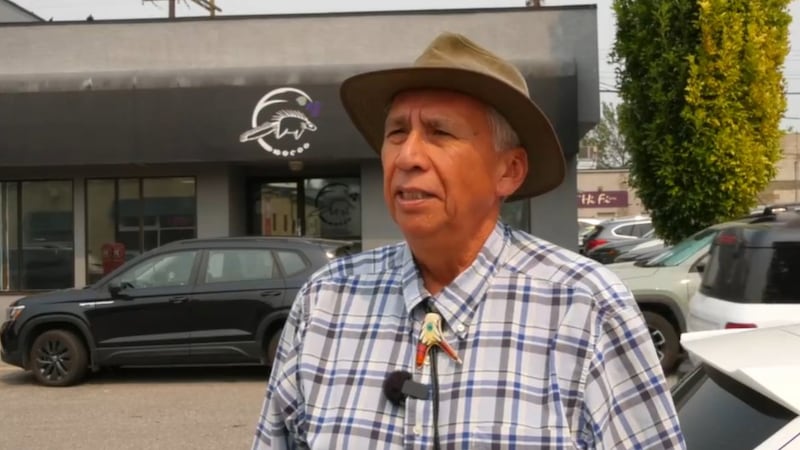
“To see longtime elders that I’ve known all my life, the look on their faces because of their homes that were lost, really broke my heart because there’s just no words for it,” Wilson told CTV News, adding that families are grappling with saying goodbye to tangible pieces of their history.
“The memories. The memorabilia that can’t be replaced … Salish baskets, the pictures of our old ball teams, hockey teams,” he said.
Wilson likened the blow, still in the early stages of being absorbed by his community, to a grieving process.
“It’s really an emotional loss that we’re still trying to deal with,” he said. “It’s like somebody died.”
The fire started late Friday before officials said the wind got hold of it, with gusts reaching 115 kilometres an hour. Wilson said the speed of the fire’s spread forced some people to evacuate with only five minutes’ notice.
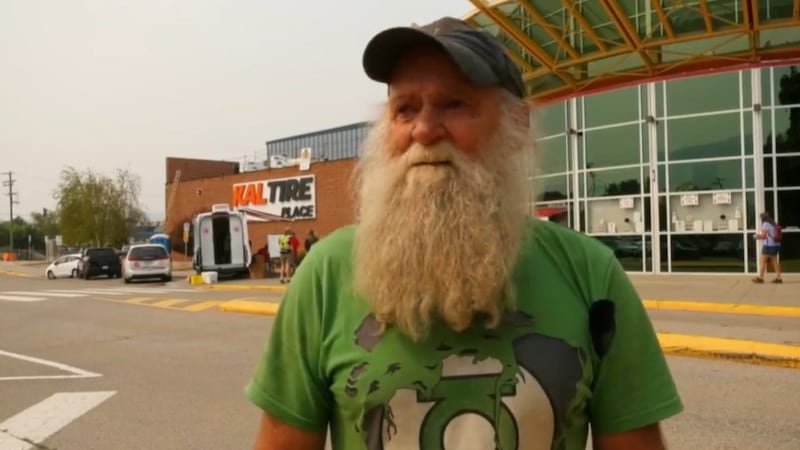
Among those who escaped was Kevin Statham, who spoke to CTV News through tears after coming face-to-face with what he described as a 12-metre wall of fire.
“We lost everything. It’s gone,” Statham said.
About 300 kilometres northwest, officials with the Thompson-Nicola Regional District say structures have been destroyed on about 120 properties because of the Pear Lake wildfire near Clinton. Some properties lost multiple buildings, and officials are still working to determine the total number of structures destroyed.
Around the province, about 8,000 people have had to leave their homes because of wildfires. More than 11,000 properties remain under evacuation orders or alerts.
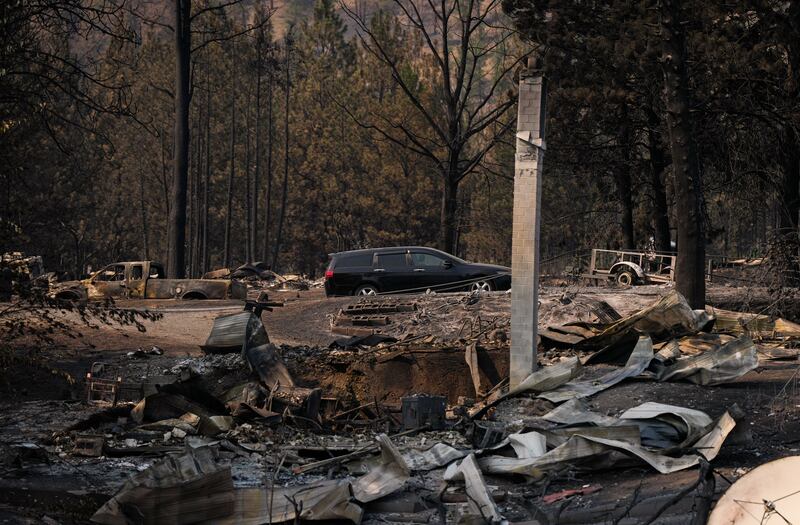
The BC Wildfire Service says about 110 wildfires are burning in the province, as officials brace for yet another stretch of rising temperatures and lightning which could spark new fires.
“We’ve never seen fuel dryness the way we are seeing it right now,” said Cliff Chapman, the director of operations for the BC Wildfire Service.
Smoke is presenting a health hazard for communities far from the flames. Much of Metro Vancouver remained under air quality warnings Wednesday, with a thick haze hanging over the city.
The wildfire danger has also extended to those working around the clock to save property. On Tuesday, the BC Wildfire Service said a helicopter battling one of the province’s wildfires near 70 Mile House crashed into a lake. The pilot survived and was taken to hospital with minor injuries.
With files from The Canadian Press

