


Cleanup efforts continued in Woodstock, Ont. on Monday after the Northern Tornadoes Project confirmed an tornado touched down in the area on Saturday.
“We confirmed that tornado preliminary rating of EF0, which is the lowest on the scale,” David Sills, director of Northern Tornadoes Project at Western University, said.
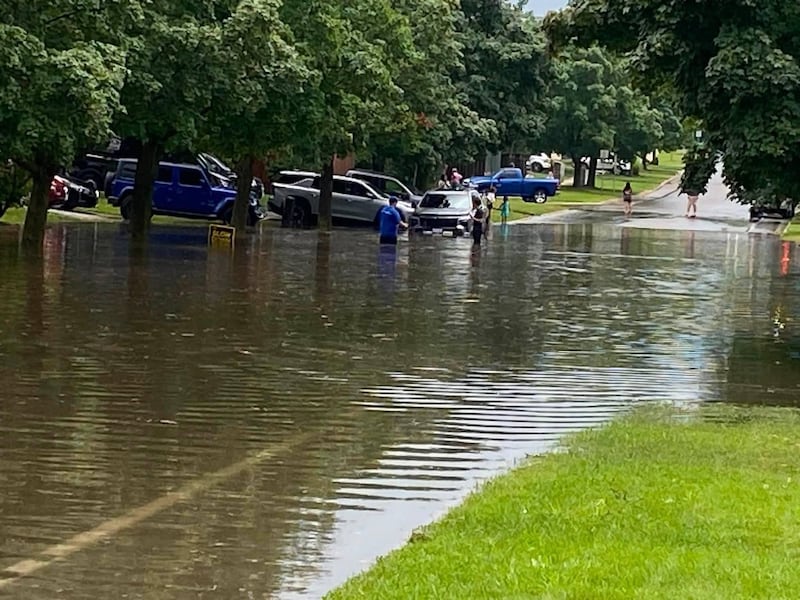
The City of Woodstock said crews responded to several downed trees and some flooded streets following the powerful storm.
Staff worked throughout the weekend to clear debris from city roads and sidewalks. The city said that work is now largely complete.
Crews are now focusing on downed trees in parks, and limbs and branches that fell in boulevards.
Playgrounds and parks are being inspected for flood-related damage, including areas where mulch washed away and will need to be replaced.
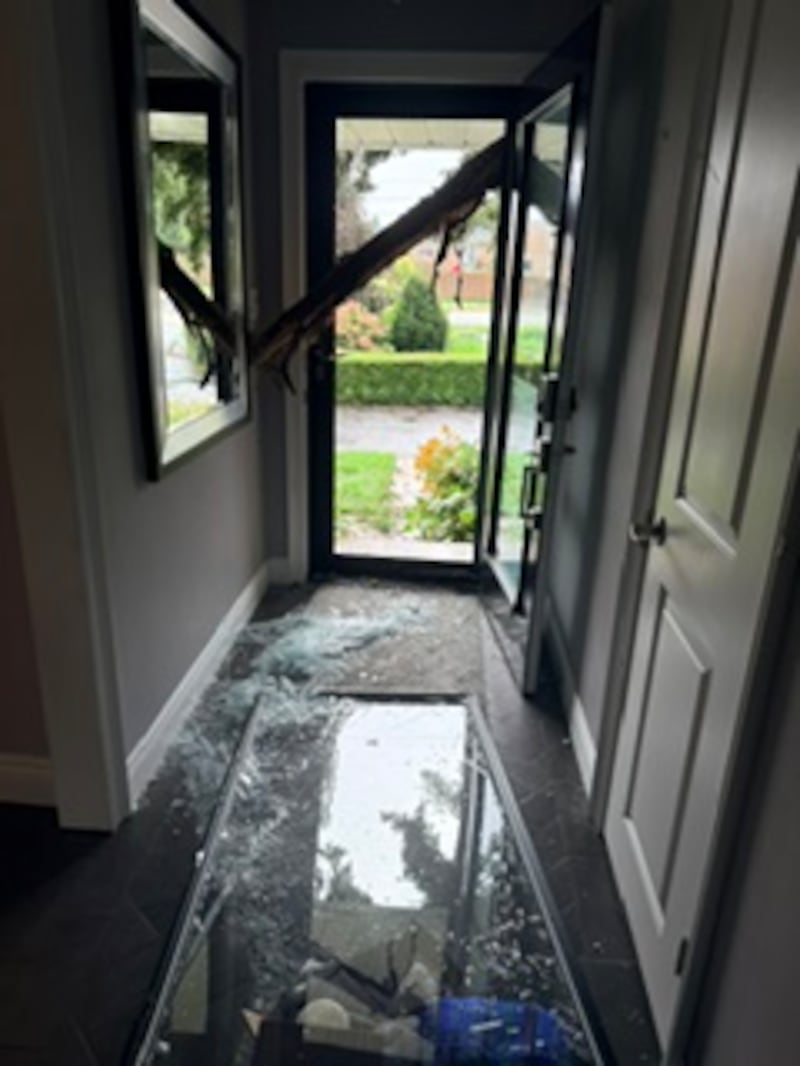
Some of the remaining issues include a fence at the city’s cricket pitch that will need to be fixed, private property damage and vehicles that were hit by falling trees.
The Northern Tornadoes Project has since confirmed two EF0 tornadoes that were associated with the weather system — one in Woodstock, Ont. and another in Lindsay, Ont.
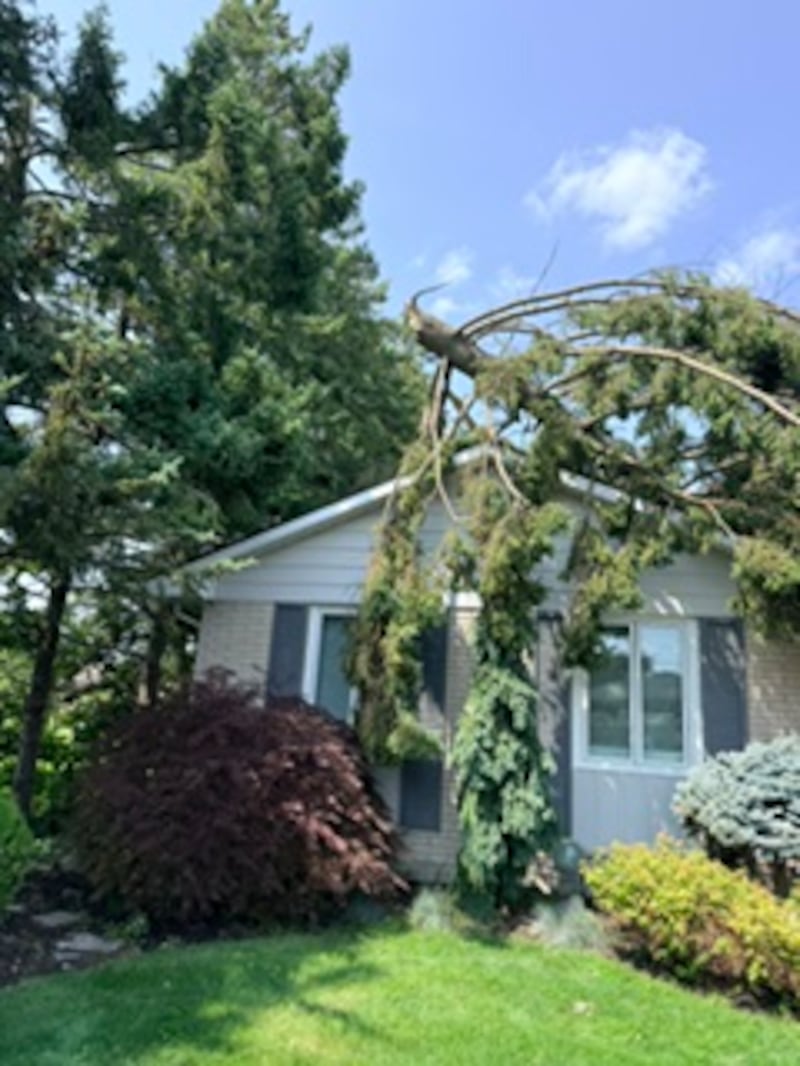
City officials said stumps from removed trees will also be addressed, although some may remain in place temporarily.
As of Sunday afternoon, officials said damage reported so far had been minor, but the team is continuing to investigate reports in the Woodstock area to determine the tornado’s track.
Tornado warning issued during storm
Environment Canada had issued a tornado warning for parts of southwestern Ontario, including Waterloo Region, during the storm.
However, people living in Woodstock said that warning came after the storm had already arrived.
“I thought it was just a regular thunderstorm,” Krzewina said. “But driving was just the reality of what actually really happened. I’ve never seen anything like it.”
Geoff Coulson, a meteorologist with Environment Canada, said the strength of the storm may have been a factor.
“These were weaker tornadoes, which tend to be somewhat harder to detect because they don’t present as well as sort of a long-lived, well-defined supercell type thunderstorm,” Coulson explained.
Residents describe intense conditions
Woodstock resident Duncan Beaumont described rapidly deteriorating conditions on the roads during the storm.
“As we drove back into town, the rain became so intense that vehicles were pulling over with their four-way flashers on and, at times, traffic virtually came to a standstill,” he said.
“Visibility was incredibly poor. At certain points you could barely see 10 feet in front of you because the rain was being driven so hard.”
Beaumont said conditions worsened quickly after arriving in their neighbourhood, with overwhelmed drainage systems and rapidly rising water.
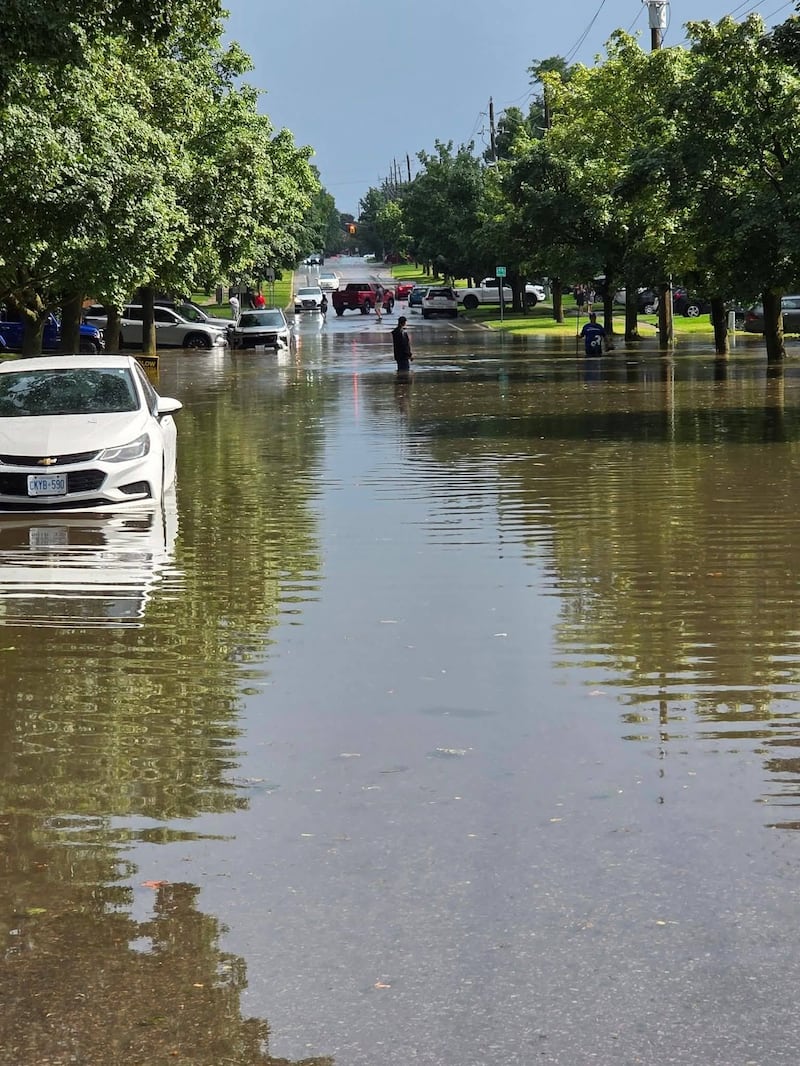
“Drains were overwhelmed, streets began flooding rapidly, and some very nice gardens and flowerbeds had effectively been washed away, with plants and debris floating down the streets.”
Realtor Kasia Krzewina said she was on the roads when the skies opened up.
“I didn’t realize how serious it was until I started driving home,” she told CTV News on Monday.
Environment Canada said between 55 and 65 mm of rain fell.
“The rain was just so intense,” Ross Farquhar, a Woodstock resident, said. “It was just pounding. At one stage, it was hailing at this part of Woodstock as well.”
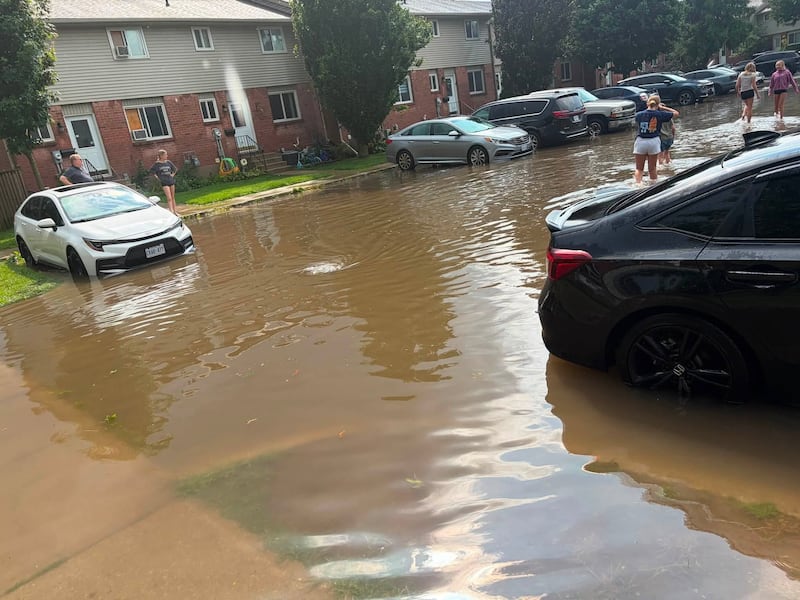
“Within a very short period of time, some of the roads had turned into rivers,” he said.
The flooding also forced some drivers to turn around and find alternate routes.
“The vehicle I was driving allowed me to carefully get through some of the deeper water, but many cars were having to turn around and find alternative routes because they simply couldn’t pass,” Beaumont recalled.
He said some neighbours found their own ways to deal with the unusual conditions.
“One family on Spitfire [Street] even put a positive spin on things, got their kayak out and went for a paddle down what had temporarily become a river!”
Krzewina also came across the unusual sight.
“Trees were down. I turned on to Spitfire. There’s people canoeing down the street,” she said.
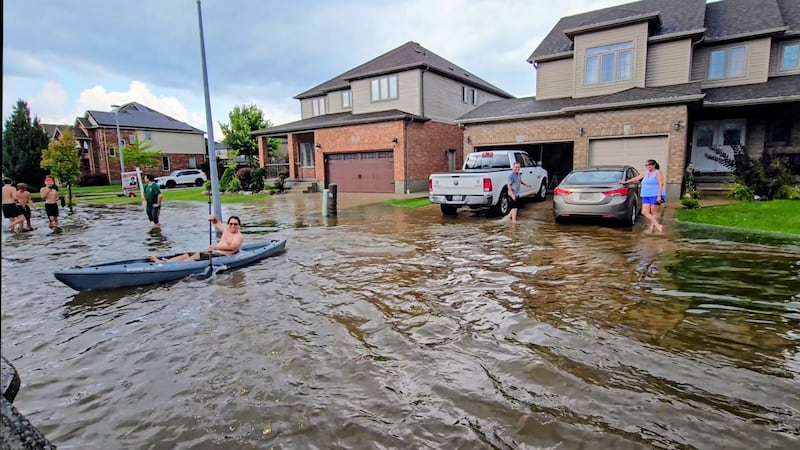
Beaumont said emergency alerts warning of a possible tornado eventually reached their phone.
“Although, from our experience, the most severe part of the storm was already happening by the time [the alerts] came through,” he recalled.
He said the event offered a reminder of how quickly severe weather can impact an area.
“Overall, I think our immediate neighbourhood was quite fortunate. Considering the amount of water outside and how quickly everything happened, I haven’t heard of too many major basement flooding issues or serious damage locally. It certainly could have been much worse,” Beaumont said.
“Experiencing something like that, even for a relatively short period, really does make you stop and think about people and communities that experience severe flooding, tornadoes and major storms much more frequently. particularly when they lose homes, possessions or livelihoods. It puts things into perspective.”

