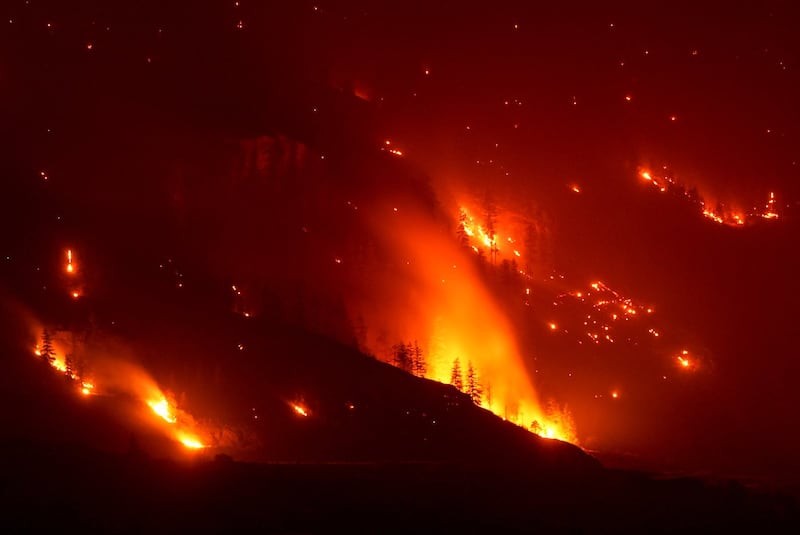
Thousands of people have been forced to evacuate as more than 100 active wildfires burn across B.C., with the province remaining under a state of emergency on Monday.
There have been “significant losses of homes and property,” according to B.C. Premier David Eby.
Nearly half of the 102 wildfires are burning out of control, including in the Summerland area, where the Bald Range fire claimed the life of an 80-year-old woman and led to evacuation orders for roughly 20,000 others.
“The hours and days ahead will be difficult. The Bald Range fire remains extremely active and significant challenges remain,” Eby said in a statement Saturday, following the “devastating news” coming out of South Okanagan.
“Since first reported early (Friday) evening, the Bald Range wildfire has grown rapidly as winds intensified, pushing into the Summerland area and affecting communities throughout the surrounding valleys.”
Meanwhile, the RCMP said they arrested one person and fined another for defying evacuation orders. They also confirmed they’re investigating the cause of the Bald Range wildfire, as “reports of suspicious activity” have fuelled online speculation about if the fires were caused by human activity.
Across the province, 43 evacuation orders — which urge residents to leave the area immediately — are in effect for approximately 13,200 properties.
There are also 51 evacuation alerts, warning people to be ready to leave on short notice, affecting some 5,800 properties.
Here’s what happened on Aug. 10, 2026:
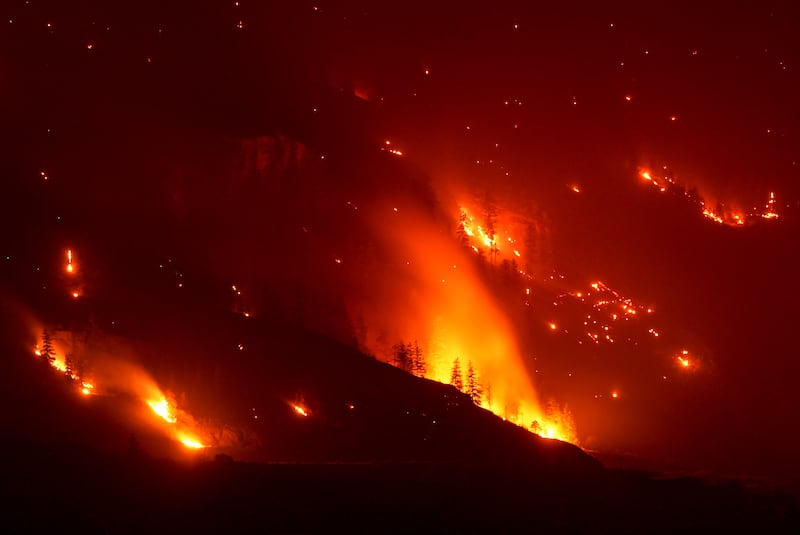
RCMP report arrest, fine for defying evacuation order
At a briefing Monday night, police say one person was arrested within the boundaries of where an evacuation order is in effect, while another person faced a “significant fine” for trying to storm through a roadblock.
“Police are reminding residents that you are to remain out of the closed areas, and access is at this point completely shut down, unless you’ve been granted a permit,” a spokesperson said.
“We are doing continued enforcement.”
While authorities say they understand the stress and anxiety people are experiencing as they wait to learn about the fate of their properties, they stressed the importance of heeding existing orders.
Lisa Steacy, journalist, CTVNewsVancouver.ca.
Investigation into reports of ‘suspicious activity’
The investigation into the cause of the Bald Range wildfire is being led by the Penticton RCMP, who issued an appeal for information Monday—along with a warning about online rumours.
“Investigators are working to determine the cause of the wildfire and are examining all reports of suspicious activity which may have led to the start of the fire,” a statement from the detachment said.
“Police are aware of several videos and misinformation circulating on social media in which an individual is observed lighting a non-lethal wildlife deterrent device (commonly known as a bear banger).”
The RCMP said the video posted online was shot kilometres away from where the fire started and that the person in it is not considered a suspect.
Lisa Steacy, journalist, CTVNewsVancouver.ca.
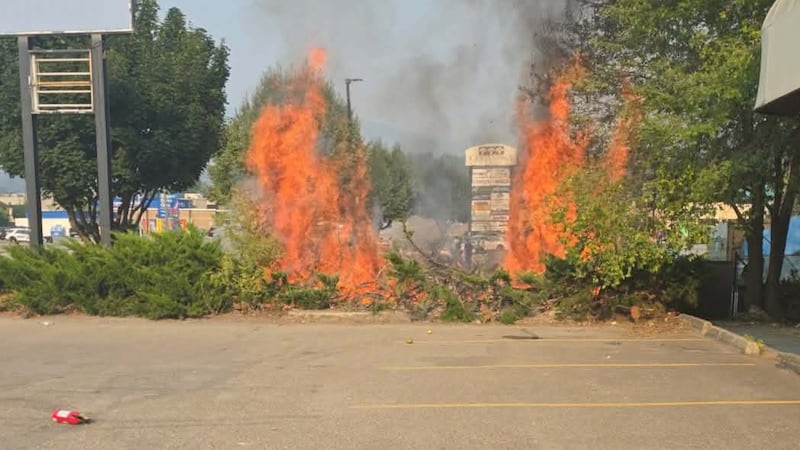
Brush fire in Salmon Arm appears ‘deliberately set’: RCMP
Authorities have arrested a suspect following a brush fire in Salmon Arm over the weekend that investigators believe was sparked on purpose.
Emergency crews responded to the fire Saturday evening along the Trans Canada Highway, arriving to find brush “fully engulfed in flames and threatening a nearby business,” the Salmon Arm RCMP said in a news release Monday.
Investigators determined the fire was “deliberately set,” and identified a suspect who was taken into custody the following day without incident, the detachment said.
Andrew Weichel, journalist, CTVNewsVancouver.ca.
Family loses home of 19 years
Kyla Gaudiuso, a Summerland wildfire evacuee, says her husband and her children are “devastated” by the loss of their home of 19 years.
In an interview with CTV News Channel on Monday, she says as she loaded up the car with her car and her family passports, her husband tried to videotape their house before they left.
“As soon as I left, I was met with absolute pandemonium,” she said. The video she provided to CTV News was what she described as “what felt like an absolute hurricane.”
“The morning after we evacuated, I received a video and a photo of the ridge my house lives on. There’s nothing left, there’s nothing that could have survived that fire,” she said. “
Gaudiuso said her family is still trying to process everything.
“Our kids are devastated,” she said, adding that sentimental items like her son’s blankie and her daughter’s stuffed animal are lost.
“Everything I saved from my future grandkids is gone. Everything I saved for my future grandkids is gone. Everything I inherited from my parents that passed and my grandparents that passed is gone,” she said.
“Every time we think of something, it’s just another hit to our emotional capabilities.”
Hunter Crowther, journalist, CTVNews.ca
Off-roading banned in parts of B.C.
The B.C. government has banned off-roading in many parts of the province due to elevated wildfire danger—and scofflaws have been warned they will face fines of up to $1,150 if caught.
The temporary ban applies to all-terrain vehicles, side-by-side vehicles and motorcycles on provincial Crown land in the Kamloops and Southeast fire centres, as well as parts of the Cariboo and Coastal fire centres.
Full details are available on the B.C. Wildfire Service website.
Forests Minister Ravi Parmar said his message for off-roaders is simple: “Don’t be stupid.”
“We are in the midst of a very challenging wildfire situation here in British Columbia,” Parmar said at a news conference Monday. “Any additional spark can cause devastation for communities.”
Andrew Weichel, journalist, CTVNewsVancouver.ca
Evacuees turn camper van into temporary home
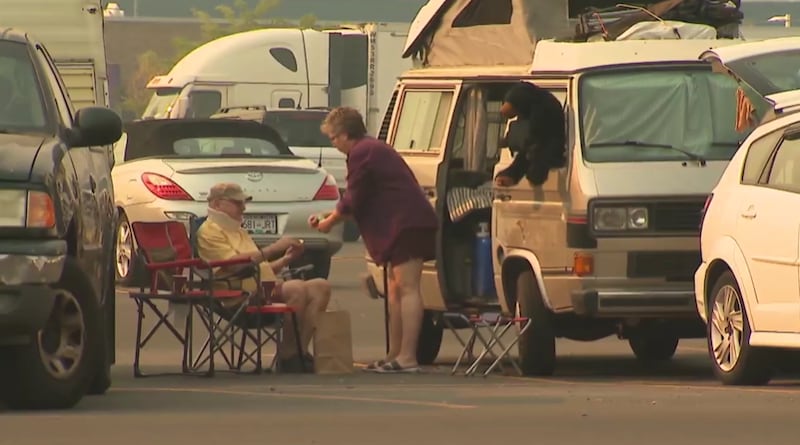
Jim Harnden and Tracey Colman have spent many years travelling the country in their camper van, which has now become a temporary home in a Walmart parking lot after a wildfire tore through their community.
Still, the couple is making the best of it.
“We’re safe. We’re as safe as we can make it,” Harnden told CTV News on Monday. “Life gives you lemons, you make lemonade,” Colman added.
The couple is among nearly 20,000 people forced from their homes as the Bald Range wildfire raced through the hills west of Summerland, B.C.
Harnden and Colman fled Friday night as flames threatened the community overlooking Okanagan Lake.
Video captured by residents showed homes burning as families made their escape.
“It was like a freight train coming at you,” said Blair Dufty, who watched the fire overtake the area where he had lived for two decades.
“The heat, everything. It’s just unexplainable. You can’t really explain how fast the stuff happened. One minute there was some smoke, the next minute there’s flames everywhere. (It) just rolled in.”
Dufty said there was no time to save much.
“We grabbed a few things, socks, a couple of passports, IDs. There wasn’t enough time to really salvage much.”
Andrew Johnson, national correspondent, CTV News
Alberta firefighters in B.C.
With more than 100 active wildfires burning across B.C., Alberta has sent nearly 200 firefighters to support crews.
Alberta’s ministry of forestry and parks said 186 firefighters are already out west with 40 more on the way Tuesday. Aerial resources are also being lent to B.C., including two air tankers, two helitankers and one helicopter.
There are also 45 support staff assisting, including an incident management team that is leaving for B.C. Monday.
Angela Amato, digital journalist, CTVNewsEdmonton.ca.
‘It was apocalyptic’: Resident on wildfire evacuation
Summerland evacuee Keegan Sluis recounted his “brutal” wildfire evacuation experience to CTV News Channel on Monday, saying he’s “never seen anything like that.”
“It’s my first time really experiencing a wildfire that close. I mean, basically, at about 5:36 p.m. (Friday night), I noticed the fire from behind the town of Summerland,” Sluis said, adding that “at first, I didn’t really take it that seriously.”
What Sluis originally wrote off as no “big deal” later escalated when he said a police officer knocked on his door to make sure he was awake.
“Basically (the wildfire) was apocalyptic by that point.”
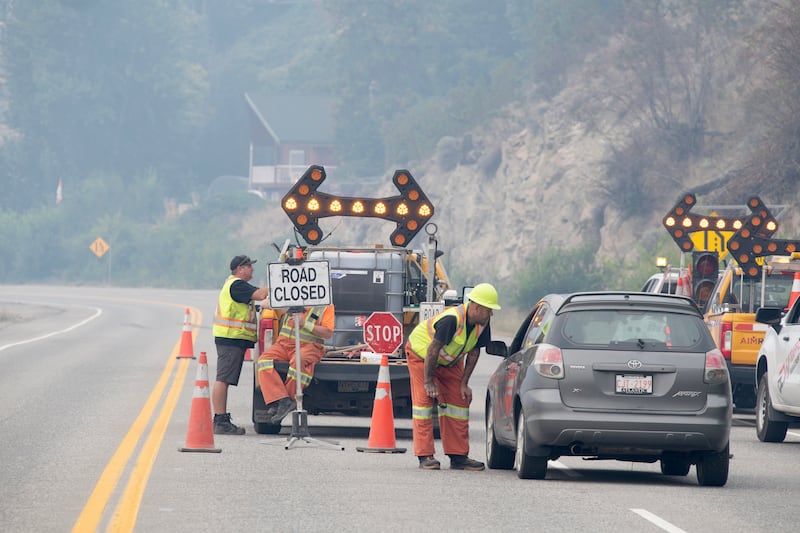
Sluis said when he walked outside, his eyes along with every breath he took burned, and he began coughing due to excess ash inhalation. That’s when he decided to pack up his 73-year-old mother along with the family’s most important documents and flee to Penticton.
As for the family’s home, Sluis says it’s still standing, but “we definitely have heard about some of (the) outskirt areas that have had some pretty severe losses”
“I can’t believe what those people are going to have to go through in order to get their lives back together,” he said.
Kayla Thompson, journalist, CTVNews.ca
NASA aircraft flies over B.C. wildfires
A high-altitude research aircraft from NASA flew over British Columbia’s wildfires over the weekend in a bid to better understand weather events generated by large blazes.
Online aviation tracking shows the ER-2 plane flew back and forth over B.C.’s southern Interior more than a dozen times on Saturday on a flight of more than six hours that took off from Great Falls, Mont.

Data from the Flightradar24 website shows the plane spent about four hours at an altitude of 60,000 feet over the Clinton area, where the massive Pear Lake wildfire has been burning.
It also swung east over Lake Revelstoke before returning to U.S. airspace.
NASA says on its website that the ER-2 is researching pyrocumulonimbus clouds, which it describes as “one of the least understood forms of severe weather on Earth.”
The Canadian Press. Read the full article here.
Bald Range wildfire damage still being assessed
Provincial officials say the Bald Range wildfire near Summerland, B.C., grew by about one to one and a half kilometres along its northwestern and southern flanks overnight.
The fire, which has destroyed homes and forced thousands to flee to shelters, measured approximately 156 square kilometres on Monday morning.
The B.C. Wildfire Service says better visibility is expected through the day with shifting winds, but thunderstorm activity is possible to the north of the fire zone, near Kamloops.
The agency says air tankers completed retardant drops Sunday before poor visibility grounded the planes.
Eight helicopters were also assigned to the blaze Monday, with air tankers and water skimmers providing support as conditions allow.
Authorities are still assessing the extent of the fire damage in the area.
“Confirmed information about structural impacts will be shared by the appropriate regional districts and local authorities as it becomes available,” the wildfire service said.
Five evacuation orders remain in effect, including for the municipality of Summerland, while four areas are under evacuation alert, including the districts of Penticton and Peachland.
Todd Coyne, journalist, CTVNewsVancouver.ca
Merritt closes trails, forested areas
Forested areas surrounding Merritt have been closed due to fears about human-caused wildfires.
Merritt Fire Chief David A. Tomkinson issued an order Monday prohibiting all uses of the forests “along the periphery of the municipality,” including hiking and biking.
“With the current conditions, limiting access and human activity in these areas helps reduce the potential for accidental ignitions,” Tomkinson told CTV News in an email.
“Given our limited local firefighting resources, preventing a fire start and identifying one as early as possible are especially important.”
Andrew Weichel, journalist, CTVNewsVancouver.ca
‘Really apocalyptic’: Family forced to flee
Carl and Mira Boucher barely spent two weeks in their new home in Summerland, B.C., before being forced to evacuate as a fast-moving wildfire spread in the region.
The Bald Range Fire was first reported late Friday evening on the western shore of Lake Okanagan and exploded in size, burning about 50 square kilometres in just a few hours.
Around 2:30 a.m. Saturday, a phone alert told the Boucher family, including the couple and their three children, to evacuate.
“There was no more power, no more water. And when we walked outside, it was like that moment, the smoke was so heavy and … the only light you see is the fire in the background,” said Carl, who is originally from Chicoutimi, Que.
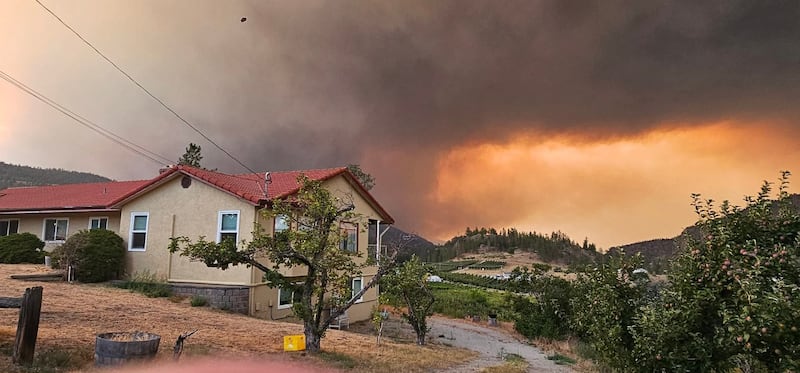
Speaking with CTV News, they said they never expected the fire to lead to the evacuation of their entire town of 12,000 people within hours.
“It was really apocalyptic. I mean, we really didn’t think it’s going to happen that quickly,” Mira added. “If you were outside more than 15 minutes, you’d have a bad headache. You’d get dizzy. It was not pleasant at all.”
Joe Lofaro, digital reporter, CTVNewsMontreal.ca.
Natural or human-caused?
Of the 102 active wildfires in B.C., 79 were caused by lightning and 19 by humans, according to officials as of Monday afternoon. The cause of four fires has not yet been determined.
The B.C. Wildfire Service says lightning strikes ignite most wildfires in the province, accounting for about 60 per cent every season. Human activity, meanwhile, causes an estimated 40 per cent.
The agency says that while natural or lightning-caused wildfires cannot be prevented, the same can’t be said for those started by humans.
“The easiest way to fight a wildfire is to prevent it from starting,” it says, adding that people start wildfires in several ways, either by accident or intentionally.
“People who undertake illegal activities that cause wildfires could be found liable for wildfire suppression costs, damage to Crown forests and other forest or land resources, fines or administrative penalties and reforestation costs,” the province’s website says.
Fire origin and cause specialists are hired to conduct “complex” investigations, which may take “weeks or even months to complete,” the B.C. Wildfire Service adds.
Information about wildfire regulation fines can be found here.
Ethan Morneau, national digital producer, CTV National News
Information officer livestreams fire
A Regional District of Okanagan Similkameen information officer had to evacuate with his family when the wildfires reached Summerland, B.C.
Eric Thompson told CTV News Channel Monday that he was called into the emergency operations centre as soon as the wildfire broke out. He decided to use YouTube and livestream the wildfire instead of getting the information out via a news release.
“I called my wife; she was already making arrangements, and I went through that process of evacuating, and while still knowing that when that wrapped up, at some point I was going to be coming back in here to continue doing my job,” he said.
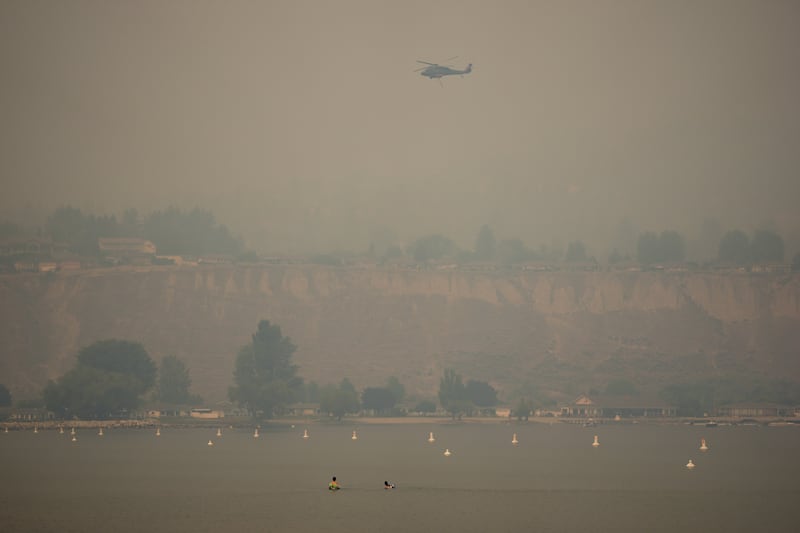
Thompson called himself “lucky” because his family is safe and happy, which makes it easier for him to focus on his responsibilities while doing his job.
“I think I’m just trying to pause and keep it in perspective,” he said, adding that his heart “goes out” to the people who have faced losses due to the wildfire.
“We’re trying to do is prevent loss of life and make people comfortable as well, but just trying to assess the damage is a challenge with an active wildfire.”
Aarjavee Raaj, journalist, CTVNews.ca
Chief of Penticton Indian Band says alerts create ‘concern and panic’
The expanded evacuation alert has created a “lot of concern and panic,” Chief of Penticton Indian Band Greg Gabriel told CTV News Channel on Monday.
“Our evacuation alert right now — we only have five homes for now that have been placed under evacuation order.
The rest remained under evacuation alerts,” Gabriel said, adding that the smoky conditions in the past couple of days have been “challenging” for elderly residents and people with medical conditions.
According to the Chief of Penticton Indian Band, the smoke from the burning wildfires is preventing air support and air attacks and is “always concerning.”
The community has “enough” firefighting equipment and personnel who are supported by the B.C. Wildfire Services and surrounding areas, which Gabriel described as “amazing.”
“We’re always keeping a close eye on the fires throughout the day and throughout the night,” he said, adding that the wildfires he’s experienced in the past have been “different” than now.
“The climate change, the dryness we’re experiencing over the years … it just increases the volatility of these fires,” Gabriel said.
Aarjavee Raaj, journalist, CTVNews.ca
Woman who lost home to 2021 wildfires braces family for evacuation
A woman who was forced to evacuate the Okanagan Indian Band Reserve said that while her home remains safe, many of her relatives have lost their own.
“The fire still remains (in) like a really good hotspot above our house. It’s about four kilometres away, but our place is still there right now,” Tiffany Wilson told CTV News Channel on Monday.
“So we came to Penticton to get away from the fires, and now we’re on an alert here.”
The Penticton Indian Band Reserve, where Wilson and many evacuees are sheltering, is now under its own ”Urgent” level wildfire alert.
Wilson, who lost her home in a 2021 due to the White Rock Creek Fire, is familiar with evacuation precautions.
“We’ve packed all of my aunts and my sisters and their family’s important things like their documents, their medications, and clothes for a few days. We have water with us in case something happens with the water,” she said.
Though Wilson said the Summerland fires are reminiscent of the 2021 White Rock Creek Fire, she added that first responders and the efforts of the Penticton Indian Band are keeping her hopeful.
“I really feel that there’s like hope for this fire. There’s a lot of boots on the ground here, especially community members,” she said.
Kayla Thompson, journalist, CTVNews.ca
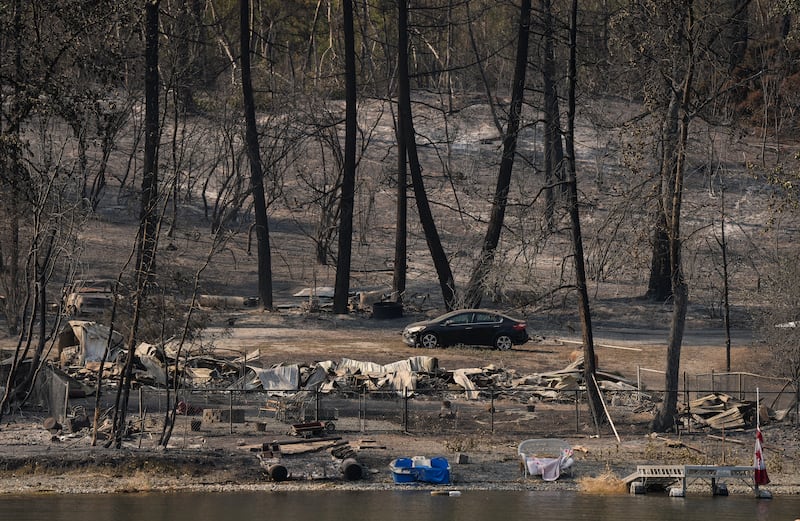
Lightning a concern for crews
B.C. wildfire crews are bracing for lightning-caused wildfire starts.
There’s “high potential” for such starts particularly in the central Interior and the Okanagan because of limited precipitation and dry lightning, an updated provincial situation report on the B.C. Wildfire Dashboard said Monday.
“Elevated temperatures and heightened wind gusts will continue to linger in the Okanagan and southeastern regions of B.C., which can increase fire behaviour,” the update added.
During hot, dry weather, new ignitions can “establish and spread quickly,” the report said. Crews are especially concerned about smaller fires in steep terrain, where wind and slope alignment “can rapidly accelerate fire growth.”
While fires may appear manageable under these conditions, the report said, such blazes can quickly transition to higher intensity behaviour.
Ethan Morneau, national digital producer, CTV National News
Defence minister says military ‘prepared to assist’
National Defence Minister David McGuinty said the military is prepared to assist with the British Columbia wildfire response if called.
Speaking at a news conference in Ottawa on Monday, McGuinty said the B.C. government has asked Eleanor Olszewski, the minister of emergency management, for federal assistance after declaring a provincewide state of emergency.
“That’s the appropriate channel through which provinces make the ask,” McGuinty told CTV News. “It’s now really a question of assessing hour by hour, as we have been doing all weekend, most of last night, to see what the status is.”
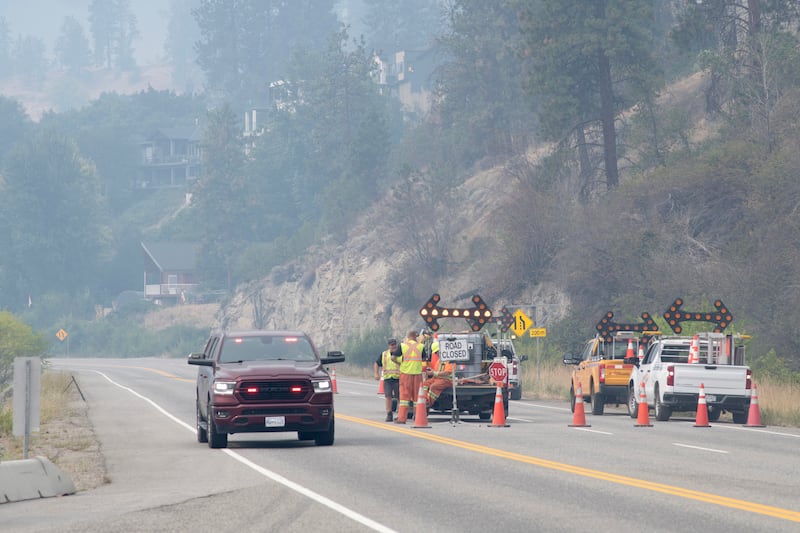
At least one death has been attributed to the Bald Range wildfire that has forced thousands to flee their homes near Summerland.
“The Canadian Armed Forces are at standby—are in direct, constant contact with our government operations centre, our emergency preparedness folks, the B.C. government, their officials,” McGuinty said.
“So, we have not yet received a formal request for assistance directed from emergency preparedness to the Canadian Forces. Should we do so, we are prepared to assist.”
Todd Coyne, journalist, CTVNewsVancouver.ca
Feds to provide assistance ‘for as long as it takes,’ minister says
A request for federal assistance to provide shelter and accommodations for people who have been forced to flee their homes has been approved, according to Emergency Management Minister Eleanor Olszewski.
“As a result, I have tasked federal officials, led by the Government Operations Centre at Public Safety Canada, to work with the province to ensure support reaches those who need it most,” Olszewski said in a post on X Sunday.
Thanking firefighters, first responders and volunteers, she said she approved B.C.’s request on Saturday night, adding that the federal government will support the province and those impacted by the wildfires “for as long as it takes.”
Ethan Morneau, national digital producer, CTV National News
Summerland residents concerned about returning to town: Mayor
The stories coming from residents evacuated to Penticton following an explosive wildfire that claimed the life of an 80-year-old resident were described as “harrowing” by Summerland, B.C., Mayor Doug Holmes.
Holmes told CTV Your Morning early Monday that as far as he knew, the fires were still burning out of control, and the town remains shut while the B.C. Wildfire Services tackle the blaze.
“This fire moves so fast that we just didn’t get any warning. Normally, when they see a fire coming towards the community, you get what they call an alert (to) tell them it might be possible that you might have to be evacuated, so pack your bag and get ready,” he said.
“We didn’t get the alerts for this. We just we were just told to leave.”
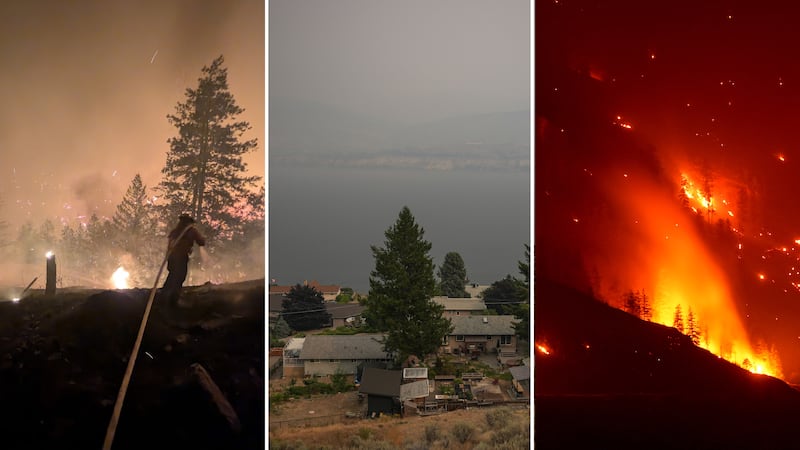
He said the residents are concerned about when they can return to their homes. Discussions about re-entry into the town are underway, the mayor said, but there are multiple safety checks to complete before they can return safely.
“The problem is that once the fire is under control, we can’t just all go home because we need to make sure the town is safe. We have to make sure infrastructure is safe,” Holmes said.
“There’s going to be power lines all over the place. The water supply is contaminated. We know there’ll be pockets of hotspots here and there, and so, that’s going to take some time to go neighbourhood by neighbourhood to make sure that it’s safe to return.”
Aarjavee Raaj, journalist, CTVNews.ca
Summerland wildfire claims 80-year-old’s life
Mounties said an 80-year-old woman has died as a result of the Bald Range fire in Summerland, B.C.According to Penticton RCMP, she was attempting to evacuate with a family member from her home in the Meadow Valley area when she died suddenly.
Another evacuee attempting to flee from the rapidly growing fire saw the woman and reported her death just after 1 a.m. on Saturday, police said.“Officers are working closely and providing full supports to the impacted family, who are asking for privacy at this time,” Supt. Beth McAndie said, in a statement.
Mounties believe the woman’s death to be a result of the wildfire, but the B.C. Coroners’ Service is investigating further.
James Paracy, journalist, CTVNewsVancouver.ca. Read the full article
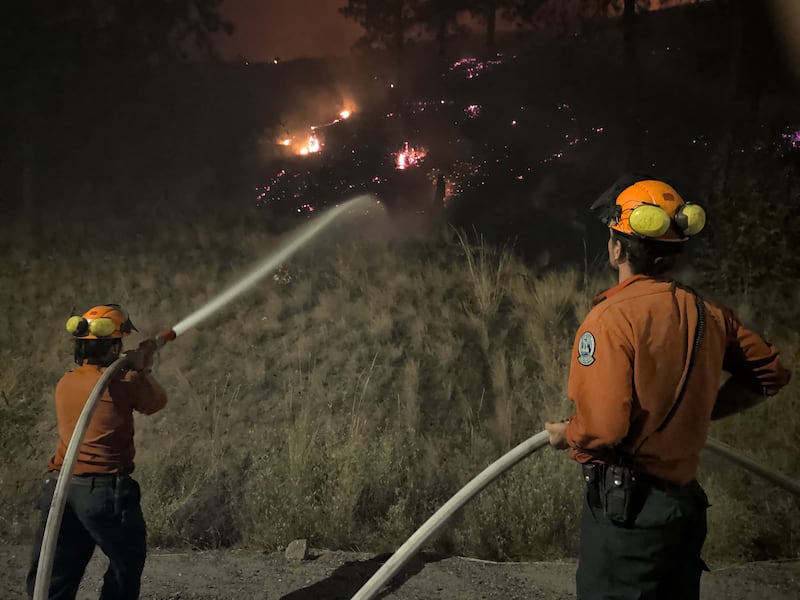
‘Doing their best’: Executive director of GlobalMedic
Local crews “are doing their best,” they need better equipment and apparatus to fight the fires in B.C. on the ground, Rahul Singh, executive director of GlobalMedic, told CTV News Channel Monday.
“Those departments are not really well-equipped for this because often they have a lot of people and limited apparatus,” Singh said.
“What we’ve been doing, is trying to unlock and unpack their existing capacity by giving them more fire trucks.”
GlobalMedic is distributing 1,000 litre fire skid units to convert pickup trucks into firefighting trucks, which can help crews fight spot fires effectively, he added. So far, 170 fire skid units have been given out to the province.
“We just got to get out there and get those spot fires out, because if they continue, they’re going to grow. They’re going to go together, and then they’re going to wipe out the town,” Singh said, adding that the fire crews tackling them are doing everything they can.
“Getting these things under control is really about trying to just meet them head on, and then containing them,” he said.
Aarjavee Raaj, journalist, CTVNews.ca