U.S. President Donald Trump’s push to overhaul childhood vaccine recommendations could make an already chaotic information environment around immunization even more confusing, including for Canadians, according to one health law expert.
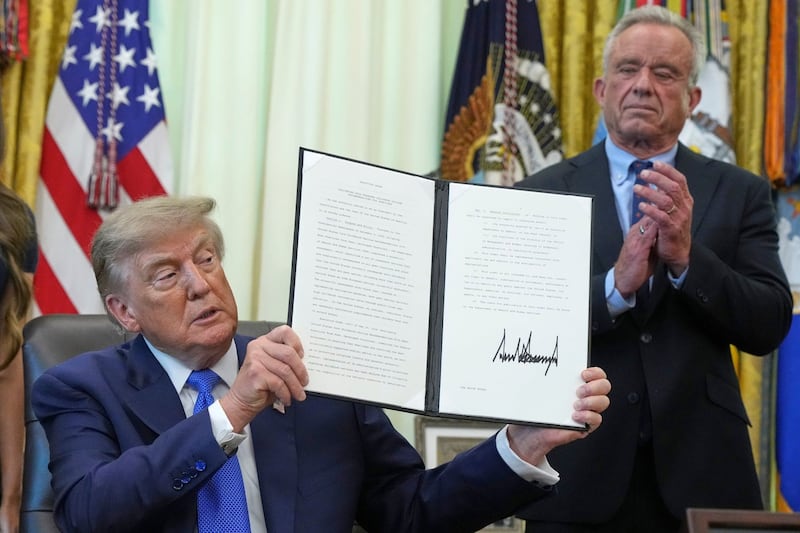
Trump signed an executive order Monday, calling for changes to the U.S. childhood vaccination schedule, including a plan to offer separate measles, mumps and rubella vaccines for children in the United States, rather than the combined MMR shot currently used.
Trump described the order as a “major victory for parents rights, religious and constitutional rights, and for the gold standard science.”
Timothy Caulfield, a research director at the Health Law Institute at the University of Alberta, said the move is anything but a victory.
“It’s a disaster. It’s really, really disappointing,” Caulfield said in an interview with CTV News Channel Tuesday. “There is absolutely no evidence, none to support this move by Trump and the administration.”
Caulfield said the idea that children’s immune systems can be overloaded by receiving multiple vaccines is a common argument in anti-vaccine circles, but there is no evidence to support it.
He also warned that separation of vaccines into individual appointments could create another barrier to vaccination.
“If you have to have a busy parent come to the office three times, is that gonna increase vaccination hesitancy? Absolutely,” he said. “We need to reduce barriers, not increase them.”
The timing of the U.S. announcement is particularly concerning, Caulfield said.
“We’re seeing outbreaks around the world of infectious diseases, including measles,” he said. “This is just the exact wrong move at the exact wrong time.”
‘It’s going to impact Canada’
The implications could extend beyond the United States, Caulfield said, because vaccine misinformation does not stop at national borders.
“Yes, this is primarily happening in the United States, but it’s going to impact Canada, and I think the world,” he said.
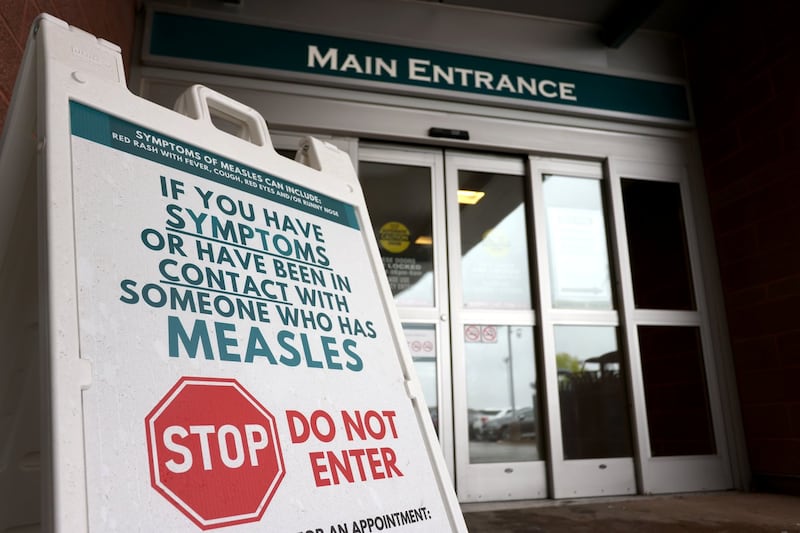
Canada is already dealing with a significant measles resurgence. It lost its measles elimination status in November 2025 after more than a year of ongoing transmission, with the Public Health Agency of Canada saying the outbreak was largely occurring among unvaccinated and under-vaccinated communities.
Caulfield said the broader problem is that parents are increasingly being asked to navigate competing claims about vaccines, despite an enormous body of evidence supporting their safety and effectiveness.

“Vaccines are probably the most studied biomedical interventions in human history,” he said. “Not only are they the most studied, they’re one of the biomedical interventions that has ongoing surveillance — not just in Canada, but around the world.”
The World Health Organization pushed back on Trump’s announcement Tuesday, defending the scientific process used to establish childhood immunization schedules.
Caulfield said the international response to Trump’s announcement is encouraging, but warned it will not necessarily prevent misinformation from spreading.
“We know that parents are increasingly feeling confused in the United States, but really around the world, about vaccines,” he said. “We’re seeing vaccination hesitancy rise absolutely everywhere, and that is a direct result of misinformation like this.”

