MONTREAL – Montreal’s Police Chief Fady Dagher says it will likely take seven to 10 years to bring about a culture change and rebuild trust after allegations of racist and hateful acts by his police officers.
Dagher is pledging to work with citizens and community groups on a concrete plan of action to be released by November that will pave the way for change.
“I am not going to tell lies. The reality is that it is going to take time and it’s going to be difficult,” said Dagher in an interview with CTV News Wednesday.
The police chief acknowledged that despite more than 35 years of experience in police work, during which he both used racial profiling and was a victim of it, he was surprised by the allegations that surfaced earlier this summer.
Dagher was born in Ivory Coast to parents of Lebanese origin.
“It was one of my nightmares to discover that kind of pure racist behaviour by cops,” he said. “I didn’t expect it, I didn’t see it coming. I didn’t expect to see this behaviour happening in the police department.”
On June 12, Dagher announced in a late-night news conference that 16 of his officers from Station 39 in Montreal North, an ethnically diverse neighbourhood, were under investigation. Three of the officers have now been suspended, and an entire unit has been disbanded.
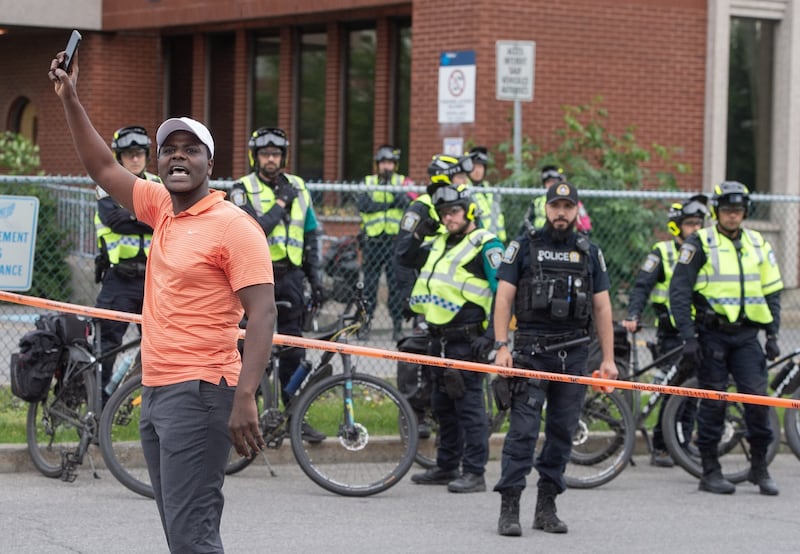
Denunciations by fellow officers led to the disciplinary actions. An allegation that is still under investigation and has not been proven suggests some racialized citizens had their dreadlocks cut off and turned into trophies.
“You can’t touch the hair, especially in the black community,” said Dagher. “You don’t touch that, so it is a very deep pain in the community.”
That pain was on full display at a public security meeting held at Montreal city hall on Tuesday night. More than 80 citizens asked Dagher questions about a plan to address discrimination.
Many citizens said they had already waited years for the police force to deal with systemic racism within its ranks, and some demanded a public inquiry.
“It’s a scandal, it’s like an absolute abomination and we deserve it. We have to eradicate the systemic racism to the roots,” says Jennifer Sydney. She says she is a mother of two boys and that when it comes to the Montreal police, she doesn’t feel safe.
Nadia Senecal is a single mother to five children, three of them boys. She said she attended the meeting to ask the police a question.
“What am I supposed to tell the kids? Police are there to protect you? But the police are not there to protect you,” she said, adding that Dagher’s answers were too vague, and that when fellow police officers denounced racist acts, the force responded, but when members of the Black or Arab communities speak up, they are ignored.
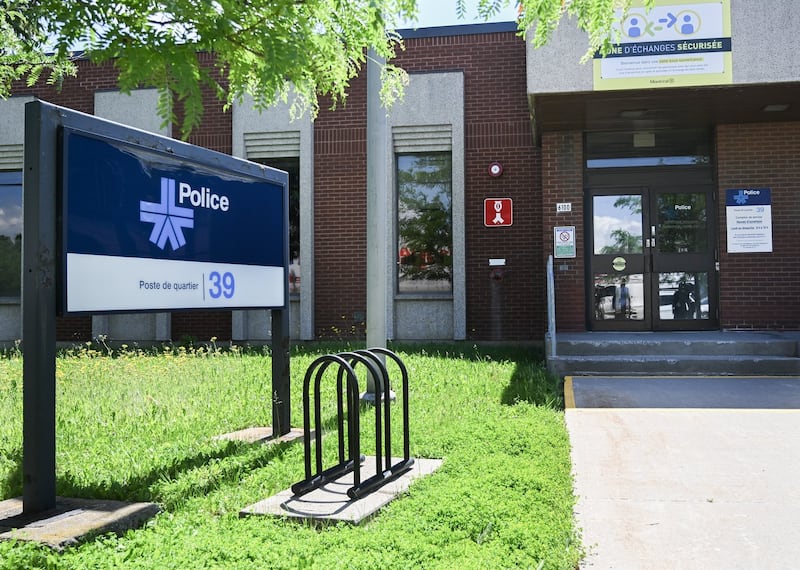
“It was a tough meeting. Very emotional. I felt a lot of frustration, (a lot) of rage,” said Dagher.
But he said he hopes that citizens will judge the force by the actions that were taken after the latest allegations of racism came to light earlier this year.
“There is no place for that behaviour. We suspended the cops right away. So, when they say ‘how can we trust you?’, I say that we opened the investigation in March and that by June 11, we found that the allegations were solid and by the next day we dismantled the unit. We disarmed them. We suspended some of the cops. How much more can I do? This is transparent. And it was police officers from the inside who flagged that kind of behaviour. This is a change in culture,” said Dagher.
He added that a committee will be set up and that the community and the police force will pilot a project together to find ways to bridge the divide and address racism. He said he has already received some interesting recommendations that will be studied.
“This is where I have hope,” said Dagher. “And I told citizens ‘let’s meet again in 2027, in one year, and let’s talk about Station 39.’ And I am hoping that we will be greatly surprised.”
Dagher expects to unveil recommendations to address racism in November.

