Ancient letters and a document recording the sale of an enslaved man are among roughly 20 papyri now on display at the University of Manitoba, offering a window into everyday life some two millennia ago.
The exhibit, called “The Ancient Inbox,” showcases handwritten documents on papyrus—an ancient writing material originating in Egypt—on loan from the University of Michigan Papyrology Collection.
“The ancient world comes to life, and you very quickly realize when you’re faced with the tangible remains of ancient peoples that they were real people,” said Mike Sampson, a professor in the department of classics at the University of Manitoba.
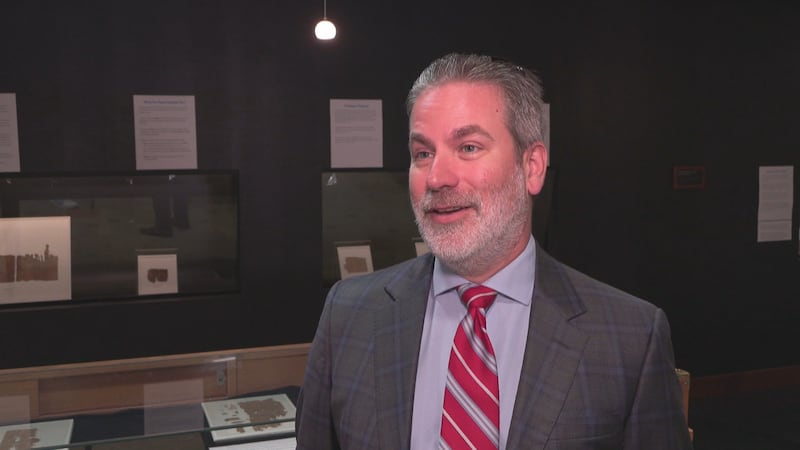
From June to July, the department hosted the Summer Institute of Papyrology, offered by the American Society of Papyrologists, bringing more than 20 participants and guest lecturers from around the world to Winnipeg to study and decipher the documents. According to the university, it’s the first institute of its kind held in Canada since the 1970s.
“Understanding the past is important, and when you’ve got the best kinds of documentation, your understanding can be enriched and improved,” Sampson said.
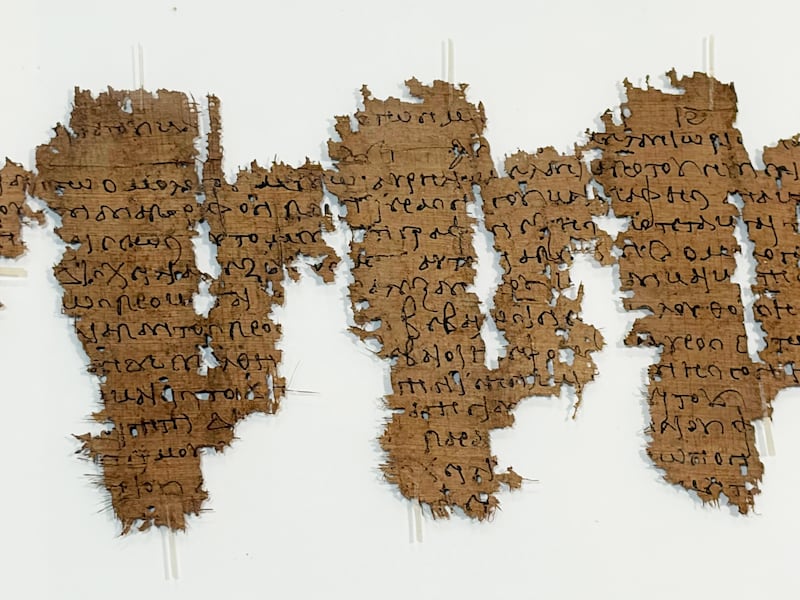
All of the papyri on display, at the University of Manitoba Archives and Special Collections, are written in Ancient Greek and date to the period of Roman rule over Egypt, which lasted from 31 BCE to the 600s.
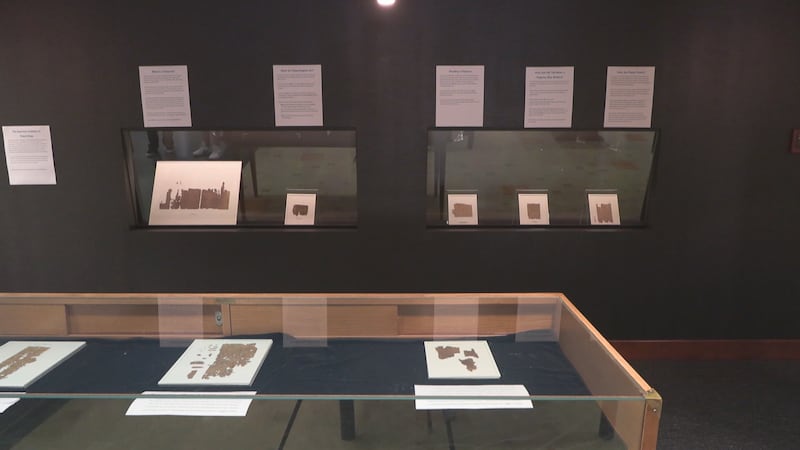
Among the documents are a court record detailing a labour dispute, and a marriage contract naming the couple and outlining the bride’s dowry and the groom’s financial obligations.
Also on display is a contract for the sale of an enslaved man, which an interpretive sign notes was a “relatively common thing” in the Roman Empire. The contract, dated Nov. 13, 246 CE, details the sale of 20-year-old Alexandros for 2,000 drachmas, a historical currency.
“They provide us with insight onto all aspects of Greco-Roman life in the Egyptian countryside over hundreds of years, both at the level of the government bureaucracy, but also at the level of the individual, the mother and the father living in a village in the countryside, trying to grow crops,” Sampson said.
“They also give us a really cool insight into just everyday folks who are living their lives and what it was like to be alive, as I say, in the countryside in antiquity.”
Attendees can also expect to see petitions and what Sampson described as “really mundane material” that could just as easily be found in a 21st-century junk drawer.
“But in antiquity, if it was worth writing down, it means it was important for one reason or another,” he said. “And so, as we sort of pour through all these materials, we might learn something about how the estate management of a particular crop was operating, or how goods or people are being moved around the Egyptian countryside.”
Because the papyri are handwritten and frequently cursive, the exhibit notes the shapes of letters don’t always resemble the forms they’re expected to take. Ancient Greek was also written without spaces between words or punctuation between sentences, adding another layer of difficulty.
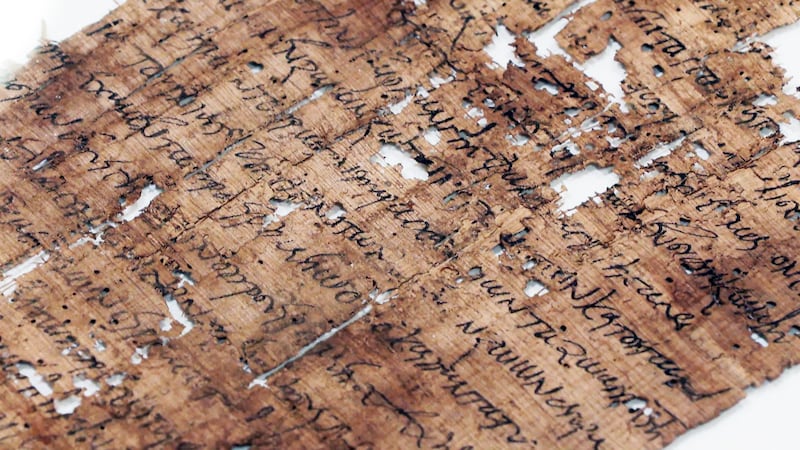
To read the documents, the exhibit explains, a papyrologist—someone who studies ancient texts written on papyrus—needs an excellent understanding of the Ancient Greek language and a deep familiarity with the cursive scripts used over hundreds of years.
“I find that when I bring students in to see these kinds of materials or any archeological objects, the vividness of their encounter with antiquity garnishes interest. It makes people curious,” Sampson said.
“And that’s why we need scholars and papyrologists to explain and interpret the abundant resources that have survived for us.”
Sampson said he also worked with two University of Manitoba students who did the largest part of the work of designing and organizing the exhibit for the public.
The exhibit runs until Sept. 30.

