OAKBANK, Man. – Canada’s beekeeping industry is bracing for a potentially devastating blow as a proposed 50 per cent U.S. tariff on Canadian natural honey approaches its Aug. 19 deadline.
Unless Canada and the U.S. reach a deal, the tariff is set to take effect Wednesday.
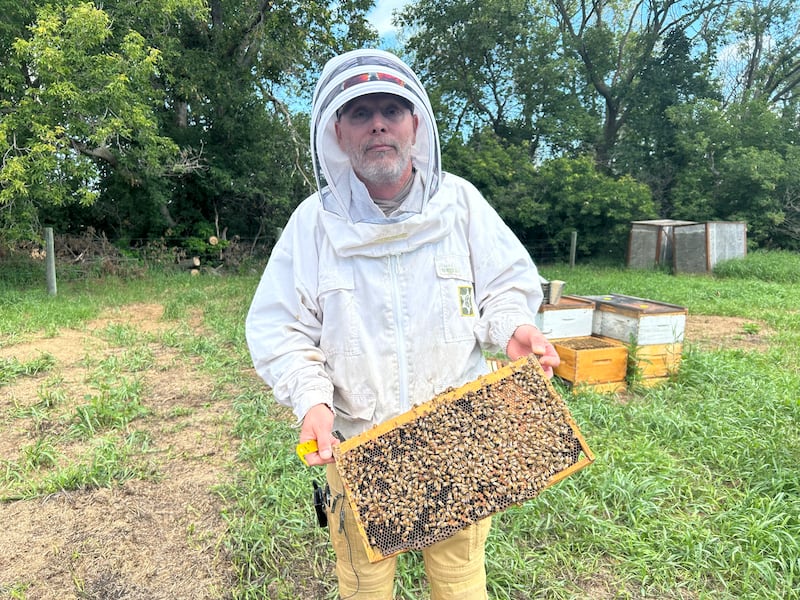
Manitoba beekeeper Chris Bartel is watching closely.
“Obviously, it’s going to have an impact on the Canadian industry,” he said.
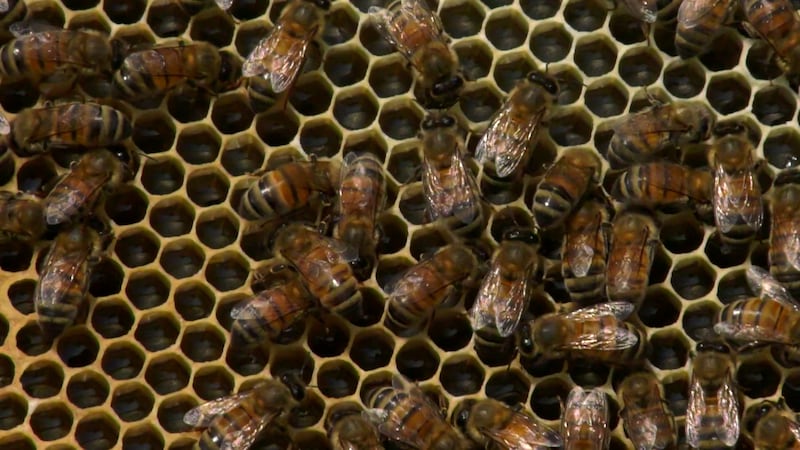
Bartel, a third-generation farmer, runs Bartel Bee Co. near Oakbank about 20 kilometres northeast of Winnipeg. He operates 32 hives which hold up to 50,000 bees per colony.
He says the industry continues to face serious challenges, including the declining health of bee colonies.
Bartel says added stress, like 50 per cent tariffs, will have serious ramifications for producers.
“If this 50 per cent comes on, and it’s not just a negotiation tactic, and it comes on and stays on, it could actually cause some farms to be lost,” he said. “For the industry as a whole, I don’t think it will be a positive thing.”
Canada produced 84.1 million pounds of honey last year, according to Statistics Canada, a 3.81 per cent increase from 2024.
With higher volumes and lower prices, the total national value of the honey harvest in 2025 increased 6.4 per cent to $241 million, up from $227 million the previous year. Alberta leads the country in honey production, while Manitoba is in second place.
Data also shows that over half of the country’s exports in that same year (52.5 per cent) went to the U.S.
Industry leaders fear that reliance on the American market could leave Canadian producers particularly vulnerable if the tariff takes effect.
“My producers have said this is devastating, and it could put the industry out of business,” said Connie Phillips, executive director of the Canadian Beekeepers Federation (CBF).
The group is calling on Ottawa to provide immediate emergency support if the tariffs were to come into effect Wednesday.
The organization said Monday the tariff could threaten the collapse of critical agricultural infrastructure for an industry that is already in dire straits, during what is a critical time for producers as it’s in the middle of honey harvest.
Phillips says some producers have started cancelling honey contracts.
“Cancelling contracts means that beekeepers will not have a market for their honey so they will have no revenue basically, because the honey production is the main source of revenue for most beekeepers,” she said.
“If our beekeepers can’t sell their honey, then they can’t pay their bills and they start going out of business.”
Phillips said the consequences could extend far beyond the beekeeping industry.
“The bigger impact is kind of a cascade of what happens. Beekeepers start going out of business, we have less bees and the more important job that bees do, than producing honey, is pollinating food crops, and so it begins to affect the cost of food, and food security over the long haul,” she said.
The Canadian Honey Council (CHC) has also warned of the potential impact. In July, chair Jake Berg said the organization believes the tariff may be part of a broader U.S. negotiating strategy.
“This action may be a bargaining tool to get Canada to accept a trade deal that is more favourable to the U.S.,” said Jake Berg in a statement in July. “It is clear that honey is not a source of irritation. They are just trying to hit as provocative and impactful a list as possible.”
The United States is by far the largest exporter of honey for Canadian beekeepers.
Some economists say the tariffs could force Canadian producers, who heavily rely on the U.S., to look for new international markets – a process that could take time.
“It might take six months to a year before beekeepers could find customers that are in Asia, Europe, Africa or South America,” said Shiu-Yik Au, an associate professor in the accounting & finance department at the University of Manitoba.
“It could be devastating for the economy here (Manitoba), as well as for the rest of Canada.”
“Consumers are not going to pay a 50 per cent premium for Canadian honey, and neither are Canadian producers able to absorb a 50 per cent tariff on their margins, so we might see a cessation of trade if there is tariffs on honey,” he said.
Au says he is hopeful a deal could be made before the deadline is up.
“Trump has always used a negotiation tactic, maximum threat, and then when it comes to actually executing the threat, sometimes he’s much more likely to be reasonable, so we see that in a lot of his negotiations,” he said.
“I hope we can come to a deal so we can avoid all this, because this kind of chaos is bad for beekeepers.”

