For years, the message was simple: if you start antibiotics, finish the course.
But a new online survey study of 1,475 U.S. adults suggests that message may have left many people with an outdated idea of what an appropriate antibiotic course actually looks like.
The study, led by Alistair Thorpe, PhD, a research assistant professor in population health sciences at the University of Utah, examined how U.S. adults view antibiotic treatment durations and adherence.
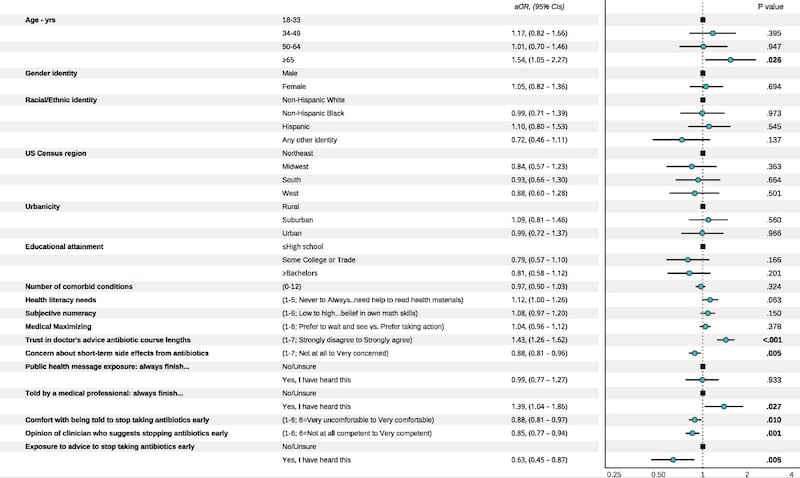
According to the research, 60 per cent of respondents preferred antibiotic courses lasting seven days or longer, while 88 per cent said they had heard and agreed with the familiar message to “always finish your antibiotics.”
The findings point to a disconnect between public perceptions and the way antibiotic treatment is evolving.
The meaning of ‘finish the course’ is changing
In an interview with CTVNews.ca, Dr. Alon Vaisman, a Canadian infectious diseases and infection control physician, said there is an important distinction between telling patients to complete their medication and telling them that antibiotics should always be taken for a long time.
“It’s important to make a distinction between what is prescribed to you and what are the recommended courses of antibiotics that have been changing and evolving in the last few years,” Vaisman said.
He referred to urinary tract infections as an example. Treatments that once commonly lasted seven to 14 days can now be shorter in some cases, as research has increasingly found that shorter courses can be just as effective.
“It’s not so much to say that you shouldn’t finish the course that is prescribed to you, it’s more that research is now showing that shorter courses are as effective as earlier,” he said.
That means a patient prescribed a five-day course today should not assume they need to continue taking the medication for seven or 10 days simply because that was once common practice.
Why doctors want less antibiotic exposure
The move toward shorter treatment is not simply about convenience.
Vaisman says researchers are trying to determine how little antibiotic exposure is needed to effectively treat an infection, while reducing the potential harms associated with the drugs.
“Lots of studies looking at various syndromes and infectious diseases demonstrating that shorter courses are as effective as longer courses,” he said.
Those potential benefits include fewer medication-related side effects and a lower risk of contributing to antibiotic resistance.

Vaisman added the reason why these studies are conducted is to minimize the side effects associated with the drugs.
He said common side effects include an upset stomach and diarrhea, while kidney dysfunction can also occur. Dermatological reactions are also possible, although he described them as rare.
But antibiotic resistance is another major reason duration matters.
“The other main reason why we want to demonstrate shorter courses are as effective is to reduce the likelihood of resistance,” Vaisman said.
Longer exposure, particularly to broad-spectrum antibiotics, can create greater opportunity for resistant organisms to be selected.
Longer isn’t automatically better
The shift also challenges the long-standing assumption that more treatment must mean better treatment.
“This mantra of longer is better isn’t often true,” Vaisman said.
Researchers increasingly use what are known as non-inferiority studies to determine whether a shorter course achieves essentially the same clinical outcome as a longer one.
In other words, the question is not whether patients should receive less treatment simply for the sake of taking fewer pills. It is whether they can receive enough treatment to successfully clear the infection without unnecessary additional exposure.
Feeling better doesn’t mean stop early
There is one part of the old advice that remains important: patients should not decide on their own when to stop taking an antibiotic.
Vaisman said some infections can return if treatment is stopped prematurely.
He points to osteomyelitis, or a bone infection, which can still require about six weeks of treatment. A patient may feel considerably better after two or three weeks but stopping at that point can increase the risk of the infection returning.
“If you stop early, the likelihood of the infection coming back is increased,” he said.
The goal, Vaisman said, is ultimately to find the minimum treatment duration needed to eliminate the infection.
For patients, that makes the message a little more nuanced than the one many grew up hearing.
Finish the antibiotics you were prescribed but understand that today’s prescription may be shorter because the science has changed.

Methodology: The online survey study was conducted between March 21 to April 23, 2024. Respondents were recruited and compensated by Dynata, who emailed a single survey link to a pool of U.S. adults who have agreed to be invited to take part in online survey studies. Dynata had no role in the study beyond recruitment and respondent compensation. Participants were eligible if they were English-reading U.S. adults, aged ≥18 years. Eligibility criteria were determined from self-reported characteristics.

