


Marco Mendicino is a former federal prosecutor, federal cabinet minister for immigration and public safety and chief of staff to Prime Minister Mark Carney. He is now senior counsel at Cassels, Brock & Blackwell LLP. He is a political analyst for CTV News and a columnist for CTVNews.ca.
At some point in every high-stakes trade negotiation, there comes a defining moment when the leader of a country must decide whether the objective is simply to reach an agreement, or to protect the national interest.
Prime Minister Mark Carney faced that crucial test and made the right choice, recalling his negotiating team from Washington, D.C. after crunch talks collapsed with its American counterparts. If there was ever a moment to draw a line in the sand, this was it.
That said, the consequences are real. The newly imposed fifty percent tariffs will place targeted Canadian businesses and workers under considerable duress. Ironically, they will have a boomerang impact on the other side of the border, even if the Trump administration refuses to accept this reality. Their near-ideological belief that tariffs are a panacea for all that ails America is running into cold, hard economic data. This should shake their faith. Likely, it will not.
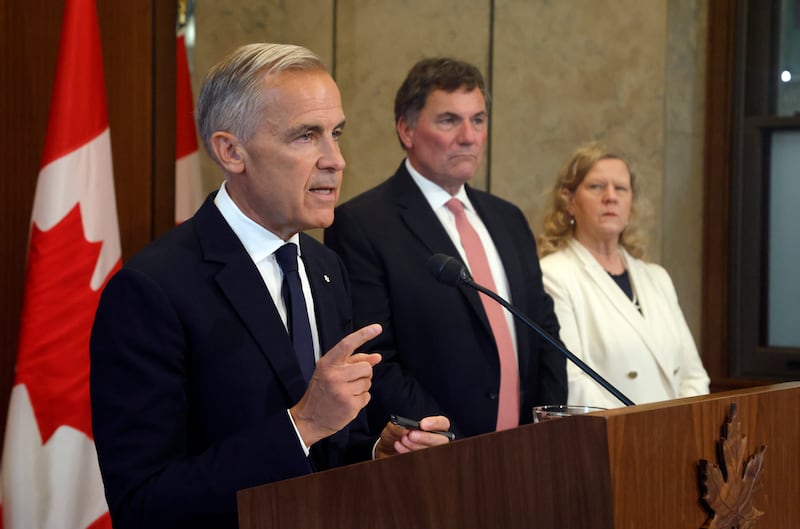
Fortunately, the prime minister has dedicated his professional life to solving economic crises. In his most pivotal speech since Davos, Mr. Carney returned to the upper foyer of the West Block to address the nation. There, in a sober tone, with clinical logic, and channeled emotion, he explained the breakdown in negotiations, and where the country goes from here. With architectural precision, the prime minister’s speech did four things.
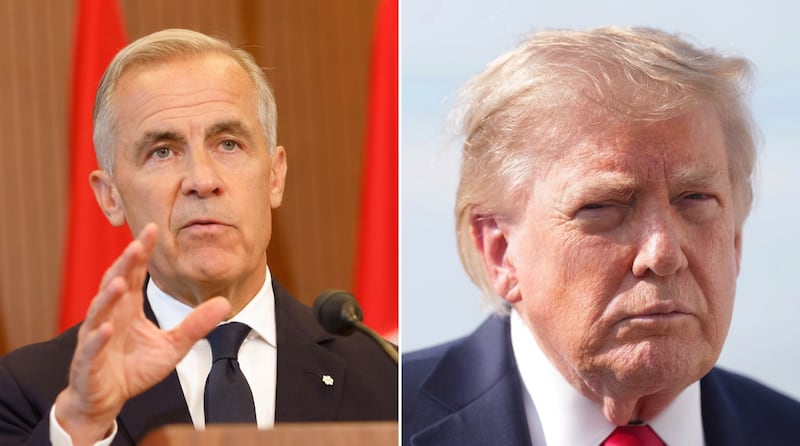
First, he drew a line in the sand.
For more than a year, President Trump has upended trade relations around the world, indiscriminately inflicting economic harm on friend and foe alike. In Canada, the imposition of higher tariffs hit the auto, steel, aluminum, and forestry sectors hardest, constituting a flagrant violation of CUSMA, our pre-existing trade agreement which the president himself had negotiated.
Nevertheless, Canadians came to the table in good faith to settle on the terms of a new economic partnership with the United States. After a series of fits and starts, the latest round of talks reached an impasse when the Americans shifted their position on a number of proposals that would continue to threaten our auto and cultural sectors, and attempted to constrain our sovereign right to trade with other countries. While citing these specific examples as unfair and uneconomic, the Prime Minister added that there was a cumulative dynamic that called into question whether any agreement could be relied upon at this time.
That was the crux of it. A deal “signed in pencil” is not a deal you can count on. It risks being a revocable transaction. However, the prime minister was not prepared to sacrifice on the altar of expedience key sectors of our economy, or our sovereignty.
Second, he mobilized the country for escalation.
The prime minister did not sugarcoat the escalation that would follow. Using his central banker “forward-guidance” format, Mr. Carney braced Canadians for more economic disruption, but committed further support for affected businesses and workers.
More striking was his candour about our own retaliation. The prime minister acknowledged plainly that dollar-for-dollar counter-tariffs would likely raise costs for Canadians and narrow consumer choice while in force. Governments rarely make these admissions publicly. It would have been far more convenient to promise that the punishment runs in only one direction.
However, in these moments, Mr. Carney has demonstrated his preference to level with Canadians, and that is a source of his credibility. Rather than pretend this trade war will be free of cost, the prime minister readied the country for a fight that could result in some pain. Eyes wide open.
Third, he left the door open to getting back to the table.
Despite the turbulence ahead, the prime minister was explicit that Canada remains a good neighbour to the United States. As such, he believes that a resolution is still possible, subject to a number of important caveats. For starters, any agreement would have to be mutually beneficial, which is a guiding principle of any constructive trade relationship.
The agreed terms would need to restore and strengthen preferential access to our markets. A settlement would have to lower costs for workers and families on both sides of the border. It could not jeopardize our key industries and workers. And finally, a negotiated resolution could never impinge on Canadian sovereignty.
What else could impede the Americans getting back to the table, beyond what remains in dispute bilaterally? They have a lot on their plate, both internationally and domestically. The war in Iran. Inflation and cost-of-living pressures. The congressional midterms. Regarding the latter, it is not for us to comment on how Americans should decide their own elections. No matter who they choose to govern, we will work with them. All Canadians want is a good faith partner whose word holds.
Fourth, he put renewed discipline and focus behind Canada’s own economic agenda.
Rapidly accelerating the construction of major energy projects and critical infrastructure, like pipelines, mines, ports and transits. Re-industrializing the defence sector. Electrifying the country. Reducing internal trade barriers. Signing new trade agreements, as we diversify our exports abroad. These are the pillars of Mr. Carney’s economic agenda. Their installation has strengthened our fundamentals since he formed government. Follow-through to completion matters even more now.
There is one other point about the government’s agenda worth underscoring. Domestic capacity and trade diversification are not an emergency fallback after the talks with the U.S. collapsed. It was never Plan B. As Mr. Carney said, it has been Plan A since the day this government took office.
What comes next?
The prime minister laid down these markers throughout the course of his address. What comes next will determine whether the resoluteness with which it was delivered will translate into execution.
As the seasons turn, there are number of milestones to watch for on the horizon.
The upcoming cabinet and caucus retreats are the planning forums where the government sets the agenda ahead of Parliament’s return in the fall. Crucially, they offer the prime minister the chance to hear directly from his ministers and MPs, allowing him to keep his finger on the pulse of the people. Listening to their perspectives, along with partners at other levels in government, industry and stakeholders, can help to shape the government’s policy and narrative. Ongoing engagement will be instrumental in keeping unity across the country.
After this, the prime minister will convene Canada’s Investment Summit in Toronto. This signature event will attract the world’s wealthiest investors, who together manage over $100 trillion in assets — a staggering figure by any measure. They will find a Canadian economy that is more inviting of capital and opportunities to develop infrastructure and resources, yielding returns for investors.
As summer turns to fall, and a new session of Parliament begins, this next phase will require even more strength, discipline and focus by the government. A tall task, but one they are up to.
The prime minister is using the bully pulpit in the moments that count. And it has never counted for him more than when he drew a line in the sand during these trade negotiations and said on behalf of the country: this is where we will stand.

