


Trade negotiations between Canada and the United States collapsed at the 11th hour and U.S. President Donald Trump has slapped 50 per cent tariffs on Canadian goods entering his country.
New 50 per cent levies from the White House will affect roughly five per cent of Canada’s annual exports to the United States, roughly $28 billion in goods ranging from hockey sticks to agricultural products.
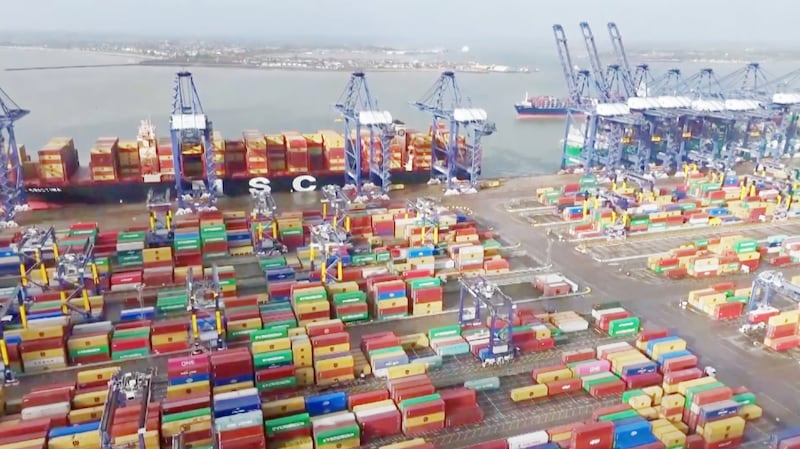
The chamber of commerce in North Bay says businesses are worried.
“It raises a lot more questions for our companies and our businesses that import and export that are part of the supply chains,” said Donna Backer, CEO of the North Bay and District Chamber of Commerce.
While there are no mines in North Bay, Backer said local manufacturers play a key role in supplying mines in Ontario, Canada and around the world.
“It’s very important that our mining manufacturing companies have some certainty moving forward to be able to plan and see what they can do to help with the supply chains,” she said.
Prime Minister Mark Carney has said Canada will impose “dollar for dollar” tariffs on the United States that will come into effect after the Labour Day long weekend.
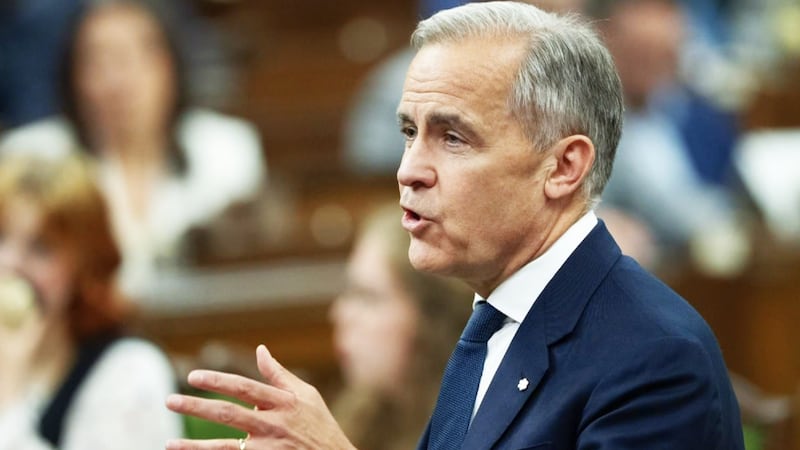
The Federation of Northern Ontario Municipalities welcomed Carney’s response.
“I appreciate the stance that both the federal and provincial governments have taken to stand up for the resources or industries that exist in northeastern Ontario,” said FONOM president Dave Plourde.
“FONOM remains hopeful that Canada and the United States can eventually reach a fair, stable and mutually beneficial agreement. However, no deal is better than a bad deal that compromises Canadian jobs, industries, sovereignty or our ability to make decisions in Canada’s best interests.”
Sudbury Mayor Paul Lefebvre said he’s taking a long-term view of the crisis.
“We’re seeing this potentially as a short-term pain for northern Ontario,” Lefebvre said.
“We need to look at opportunities to diversify that economy and not just be relying on the U.S.”
He is urging the federal government to use the city’s critical minerals deposits to the country’s “enormous advantage.”
“Now there’s an opportunity to think much bigger,” Lefebvre said.
“Mine in northern Ontario. Process and refine in northern Ontario. Manufacture higher-value products here in Ontario, across Canada, and sell those products to markets around the world.”
Citing Sudbury’s nine operating mines -- with that number expected to grow to 15 -- he said accelerating mine exploration and development and expanding processing is a must.
“This is Canada’s ace card,” Lefebvre said.
Not starting from scratch
“But an ace card is only useful if you play it. We have more than a century of mineral processing expertise, two smelters, two refineries, a world-class mining supply and service sector, post-secondary institutions, research and innovation capacity, skilled workers and the infrastructure to build on it. Canada does not need to start from scratch.”

In Sault Ste. Marie, Algoma Steel is the city’s largest private employer with 1,500 employees. Higher tariffs will hurt the company and the city’s economy even more.
Mayor Matthew Shoemaker says the community is at its “wit’s end” with the Trump administration.
“We’re going to have to look at the Canadian market -- and outside of the Canadian market in Europe and Asia, Africa and elsewhere in the Middle East to sell our steel,” Shoemaker said.
He said he will advocate for further “investment from Algoma Steel and government partners to ensure that they diversify their product lines.”
Shifting production
He envisions Algoma Steel shifting to produce armoured plate and structural steel beams.
“Right now, the majority of Algoma’s product is built on a historic trading relationship where the bulk of it went to the United States,” Shoemaker said.
“Now that that market is effectively closed out, we need investments to shift that production to what the demands of the Canadian market are.”
He also called for government investment in the Port of Sault Ste. Marie.
“We are supporting the mining sector with the port, we are supporting the secondary steel industry locally with Tenaris’ Tube Mill that produces oil exploration pipes and the energy industry in Canada,” Shoemaker said.
“We can support the forest industry through that port so that we can ensure that their product … gets out to market and more cost-effectively. That is how we will become less reliant on the whims of the U.S. presidency.”

