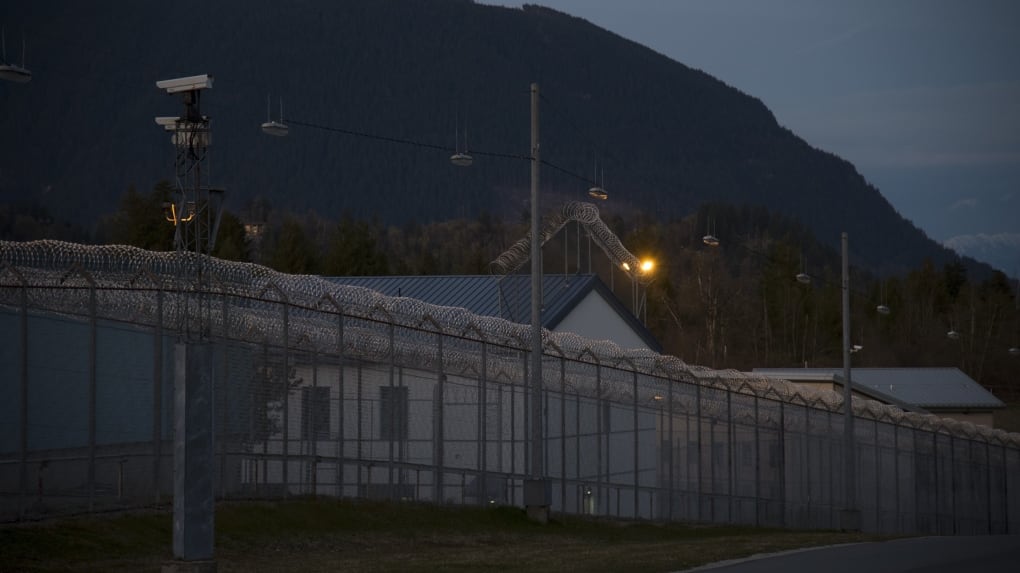
The British Columbia Supreme Court has rejected a federal inmate’s request for a transfer to a minimum-security prison to serve the remainder of his sentence for two counts of attempted murder.
Tresor Buloze Kimwemwe failed to convince the court that the acting warden at the medium-security prison where he is currently housed acted unfairly or unreasonably in denying his transfer request.
Justice Anita Chan found the 25-year-old remains a “high risk to public safety” due to the violence of his offences and his behaviour while in prison, where he has been accused of more than 170 disciplinary offences.
Teenage offender
Kimwemwe, who immigrated to Canada from the Democratic Republic of the Congo when he was still an infant, was 16 years old when he committed the attempted murders in separate incidents in 2016. Despite his youth, he was tried and convicted as an adult.
In the first case, Kimwemwe and an associate attended the home of a gang member, where Kimwemwe shot the victim at close range. The victim survived but was left with permanent injuries.
A month later, Kimwemwe went to the home of a witness in an upcoming trial. When he was told the witness was not there, he shot the witness’s mother instead.
“Her spinal cord was severed and she is now a paraplegic,” the judge wrote in her decision on Aug. 24.
Kimwemwe started serving his sentence at a maximum-security prison in 2019.
‘Likely to cause death, harm’
In May 2024, the Parole Board of Canada took the unusual step of issuing a detention order prohibiting the Correctional Service of Canada from releasing Kimwemwe into the community before the end of his sentence.
The board found that, if released, he was “likely to commit an offence causing death or serious harm.”
The court heard that Kimwemwe’s behaviour in prison was initially poor. Between February 2024 and August 2025, he was found guilty of 120 institutional offences, including breaching barriers and refusing orders, as well as more serious incidents of violence.
He was accused of more than 50 other offences during the same period, the judge heard.
But his conduct eventually improved enough for correctional officials to approve his transfer to medium security at the Mission Institution last August.
Four months later, he requested a transfer to minimum security.
An assessment by Kimwemwe’s institutional parole officer found that he presented a moderate risk of escape and a high risk to public safety if he did, in fact, escape.
Suspected gang involvement
His most recent security classification score was 25.5, a level that would normally indicate maximum security. However, his case management team recommended that he remain in medium security, according to the decision.
The assessment also cited information from the correctional service’s security intelligence department, which advised in January that Kimwemwe remained an active member of a known gang.
A psychological risk assessment conducted later that month found that although Kimwemwe understood the serious harm his offences had caused, he was still prone to violence.
“If he is still involved with gangs, his risk could not be managed in the community,” the judge wrote, summarizing the assessment.
December release date
Kimwemwe’s transfer request was denied by the acting warden of the Mission Institution in February. Two months later, the inmate filed a petition to the court, arguing the warden’s refusal was unreasonable and failed to properly consider evidence of his recent progress in counselling.
Kimwemwe is scheduled to be released from prison in December. He argued he requires some time in a minimum-security setting to prepare him for his looming release from custody.
He also argued the warden had given too much weight to the parole board’s detention order.
The judge found no basis for the claims, ruling the warden’s decision to reject the transfer was reasonable and the detention order was only one of several factors considered in the decision.
She also rejected the argument that the warden had failed to consider Kimwemwe’s recent progress, noting that his psychological assessment had been before the warden when the transfer was rejected.
The judge also found that Kimwemwe’s upcoming release date did not compel the court to overturn the warden’s decision, noting that he is welcome to make another transfer request six months after the previous application was received.
“The acting warden’s decision refusing the transfer to minimum security was reasonable,” the decision concluded, dismissing the petition.

