Quebec Premier Christine Fréchette launched the election campaign Thursday morning after meeting the lieutenant-governor and dissolving the National Assembly. The provincial election is set for Oct. 5.
Key details:
- The election campaign will last 39 days.
- Five main political parties are seeking Quebecers’ support: Coalition Avenir Québec, headed by Fréchette, the Quebec Liberal Party, headed by Charles Milliard, the Parti Québécois, Paul St-Pierre Plamondon, Québec Solidaire, headed by Ruba Ghazal, and the Conservative Party of Quebec, led by Éric Duhaime.
- The Coalition Avenir Québec’s government, previously led by François Legault, has held power for the last eight years. Legault stepped down as leader in January.
- Quebec National Assembly seats at dissolution: Coalition Avenir Québec (79 seats), Quebec Liberal Party (18), Québec Solidaire (11), Parti Québécois (7), Quebec Conservative Party (1), Independent (9).
Follow along for the latest updates:
‘My opponent is named Donald Trump’
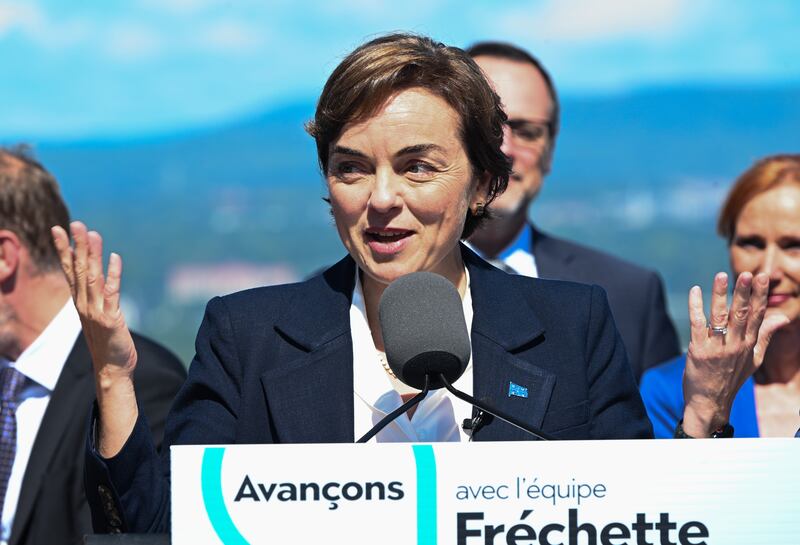
Coalition Avenir Québec Leader Christine Fréchette noted the cloudless Quebec City sky was “CAQ blue” as her campaign began. But she made it clear that U.S. tariffs are punishing some of Quebec’s key industries and casting storm clouds over the province.
Fréchette, launching her first campaign as CAQ leader, appeared upbeat as she took the stage at her first campaign event, alongside members of her team. Supporters applauded as she cast her party as the team Quebec needs to confront the economic uncertainty coming from south of the border.
“My opponent is named Donald Trump,” she said. “He’s the real adversary.”
Fréchette said she and her team are best positioned to work with municipalities, businesses, First Nations and Inuit leaders and the federal government to create stability and predictability amid a trade war that she said threatens jobs, businesses and families.
She argued that the decades-old economic relationship with the United States has fundamentally changed and isn’t coming back.
“It’s not going back to the way we worked with the United States, unfortunately,” she said. “It’s gone, so we have to transform our economy.”
Fréchette cast the election as a choice over who is best equipped to steer Quebec through that new economic reality.
“I’m asking for a mandate to move forward through a storm,” she said.
When asked about the biggest challenge facing her, she turned the focus to Quebecers struggling with the cost of living.
“The biggest challenge isn’t for me,” she said, pointing instead to people struggling to pay their rent and grocery bills and workers facing the prospect of losing their jobs or seeing their income fall.
The Canadian Press
Québec Solidaire launches campaign
Québec Solidaire’s Ruba Ghazal launched the party’s “C’est Possible” campaign Thursday afternoon after the election campaign kicked off.
Ghazal says her party will focus on solutions for major key issues the province is facing, including the housing crisis, the cost of living, public services and the economy.
“I want to give Quebecers solutions to all these issues,” she said. “They don’t need more bad news.”
Though the latest Léger voter intention poll shows that Québec Solidaire is polling behind all other parties, Ghazal said that half of Quebecers remain undecided.
“Quebecers still want to listen, so there’s an opportunity for Québec Solidaire to give solutions to Quebecers. They are curious and are continuing to listen,” she said.
Ghazal, who immigrated to Quebec as a child, also said her party’s vision for sovereignty is inclusive, and differs from the Parti Québécois.
“Quebec can defend its interests by ourselves; we don’t need anyone else to do it for us,” she said. “We need to make people who are anglophone, or immigrants, see that our project of independence is for them as well.”
Robin Della Corte, CTVNewsMontreal.ca
Milliard reiterates priorities
Following his party’s campaign launched Thursday morning, Liberal leader Charles Milliard spoke again to reiterate his party’s focus.
He said some key issues his party will focus on in this campaign are the economy, cost of living, health care, education, immigration pathways and culture.
“Public services are a key element in Quebec, and I want this campaign to be about public services and how we are going to finance them,” he said.
“Let me remind you that the 11th prioirty for Quebecers is the separation of Quebec; I’ll be working on the top 10.”
The Canada-U.S. trade war is a major issue for Quebec, Milliard said, but that “Fréchette is not going to be the one to solve it.”
“Her worst enemy is her own party,” he said.
Milliard said although Plamondon is his strongest opponent, he believes it is his party’s “time to shine” with its view on Quebec’s independence.
“We are the only federalist party in this campaign that believes in a strong Quebec within a strong Canada, and I think it’s in tune with what Quebecers are looking for,” he said.
Robin Della Corte, CTVNewsMontreal.ca
‘One of the favourite teams’: PQ
Parti Québécois (PQ) leader Paul St-Pierre Plamondon took to the podium in Montreal shortly before noon.
The PQ has been leading the polls for over a year, but that lead has lessened in recent months.
“I’ve never heard a hockey team going for the Stanley Cup saying, ‘I’m one of the favourite teams, so I have everything to lose,” he said.
He said the campaign is about balancing Quebec’s desire to govern itself and the province’s desire for change.
“We need a solid team, given what’s going on in the United States,” he said as his third point.
Daniel J. Rowe, CTVNewsMontreal.ca
Conservatives see opportunity with anglo vote
The Conservative Party of Quebec is hoping to grow its seat count and win one for the first time.
The lone MNA, Maïté Vézina-Blanchette, won her seat as a member of the CAQ and opened the campaign for leader Éric Duhaime.
The party has yet to win a seat in a provincial election.
Duhaime sees a chance to convince undecided voters and also to swing English-speakers who voted Liberal in the past.
“I see it personally, as a Conservative, as an opportunity because it means that the main parties are not able to convince them and they’re not quite sure who they would like to have as premier, so that’s a good opportunity,” said Duhaime, who wants to exploit provincial natural gas, expand private sector health care and cut taxes for businesses.
“And also for anglo Quebecers, we have a special message: ‘The English community in Quebec has been hostage of the Liberals forever, and the Liberals have not delivered,’” he added.
CTV News Election Special
As the Quebec election campaign kicks off today, CTV News Montreal streamed a live digital election special from 12 p.m. – 12:30 p.m.
The special coverage was anchored by Mutsumi Takahashi, with reporters Angela Mackenzie and Matt Gilmour, along with political analysts David Heurtel and Sebastien Dallaire. Also available at CJAD 800 Radio and on the iHeart app.
The special is available above
Amy Luft, CTVNewsMontreal.ca
CAQ leader calls election
Coalition Avenir Quebec leader Christine Fréchette visited Lieutenant-Governor Manon Jeannotte to dissolve the legislature and officially launch the election campaign.
“I’m happy,” she said as she strolled down Louis-Alexandre-Taschereau Street in the provincial capital.
Jeannotte then signed the decree calling for elections on Oct. 5.
Daniel J. Rowe, CTVNewsMontreal.ca
Liberal launch campaign
At the Promenade Samuel de Champlain at the Quai Hector in Quebec City, Liberal leader Charles Milliard launched the party’s campaign.
Although Milliard decided to kick off his election campaign in the Quebec City region on Thursday, the proposed third highway link doesn’t appear to be a priority for the party.
If it forms the government, the PLQ will carry out “priority projects” to improve traffic flow in the capital region, which does not include the third link between Quebec City and Lévis.
“The first step is to change the government that is managing this project because we’ve been deceived,” he said. “Quebecers have been deceived for the past 10 years on that.”
Milliard said he wants to meet with the private sector and other players on the project.
Daniel J. Rowe, CTVNewsMontreal.ca
With files from The Canadian Press
Party leaders
- Coalition Avenir Québec Leader Christine Fréchette hopes to stay premier
- Parti Québécois Leader Paul St-Pierre Plamondon brings party back from the brink
- Quebec Liberal Leader Charles Milliard promises to renew party
- Québec solidaire’s Ruba Ghazal enters first campaign as spokesperson
- Conservative Party of Quebec Leader Éric Duhaime vying for seats
Under Quebec’s electoral system, the premier must symbolically ask the lieutenant-governor — who represents the King — to dissolve the legislature to call an election.
The Coalition Avenir Québec will be seeking another mandate after eight years in power.
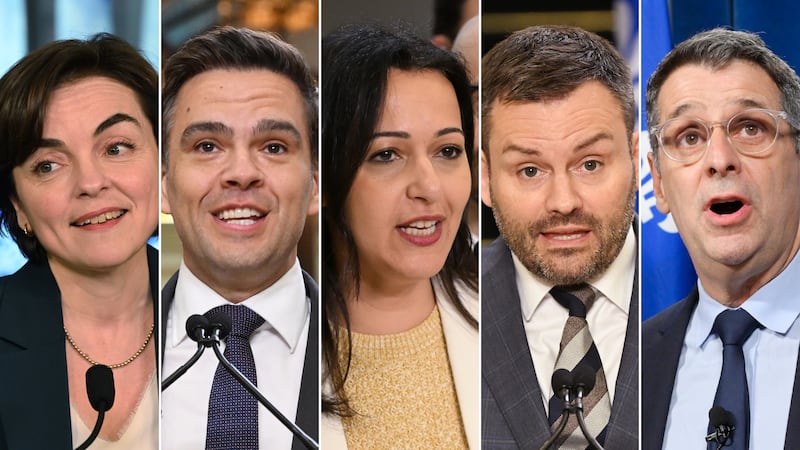
Fréchette took over party leadership in April after former premier François Legault stepped down amid poor polling numbers.
The party will face challenges from the Parti Québécois, Quebec Liberal Party, Québec solidaire and the Conservative Party of Quebec.
- READ MORE: Trump, referendum talk make for a tough-to-predict Quebec election: analysts
- READ MORE: Montreal mayor sets priorities ahead of Quebec election
Voters across the province are scheduled to head to the polls on Oct. 5.
The Canadian Press
Signs of the time
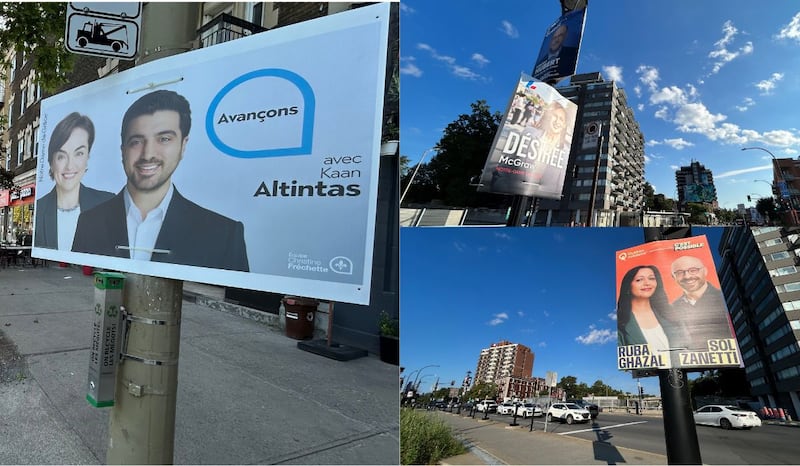
Late Wednesday night and early Tuesday morning, staffers were on the streets with zip strips and posters, as the election campaign began.
Daniel J. Rowe, CTVNewsMontreal.ca
Seat count
At dissolution of parliament, the CAQ had a massive majority, although that number was once even greater.
There are also nine Independent MNAs in 2026, whereas there were none without a major party after the last election.
The following is the seat count at dissolution versus the count after the 2022 election:
- CAQ: 79, 90
- PLQ: 18, 21
- QS: 11, 11
- PQ: 7, 3
- PCQ: 1,0
- Independent: 9,0

