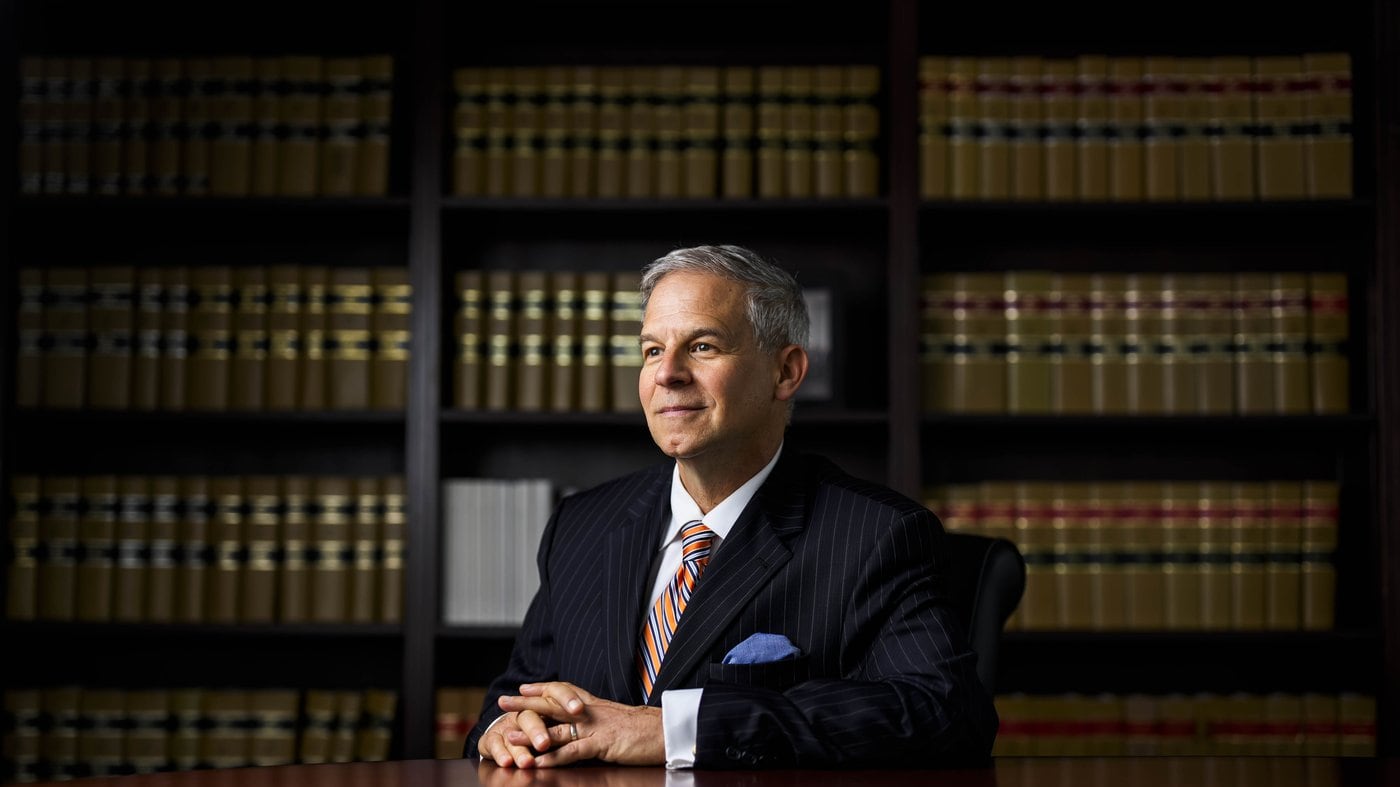
OTTAWA — A massive increase in immigration cases in the last six years has created unmanageable workloads at the Federal Court, says Chief Justice Alan Diner.
The Federal Court has jurisdiction over a number of immigration matters, such as visa applications, refugee claims, admissibility cases and removals.
Diner, who was sworn in as the top judge for the Federal Court on July 6, said when he joined the court in 2014, it typically saw between 5,000 and 6,000 immigration cases a year.
In 2021, immigration filings quickly began to climb, with 9,700 cases brought before the court that year. Now Diner said the Federal Court is on track to see upwards of 33,000 immigration filings this year alone.
“The judges have the pedal to the metal and are trying to do their utmost,” Diner said.
“They’re working around the clock, working weekends, working vacations, court staff, the same thing, available evenings, available weekends to try and deal with this volume.”
The rapid increase in immigration-related cases coincides with an increase in the number of permanent and temporary immigrants, in addition to asylum seekers, in the wake of the COVID-19 pandemic.
More than 14,000 immigration cases were filed between Jan. 1 and June 30, with 28,000 pending. Almost 1,000 cases have been granted hearings for a judicial review.
“It would be a lie for me to say this is without challenges. Judges are being pressured, court staff are being pressured, and I’m very proud of the way they’re handling this unprecedented increase, but we’re doing what we can,” Diner said.
The passage of Canada’s border security bill, C-12, in March is also creating additional pressures on Federal Court resources.
That bill says the Immigration and Refugee Board will only hear cases from people who make a refugee claim within their first year in Canada. The law is retroactive to arrivals in Canada after June 24, 2020 and applies to all claims made on or after June 3, 2025.
If someone makes a refugee claim more than a year after the first time they arrived in Canada, they are only eligible for a pre-removal risk assessment. The only avenue to appeal a negative assessment is through the Federal Court.
Diner said since C-12 became law the Federal Court has received more than 2,000 applications challenging the constitutionality of the law.
These challenges are going through case management, where judges will make a ruling on the core constitutional question based on a smaller number of cases.
Diner said the Federal Court is also seeing a “huge increase” in requests for a stay of deportation since C-12 was passed. He said the court usually saw 300 to 400 applications a year, but is now looking at more than 1,100 cases.
There are 44 Federal Court judges, including Diner. He said they have seen a roughly 600 per cent increase in the number of immigration cases since 2020 with no change in the number of judges.
He said the Federal Court needs more judges to keep up with the workload and the government has been made aware of the request.
“So, difficult for the same number of judges to do six times the amount of work,” Diner said.
“But obviously it’s incumbent on us to improve to the extent that we can, and be innovative and modernize and use technology to try and somehow stem this flow.”
A spokesperson for Justice Minister Sean Fraser said he is “mindful” of the significant caseload increase facing the Federal Court, and is committed to supporting fair, timely access to justice.
The spokesperson said both the department and minister assess requests for additional resources, and “evidence of growing caseloads and backlogs are important factors in those assessments.”
Conservative immigration critic Michelle Rempel Garner said the increased caseload isn’t surprising, given the increase in immigration over the last decade that includes the period when Fraser was minister.
She said the government was also warned about “instant challenges” to C-12 when it was being studied at committee.
“I think that the government needs to take a bit of a pause and look at why there is such a volume of caseload and then try to address some of the determinants of those causes,” Rempel Garner said.
“Their poor management of the file, putting it mildly over the last decade, has had an impact on the court system. Of course it has.”
The Federal Court registry issued a notice last month noting document processing times have increased due to a “significant surge” in filings. The notice says the goal is to process documents within 48 hours, but delays could be up to eight weeks — especially for immigration-related matters.
Diner said the court is doing what it can to increase efficiency. He said this is one of his main priorities as chief justice.
This includes expanding on digitization work that really started to advance during the COVID-19 pandemic and looking at automation and artificial intelligence tools that could assist in managing high caseloads.
The use of AI in the court could one day go beyond just administration.
“That’s obviously something we’re going to have to consider. Not to make decisions, but to see where we can assist in the process, given this unprecedented surge,” Diner said. “We do know that AI is increasingly being used and obviously we also have to consider if the judiciary can use AI to help cope with this unprecedented volume.”
Immigration related filings made up about 86 per cent of the matters brought to the Federal Court in the first six months on the year, and are consistently the majority of files brought to the court in a given year.
While the court continues to manage the major increase in immigration cases, Diner said the demand is increasing in other areas of their jurisdiction, including national security matters, class actions and judicial reviews.
“Working weekends, working holidays, working through your vacations is not really an acceptable answer to how we’re going to have long term well-being,” he said.
“When you’re under the kinds of pressure that I’ve talked about, you can imagine that people end up feeling sensitive, burned out, and so forth … The judges are always going to work hard, the employees are always going to work hard. But we have to ensure the well-being of our complement.”
This report by The Canadian Press was first published Aug. 29, 2026.
David Baxter, The Canadian Press

