Food and household goods companies in Canada say they’re seeing a surge in demand as Canadians prioritize shopping local amid the ongoing trade war, but they say some retailers are slow to give more shelf space to products from this country.
Despite the strain of higher prices at the grocery store, many shoppers are going out of their way to buy Canadian-made products, food and household goods, companies told The Canadian Press.
However, they say some retailers are slow to react to the shift in demand, leading to a rise in selling directly to consumers.
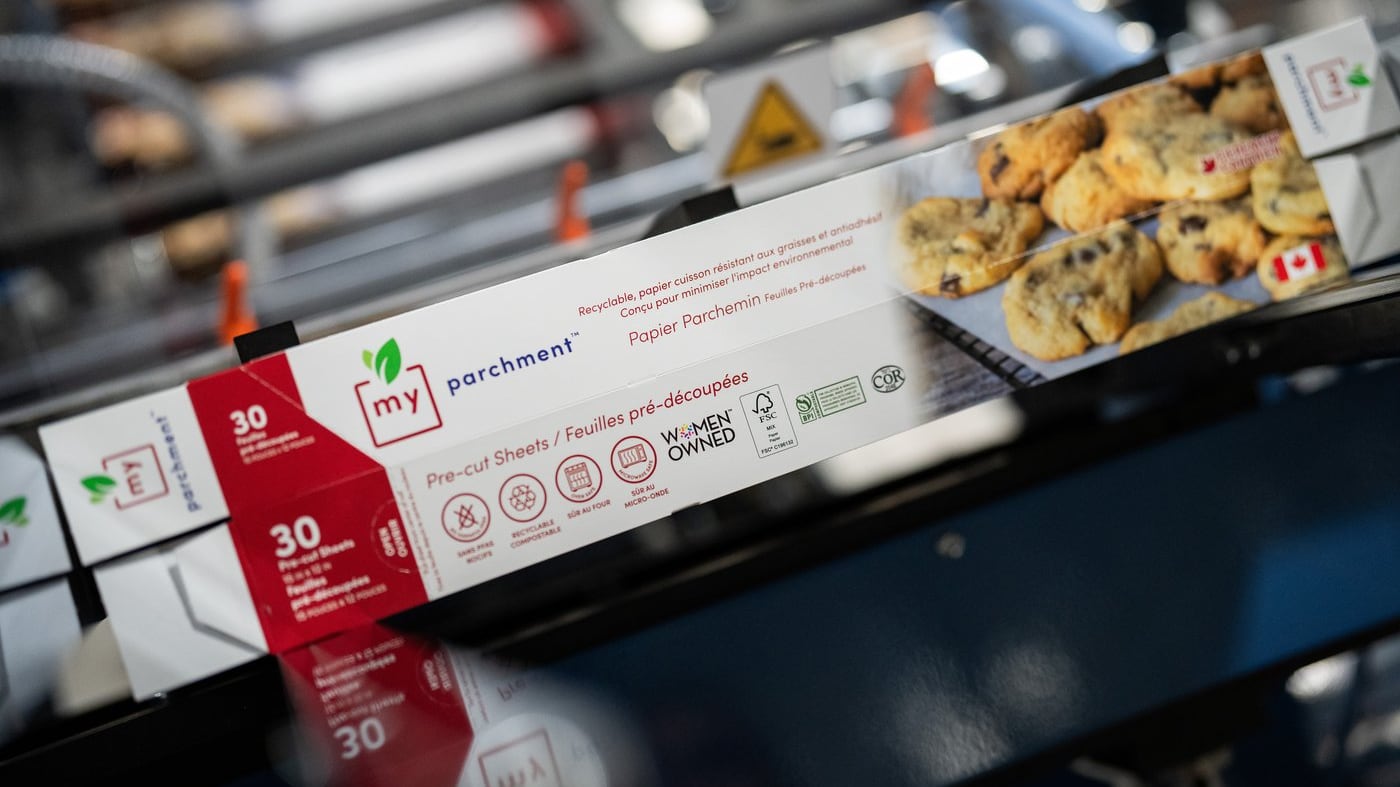
“We aren’t really built for direct-to-customer sales but we’re doing it because of the demand we’re seeing,” said Kathleen Chapman, president of aVenco Ltd., a Bowmanville, Ont.-based parchment paper company.
“The consumer response has been phenomenal,” she said. “It seems that the consumer is moving faster than retail. Canadians are looking for products and asking for products so we’ve pivoted and we’re supplying them as quickly as we can.”
The company’s direct-to-consumer orders have jumped from about 20 in the last two years to hundreds in the week since the new U.S. tariffs came into effect, Chapman said.
Meanwhile, aVenco’s U.S. business, which previously made up roughly 30 to 40 per cent of sales, has stalled due to tariffs, she said.
“It has essentially shut down any talks with U.S. customers at this point,” Chapman said.
The company was initially affected by U.S. tariffs on European goods as it sources raw parchment paper in France, and now it faces a 50 per cent tariff because the baking paper is prepared and converted in Canada.
G.E. Barbour Inc., a Sussex, N.B.-based manufacturer of tea, peanut butter, spices and other food products, currently generates about half its sales in the U.S. market.
While its products, which include King Cole Tea and Nuts About Peanut Butter, are currently exempt from tariffs, the company is increasingly focused on markets outside the U.S., president Jeff Rose said.
“Our products are not subject to any tariffs either from the U.S. or from Canada today,” he said. “But the point is that I cannot say that with confidence tomorrow and that’s why it’s so important for us to focus on the domestic market, to grow our business in Canada, but also to grow it elsewhere in the world.”
The New Brunswick company’s Canadian sales were largely limited to Atlantic Canada and Quebec when the tariff dispute first erupted about a year-and-a-half ago, Rose said.
“Canada is a big country so we decided to start focusing on the domestic market,” he said.
The company grew its sales team in Quebec and Ontario and began selling more into those provinces, increasing its social media presence and promoting its Canadian roots both within Canada and around the world, Rose said.
“We made the decision that we needed to diversify,” he said.
While some retailers see the buy Canadian movement as a “passing fad,” Rose said others have shown a willingness to promote Canadian brands.
“Some have embraced it and it’s really win-win,” he said. “It shows their customers they are supporting Canadian and promotes a Canadian brand.”
The company is also going directly to consumers with the upcoming launch of Barbours Market, an online store for domestic brands.
“The idea is that we’re creating this Canadian exclusive marketplace for wonderful brands that are in Canada that you may not be able to find on the store shelves,” Rose said.
Peter Chapman, founder of retail consultancy SKUFood, said the retail industry is very consumer-driven and the more customers demand Canadian products the more stores will open shelf space to local producers.
“If consumers say, ‘Hey, we want more Canadian products on the shelf,’ then the retailers are going to respond,” said Chapman, of no relation to Kathleen Chapman. “Some are just better at it than others.”
Although Costco Wholesale Corp. is a U.S.-based retailer, Chapman said it listens to members and if they want more Canadian products it responds quickly.
Canadian brands also have to give retailers “a compelling reason to put them on the shelf,” he said.
“Maybe they’ve got something to bring to the table that’s a little bit unique or different,” Chapman said. “Canadian (consumer packaged goods) companies have to be doing a fantastic job telling their story.”
---
Brett Bundale, The Canadian Press
This report by The Canadian Press was first published Sept. 1, 2026.

