OTTAWA — Ottawa’s new framework for guiding the development of artificial intelligence data centres is failing to win over critics.
The federal government unveiled five principles Thursday aimed at addressing growing concerns about the centres, including a duty to minimize water use and environmental harm, a pledge to ensure electricity costs aren’t passed on to Canadians, and a commitment to be transparent about projects.
But the framework has no legal force, and critics say there is little to stop companies from ignoring the principles.
“With most of these items, if the data centre companies decide to renege on any of these commitments, what will be the consequences? As far as I can tell, there’ll be no consequences at all from the federal government,” said Dru Jay, executive director of the Council of Canadians.
“I think we need to be clear that this is the federal government passing the buck and saying we’re not going to do anything to enforce standards. We’re not going to enforce any standards of transparency. We’re not going to enforce any standards of environmental impact.”
The framework does have the backing of the Federation of Canadian Municipalities, while 23 companies have also signed on.
They include Amazon Web Services, Google, Microsoft, Meta, OpenAI and Anthropic.

Evan Solomon, the minister for artificial intelligence and digital innovation, said the commitments have value even if the companies aren’t legally required to follow them.
“It is good to know that at the very beginning, industry leaders have recognized that community standards are high.”
‘There’s a public interest in this’
The Carney government has been pushing for the development of AI data centres, arguing they will drive innovation and help secure future economic growth.
But concerns are mounting over how much water and electricity the centres will consume — and whether the communities that host them will be left to pay the price.
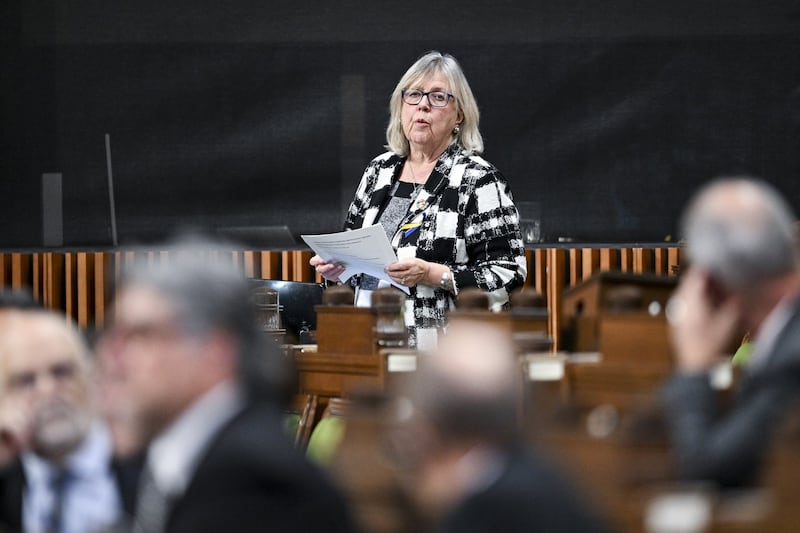
Green Party Leader Elizabeth May raised similar concerns in June.
“Data centres use vast amounts of energy and water. They affect local grids, watersheds, communities, and affordability. Before public money or approvals go to these projects, the government must tell Canadians exactly how much power and water they will use, who will pay, and what protections will be in place,” she said.
Those concerns have already prompted two Ontario communities — Sault Ste. Marie and Oakville — to pause data centre development.
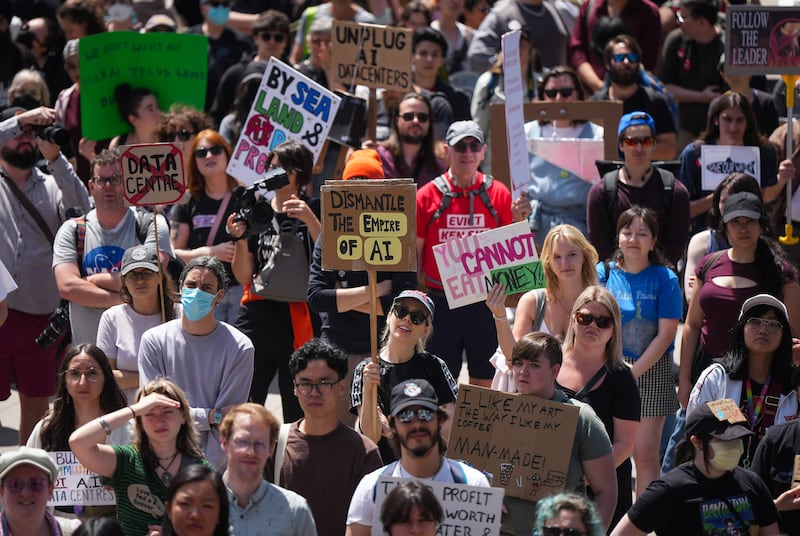
Protests have also been held in cities across the country.
“I think a lot of communities are recognizing it’s a disaster for them,” Jay said. “And so, this is the federal government trying to get ahead of that.”
That is also why federal New Democrats are calling for a pause.
“I think it’s really important that parliamentarians and legislators across the country understand the issues involved, understand the benefits and the risks before we allow what really is private sector, in many cases, tech billionaires to rush forward,” said NDP parliamentary leader Don Davies.
“There’s a public interest in this. These are public resources that are being used.”

