Online dangers are the top threat children are facing in Canada, according to a new report from a national charity.
Children First Canada released its annual report on Tuesday, presenting findings on the top 10 threats to childhood every year since 2018.
For the first time, the “Raising Canada: The state of the nation’s children” report named online harms as the number one threat.
“From AI-powered toys and excessive screen use in the earliest years to social media, gaming, messaging apps, online sexual exploitation and AI chatbots, children are growing up in a digital world that was not designed with their safety, rights, and healthy development at its centre,” the charity says in a news release.
According to the report, Canadian adolescents now average seven or more hours of screen use per day, nearly four times the national guidelines.
Cybersecurity expert David Shipley applauds New Brunswick’s recent move to ban cellphone use in schools.
“That’s the start. We’ve got to break the addiction, the habit, the uses of these devices. These devices are the gateway to the harm,” he said.
Shipley would also like to see an emphasis on AI literacy in the classroom.
“Teaching them to ask, ‘When should I use an AI? When should I do the thinking myself? How do I use the AI safely and intelligently?’”
The online threats are also connected to the other harms facing children, including poor mental health, declining physical activity and play, bullying, racism and discrimination.
Violent online networks such as ‘764’ have prompted law enforcement agencies to warn Canadians about kids being targeted through gaming platforms, social media and messaging apps.
Advocates say the group lures a youth through platforms like Discord, Roblox, Minecraft or Twitch, and coerces them into violent and abusive behaviours.
Victims are groomed into sharing intimate images, which are then used for sexual extortion and blackmail.

In Halifax, a youth was identified as a member of the violent subgroup, which glorifies extremist violence.
Halifax Regional Police says the youth allegedly communicated with hundreds of people worldwide, with local victims identified, too.
The new report names well-known instances of children who have died as a result of online harms, including Rehtaeh Parsons, a 17-year-old girl from Nova Scotia who attempted to take her own life after she was raped and cyberbullied. She was taken off life support in 2013.
The case sparked outrage across Canada.

The year before, 15-year-old Amanda Todd died by suicide after being cyberbullied and sexually extorted. A month before her death she posted a video online using a series of flash cards to tell her story, going viral and drawing international attention.
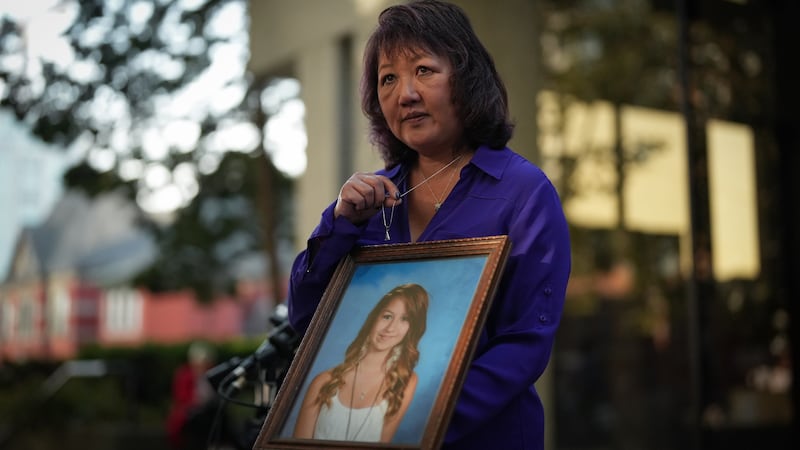
Carol Todd, Amanda’s mother, travelled to Parliament Hill with Children’s First Canada this year to speak on the issue of online harms.
“No family should have had to bury a son or daughter before we decided to act. Yet almost 14 years after Amanda’s death, I found myself standing alongside families carrying stories that sounded painfully familiar,” she says.
Her case led Nova Scotia to pass anti-cyberbullying laws, but Children’s First Canada says the expansion of technology has outpaced efforts to reduce its harms.
Sara L. Austin, the founder and CEO of the charity, is also a human rights lawyer and a mother. She says kids nowadays encounter tech before they can even read.
“The data presented in these pages keeps me up at night. It should serve as a wake-up call,” she writes in the report.
“As I immersed myself in the research for this report, I found myself asking a question that I believe every parent, educator, policymaker, and technology leader should ask: ‘How did we allow technology to become so deeply embedded in childhood before ensuring it was safe for children?’”
Austin calls the data disturbing and alarming but adds she doesn’t want parents to panic.
“I certainly don’t want them to resort to punishing their kids. Our kids are not to blame here. We’ve let the tech industry off the hook for two decades now and it’s time that we set new laws and establish stricter regulations for the entire tech industry,” said Austin.
As Parliament returns for the fall, the group urges policymakers to strengthen and pass Bill C-34, known as the Safe Social Media Act.
They also call for a national youth strategy and investment in children through co-ordinated action.
“Canada’s 8 million children deserve better,” says the charity.
Their full list of threats to childhood includes:
- online threats
- unintentional preventable injuries
- violence against children/child abuse
- poverty and food insecurity
- poor mental health
- vaccine-preventable illnesses
- bullying
- systemic racism and discrimination
- limited physical activity and play
- climate change
The report was produced by Children First Canada with SickKids, the University of Calgary, and PolicyWise for Children & Families.
If you or someone you know is in crisis, here are some resources that are available:
- Suicide Crisis Helpline (988)
- Centre for Addiction and Mental Health (1-800-463-2338)
- Crisis Services Canada (1-833-456-4566, or 45645 by text)
- Kids Help Phone (1-800-668-6868)
- If you need immediate assistance, call 911 or go to the nearest hospital
For more Nova Scotia news, visit our dedicated provincial page