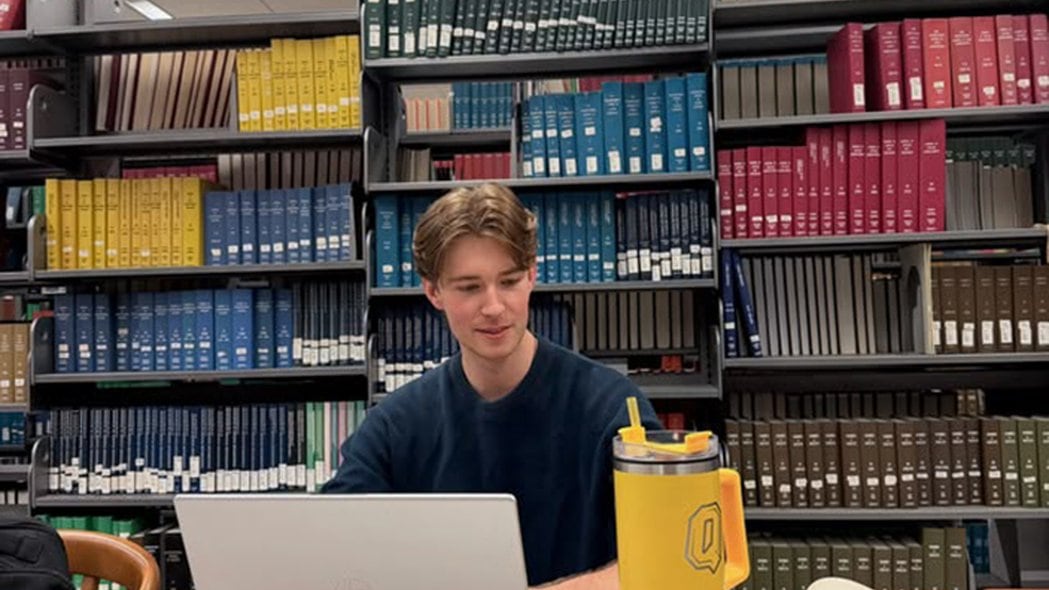
When Kieran Michael MacNeill started going door to door in Richmond, B.C., serenading householders in Mandarin, he was worried they might think he was a “weirdo.”
But instead, they embraced the efforts of the 22-year-old student, who spent summer singing to residents at the urging of Chinese Canadian friends who were “blown away” when he sang a classic Mando-pop tune in a car with them one day.
MacNeill’s renditions of the sentimental 1980s ballad, “A Spray of Plum Blossoms,” videoed by friend Jason Chen, have received millions of views online, drawing fascination for both his singing and the reactions to it.
Some residents join in the song, rich in symbolism about hardship and longing. Others have shared food with MacNeill and Chen.
“When you see a white guy at your door, you don’t expect him to speak Chinese,” said Chen, “Just seeing Michael want to learn Chinese and actually going out there and speaking it, I think it’s super awesome.”
MacNeill, who is studying computer science at Queen’s University in Ontario but is originally from Calgary, learned the song to kill time while on a flight in 2024.
But after mastering the song, it wasn’t until this May when he came to B.C. for a summer job that he got a chance to show off his talent in Richmond, which has the highest proportion of residents of Chinese descent of any municipality in Canada, making up more than half of the city’s population.
He was driving to a restaurant in Richmond with Chen and another friend when MacNeill started singing.
“They are like, you have to sing that to the aunties and uncles in Richmond, and they’re gonna be blown away that you could do that,” laughed MacNeill.
They started their project in June, MacNeill overcoming a sense of awkwardness and “being a weirdo” as the Chinese community warmed to his efforts.
At the first house they tried, the resident was so impressed she gave them dinner.
“She’s like, OK, hold on one second, and then she came out with two plates of lamb chops,” said MacNeill.
“We were just expecting a granola bar probably, not her dinner.”
A performance for an 81-year-old Chinese woman who immigrated to Canada in the 1980s received 1.8 million likes and almost 14 million views on Instagram.
She told MacNeill it was the first time a white person had sung in Chinese to her.
“If I moved to China 44 years ago and I didn’t speak Chinese, and then some random Chinese kid came up to me and sang ‘Sweet Caroline’ to me, that would be a real culture shock for sure,” said MacNeill.
Not everyone has been appreciative. MacNeill said he had visited 300 to 400 homes over the summer, some residents thinking he was a salesman and closing the door in his face.
But MacNeill said he had been overwhelmed with “over the top reactions” from those who enjoyed his performances — which have also included a song for Cantonese speakers, “Boundless Oceans, Vast Skies” by Beyond.
“They kind of go from not really wanting to talk to you or being very shy to then all of a sudden wanting to ask me a million questions,” said MacNeill.
Some guessed that he learned Chinese because he had a Chinese girlfriend, which he doesn’t.
MacNeill said he learned Chinese by using Google Translate and watching YouTube videos, testing out his language skills by ordering food at a Chinese restaurant. His B.C. friends have also mentored him.
But the reactions of Richmond householders to his singing have provided incentive to keep learning.
“The best way to learn a language is to actually be motivated … so when people have these good reactions and they’re always so impressed even if you just know really basic Chinese … that was good motivation to learn the language,” said MacNeill.
He said the idea that Chinese immigrants could be “closed off” was a false impression created by cultural and language barriers, with some worried about causing offence if they don’t speak English well.
But show interest in their culture, and true personalities shone through, he said.
“They’re very welcoming. Chinese people are some of the kindest people I’ve ever met in my life,” he said.
This report by The Canadian Press was first published Sept. 12, 2026.
Nono Shen, The Canadian Press

