WINNIPEG – A potential new treatment could help restore brain function in people with progressive multiple sclerosis.
Researchers at the University of Manitoba have found that restoring levels of a depleted brain protein called neuregulin-1 (Nrg-1) may help repair damaged brain tissue, slow or halt the progression of multiple sclerosis (MS), and reverse losses in mobility and cognitive function.
Head researcher Dr. Soheila Karimi says this breakthrough is significant.
“This is promising in the sense now, based on the findings that we are providing, it seems, Nrg-1 can be potentially provide a treatment strategy that can then ameliorate the progress in this stage of MS,” said Dr. Karimi, who is also a professor in the Max Rady College of Medicine at the University of Manitoba.
The findings have so far been demonstrated in preclinical studies, and researchers have not yet established whether the approach will work in people.
What is MS?
MS is a disease of the central nervous system, including the brain, spinal cord, and optic nerves. According to MS Canada, in someone with MS, the body’s immune system mistakenly attacks myelin, which is the protective layer surrounding nerve fibres.
When myelin is damaged, nerve fibres can also be injured or lost. Over time, this damage can accumulate and contribute to the progression of the disease.
There is currently no cure for MS, although treatments can help manage the disease and its symptoms.
But Dr. Karimi hopes this research could change that.
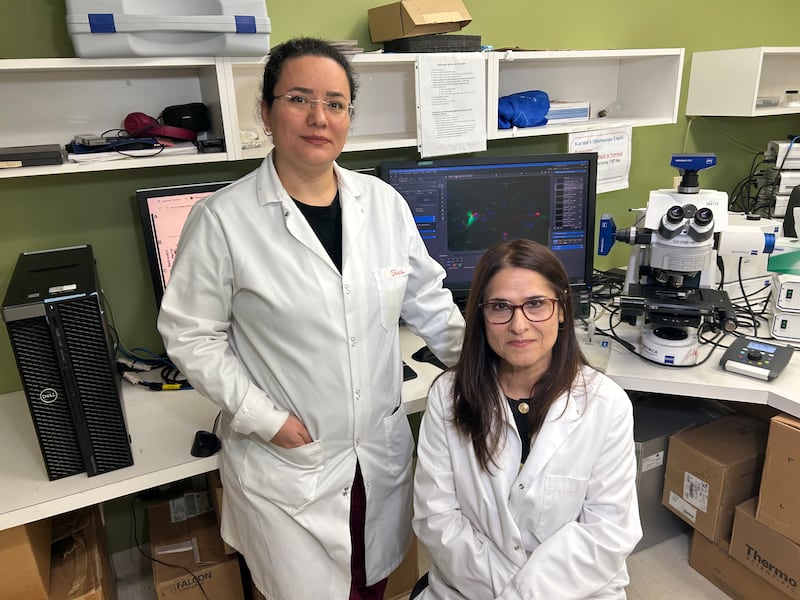
She and her team found that areas of the brain affected by progressive MS had lower levels of a protein called Nrg-1, which helps keep nerve cells healthy and working properly.
In animal studies, restoring Nrg-1 helped brain cells produce more energy. It also helped repair damaged myelin and improve mobility and cognitive function.
“So, this is important, why? Because there is limited treatment options for progress,” she said.
“It is exciting and promising because, majority of the available treatments for MS, they can address the inflammation and immune response, but they are not able to protect nerve cells or repair the damage that’s already done.”
The next step in the research is to prepare for human clinical trials, bringing researchers closer to testing whether the treatment could help people living with progressive MS.
“It’s really important to pave a new way for new treatment and also it brings hope and we are hoping that we will be able to increase the quality of life of individuals who are living with MS,” said Shiva Nematie, who is a research associate at the University of Manitoba.
MS Canada told CTV News they are hopeful this research can be replicated in humans.
“The latest findings in animal models have shown that Neuregulin-1 can promote myelin repair and protect nerve fibres, while improving mobility and cognitive function,” said Dr. Pamela Valentine the president and CEO of MS Canada, in a statement.
“This research brings us closer to solutions that would allow us to reverse disease progression,” she wrote.
This disease impacts everyone differently. There are a wide-variety of symptoms including:
- Fatigue
- Problems with balance
- Weakness
- Sensory changes, like tingling and numbness
- Vision problems
- Bladder and bowel problems
- Cognitive and mood changes
Canada has one of the highest rates of MS in the world, with an estimated 90,000 Canadians living with the disease. Manitoba records among the highest rates across the country.
MS Canada says 12 Canadians, on average, are diagnosed with the disease every day.
‘Fairly hopeful now’
Winnipegger Raisa Baluta’s life changed nine years ago when she woke up on Christmas morning in 2016.
“I had bilateral numbness in my legs from my mid back down. I went to several doctors, and I kept telling them it felt like I was wearing like five or six pairs of sweatpants,” she said.

A year later, at just the age of 22, an MRI confirmed she was living with MS.
“When I look at MRIs, I can see very clear visual damage in my brain, kind of like white spots and just holes in my brain and down my spine,” she said.
“I often have tremors. I feel like they come up a little bit more with fatigue.”
Baluta says it’s exciting to see research is being done for a disease that does not have a cure.
“Things are definitely improving, and it’s fairly hopeful now,” she said.
“We’re out there, and there are lots and lots and lots of us, and we struggle with it every day.”
Dr. Karimi hopes the research they are working on will help make a difference for those, like Baluta, who are living with MS.
“We are working very hard to make these discoveries,” she said. “We just want to convey hope, and I also want to say that the research is the path to cure MS.”

