The first confirmed detection of spotted lanternfly in Canada is raising concerns among local grape growers and wineries about the potential impact of the invasive insect.
The Canadian Food Inspection Agency (CFIA) confirmed Thursday that live spotted lanternfly was detected in Windsor, Ont., during an official survey — the first confirmed detection of the pest in Canada.
The detection follows years of sightings and interceptions in Windsor-Essex and other parts of Canada, but officials say there is currently no evidence of an established, reproducing population in the country.
For local growers, however, the discovery is cause for concern.
“This is bad news for a lot of agricultural related industries,” said Steve Mitchell, vice-chair of the Ontario Craft Wineries and president of Sprucewood Shores Estate Winery.
Mitchell said grape growers are particularly vulnerable because spotted lanternfly can feed on the sap of grapevines and, when present in large numbers, cause significant damage.
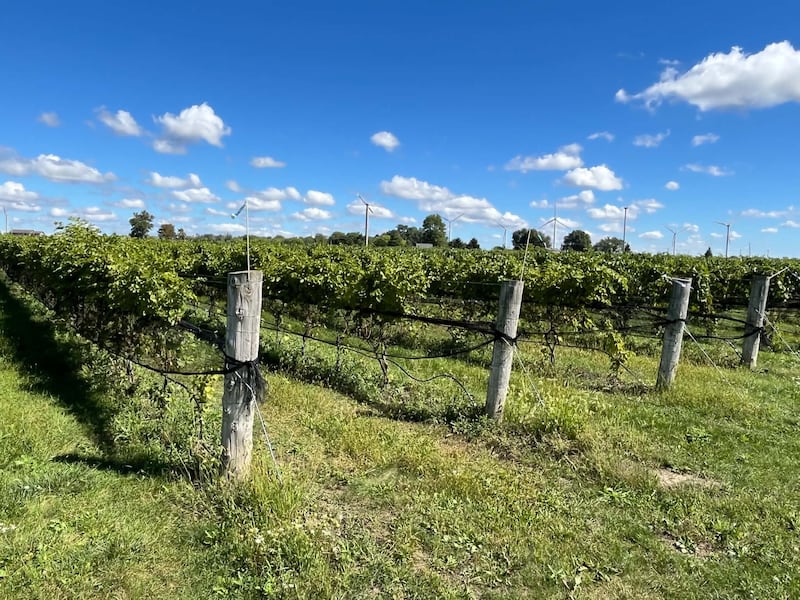
“What it could do if left unchecked would be to basically decimate not just your crop, but your vines,” Mitchell said.
Spotted lanternfly can feed on more than 100 species of plants and trees. The CFIA says significant impacts from the insect’s feeding have so far been observed, particularly on grapes.
Tom O’Brien, co-owner of Cooper’s Hawk Winery and Vineyard, said local growers have been preparing for the possibility of the pest arriving in the region.
“We’ve been getting warnings from government agencies and the organizations that monitor these things for a couple of years now,” O’Brien said.
O’Brien said growers are being trained to look for egg masses, while some wineries have also begun preventative spraying programs.
The pest is particularly concerning because of the timing of its arrival in Windsor-Essex, where grape growers are already dealing with a difficult growing season.
O’Brien said local vineyards suffered significant damage from cold temperatures last January, while grape supplies are also tight because of weather-related challenges in Niagara.
He said wineries can supplement their local supply by purchasing grapes from other regions, but this year’s reduced supply means there is less to go around.

Despite the concerns, O’Brien said consumers should not expect an immediate impact on the availability of local wine.
“We have lots of inventory on hand,” he said, adding that wineries typically maintain roughly two to two-and-a-half years of inventory.
Mitchell said the biggest concern is not necessarily this year’s crop, but what could happen if the insect becomes established.
“It’s not really about this season,” Mitchell explained.
“This is, once it arrives and establishes, that’s when it turns into an ongoing pest to deal with.”
Vince La Tessa, program development coordinator with the Invasive Species Centre, said the distinction between a sighting and a detection is important.
Previous reports of spotted lanternfly in Canada were confirmed by the CFIA as sightings or interceptions, but the agency had not found the insect itself during an official survey. The Windsor detection is different because the CFIA confirmed live spotted lanternfly in the Canadian environment through its own survey.
La Tessa said there is currently no confirmed established population in Canada.
“This isn’t an insect that’s going to cause direct harm to anybody,” La Tessa said.
“They don’t sting; they don’t bite. They’re actually quite safe to handle.”
Instead, he said the public can help limit the spread by learning what the insect and its egg masses look like and reporting suspected sightings.
The CFIA is asking people who find a suspected spotted lanternfly to take a photo or video, capture the insect or scrape an egg mass into a sealed container if possible, and report it immediately.
The agency is also asking people travelling from areas where the pest is established to check vehicles, trailers, recreational vehicles, camping equipment, patio furniture, and other outdoor items for insects or egg masses.
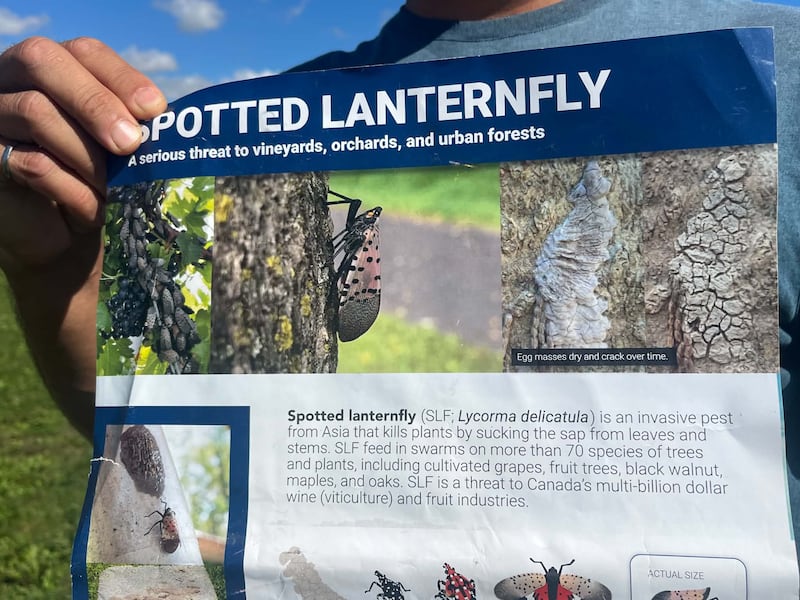
La Tessa said the coming weeks will be particularly important as officials continue surveillance in the Windsor area.
“For the next few weeks, it’s definitely important,” he said.
“Especially in the Windsor and surrounding area, that they’re just extra vigilant.”
The CFIA has imposed movement restrictions on regulated materials in response to the Windsor detection, while surveillance continues to determine the extent of the pest’s presence and next steps.

