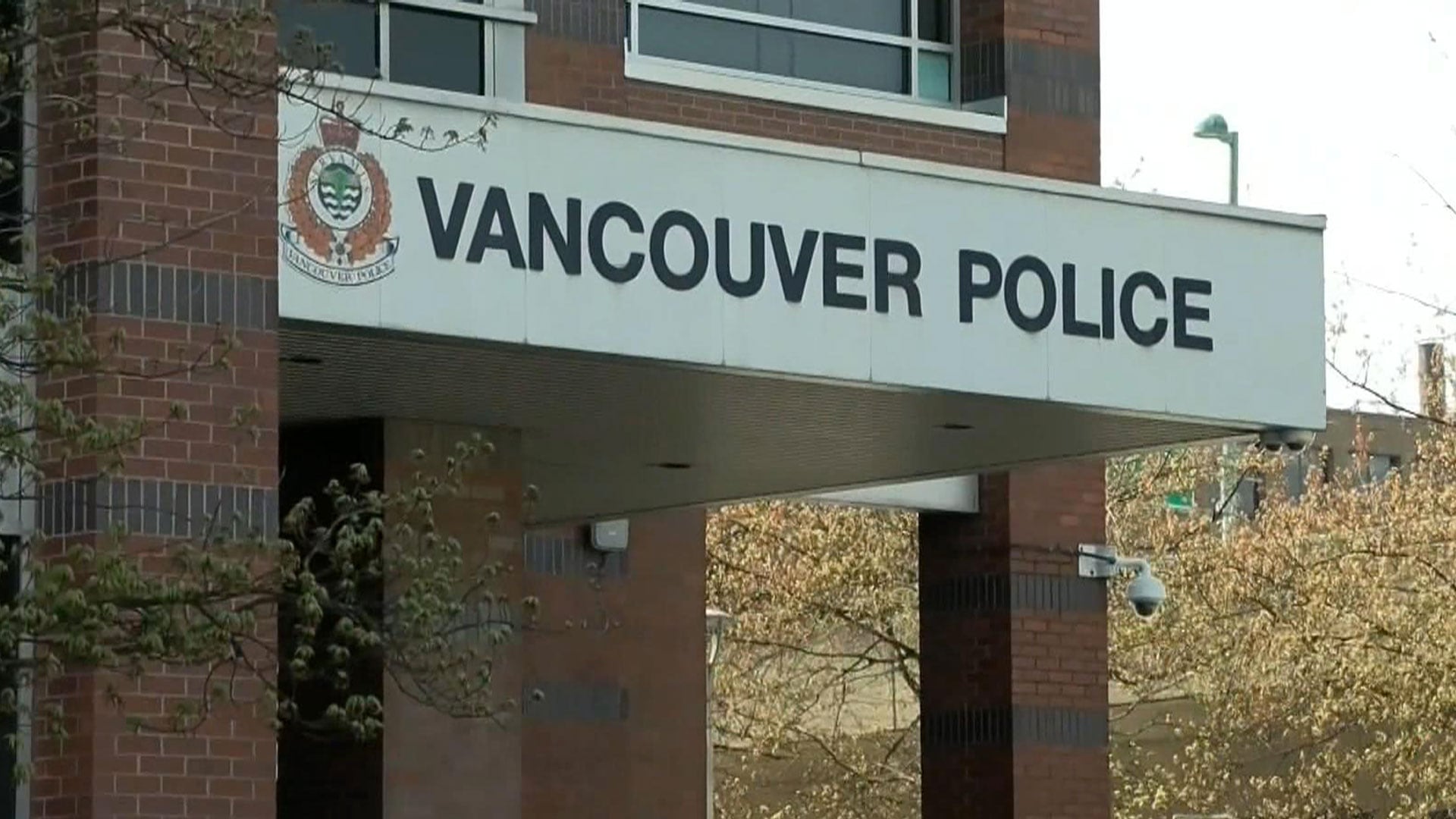
A Black woman who was handcuffed by Vancouver police during a traffic stop has been awarded more than $26,000 after the B.C. Human Rights Tribunal found officers discriminated against her based on her race.
Safiya Elshazly filed a complaint against the Vancouver Police Board—which employs the officers of the Vancouver Police Department—over the way she was treated as a passenger in a car that was pulled over for having one too many people inside in December 2020.
Elshazly had been buckled up in the backseat, with the unbuckled extra passenger in her lap, when she became the focus of what tribunal member Laila Said found to be a “traumatic, violent and unnecessary” escalation by police.
“The officers’ conduct was tainted by racism because they imposed harsh consequences on Ms. Elshazly when their expectation of docility and compliance from a Black woman was not met,” Said wrote in her Sept. 10 decision.
The tribunal member found police viewed Elshazly as “more of a threat than she really was” due to stereotypes, and exerted more control over her than they otherwise would have “if she was not Black.”
Elshazly was the only one ticketed in the incident. The driver was not penalized, and police said the unbuckled passenger was let off for being co-operative.
While there were conflicting accounts of how the approximately 35-minute interaction unfolded, Said noted there was substantial video evidence on which to base her decision, both from Elshazly’s cellphone and from police.
Standard protocols not used
The tribunal heard the trouble began when an officer, identified only as Const. Cheng in the decision, accused Elshazly of not wearing a seatbelt, told her she would be given a ticket, and asked for her ID.
Elshazly replied: “I don’t need to give you ID. I don’t have ID.”
Cheng then told her to exit the vehicle, asked her for ID one more time, then said she was “under arrest for obstruction.”
Three officers testified in the case, and the tribunal decision noted that every one of them confirmed the standard protocol when someone doesn’t have ID would be to ask for their name, date of birth, address and other information to look them up in the police database.
Elshazly was seemingly aware of this, and offered to provide her personal information after stepping outside of the car.
“I can give you my name and you can look me up,” she said, in her recording of the incident. “You want to ask for my information, I’ll give you my information.”
At one point, another officer identified only as Const. Bokenfohr arrived at the scene as backup. The tribunal heard that when Elshazly dropped her iPhone, while being handcuffed with her arms behind her back, Bokenfohr said, “You are one drunk lady.”
Police allegations and evidence challenged
The allegation that Elshazly was not wearing a seatbelt was incorrect to begin with, Said found, citing a moment in the recording when it can be heard being “unclicked” before she exits the vehicle.
Elshazly successfully challenged her ticket in B.C. provincial court.
Said found nothing in the video evidence to suggest Elshazly—who told the tribunal she doesn’t drink for religious reasons—had been impaired during the incident either.
In his police report on the traffic stop, Cheng described Elshazly as being “verbally belligerent and rude,” and accused her of making “a lot of racist comments” about his own ethnicity.
Said categorized those claims as “grossly exaggerated when viewed next to the videos in evidence.”
The recordings captured Elshazly saying, “Do you speak English? Because I’m speaking English with you,” but the tribunal member found the remarks were made in frustration, after “repeatedly stating that she did not have identification” and having her offer to provide personal information “ignored by the officers.”
“The officers’ descriptions of Ms. Elshazly are consistent with indicators of anti-Black stereotypes that unfairly and disproportionately require humility from Black people as compared to their white counterparts,” Said found.
“She expressed herself in a manner that would not be considered offensive in the context in which the statements were made.”
Officer acted on justified suspicion, board argues
For her part, Elshazly was also found to be “inconsistent” in some of her testimony and submissions. She attempted to introduce new evidence in her written closing submissions that hadn’t been presented at the tribunal, which Said rejected.
The decision noted as well that Elshazly did have ID in the vehicle during the traffic stop, despite repeatedly claiming she did not.
The Vancouver Police Board maintained the way she was treated was a response to her refusal to comply with a “lawful direction” to provide that ID to officers, and that discrimination was not a factor in her arrest.
Cheng had a reasonable belief that Elshazly had identification because someone in the car said, “Give them your ID,” the board argued, and he was ultimately correct.
The decision does not indicate whether “Give them your ID” was captured on video, or when in the interaction it was uttered.
Said found the board’s argument unpersuasive either way, calling it an “after-the-fact justification” that doesn’t adequately explain the “disproportionate reaction and escalation” from police, not the decision to “depart from usual procedures.”
“An interaction between a police officer and any member of the public inherently involves the exercise of power,” the tribunal member wrote.
“I find that the inherent imbalance of power between Ms. Elshazly and the VPB was inappropriately exacerbated due to Ms. Elshazly’s race. The VPB’s conduct reflects a lack of restraint that ultimately erodes trust in a civic institution.”
Elshazly was awarded $25,000 for injury to her dignity, feelings and self-respect, and another $1,398 to replace her iPhone, which was damaged when it fell to the ground.
CTV News asked the Vancouver Police Department whether any of the officers involved in the incident are facing internal discipline in light of the tribunal’s findings. This story will be updated if a response is received.

