A failed crop has squashed one area farm’s annual pumpkin festival.
Kiwi Garden Centre and Nursery announced Thursday that excessive rain in June and July devastated its pumpkin crop, forcing the cancellation of this year’s event.
The Edmonton region, along with much of central Alberta, experienced an exceptionally wet summer. The area recorded a record 271 millimetres of rain in June, followed by the second-rainiest July on record with 265 millimetres.
Ashleigh Rivera, owner of the farm west of Edmonton on Highway 16 between Acheson and Spruce Grove, said she and her staff replanted the crop more than once, but the efforts failed. Two fields were washed out by heavy rain, she said, damaging the corn maze crop and slowing pumpkin growth.
The garden centre typically grows more than 1,000 pumpkins for sale. This year, it produced just 45 to 55 pumpkins, “all pretty small in size,” Rivera said.
“The soil, the plants, everything was gone,” she told CTV News Edmonton on Thursday. “We were hoping we’d get some nicer weather. We replanted the field twice, and we knew a couple of months ago there was a good chance nothing was coming from it.”
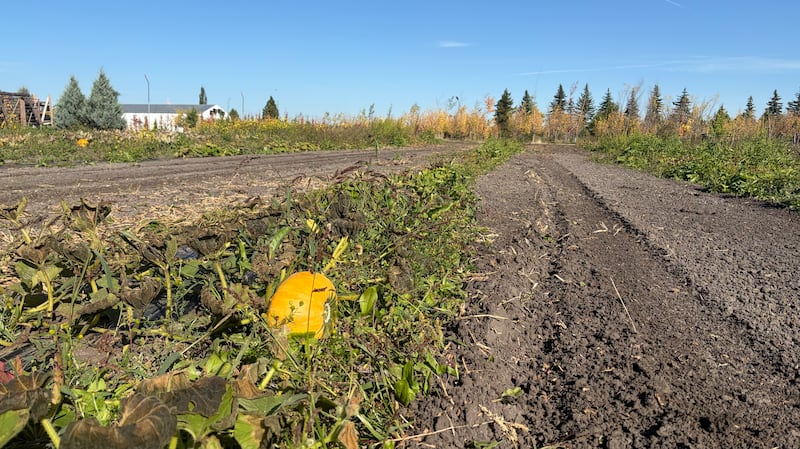
Kiwi Garden Centre typically grows a variety of pumpkins for its annual festival, along with zucchini and tomatoes that are donated to the local food bank in addition to produce sold to customers.
Rivera said flood damage will also force the cancellation of the farm’s annual Christmas festival.
“We have a lot of renovations (to do) to fix different areas,” she said. “It’s been a hard decision, but we figured it’s better to have something that’s worth it than have something that’s just mediocre.”
Linda Gorim, an associate professor at the University of Alberta and Western Grains Research Foundation chair in cropping systems, said flooding across several parts of the province has affected crops of all kinds because they are bred for more typical growing conditions.
The wet weather continues to create challenges. Gorim said many farmers are still struggling to get equipment into their fields.
“If they are all getting stuck and getting buried in mud, then there’s no chance that a crop is going to be taken out,” she said.
The effects of this year’s rainy weather could also extend into next year. Fall harvest is critical not only for this season’s sales but also for preparing fields for crops such as winter wheat.
“Winter wheat needs the winter to vernalize, therefore farmers need to get into the field,” Gorim told CTV News Edmonton. “The sooner they seed winter wheat, the more time the plants have to emerge and develop enough growth to store energy and survive the winter before they begin growing again in the spring.
“But with the current situation, if crops are still in the field in the second week of September, it means nobody is seeding winter wheat.”
With files from CTV News Edmonton’s Miriam Valdes-Carletti

