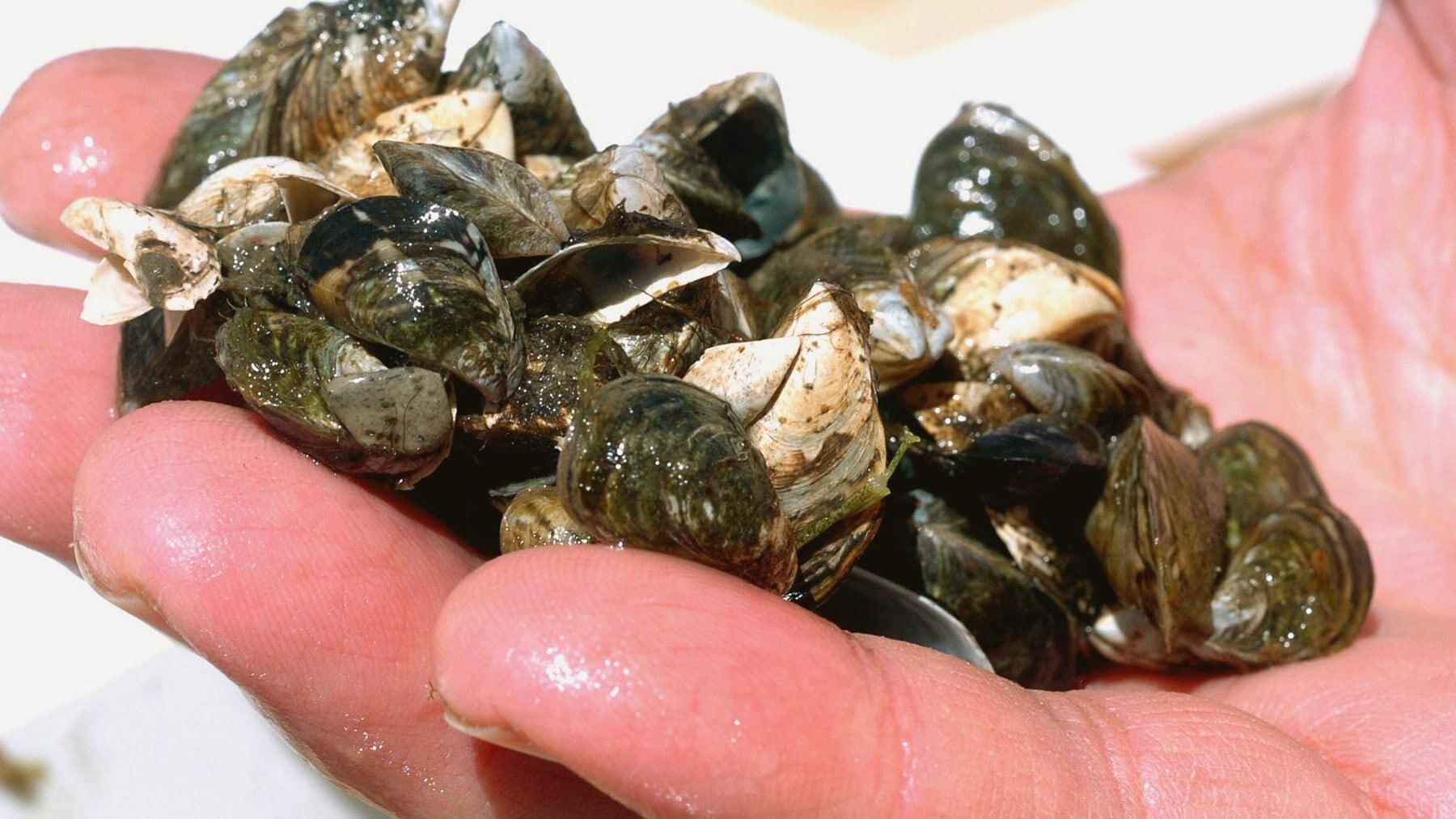
WINNIPEG – The Manitoba government announced earlier this week that zebra mussels have been detected in two new lakes in the province – Lake Winnipegosis and Waterhen Lake in western Manitoba.
Samples collected from both lakes in late August tested positive for zebra mussel larvae. In addition, a fisherman recently reported finding adult zebra mussels attached to their boat after taking it out of Lake Winnipegosis.
Provincial officials say additional monitoring will be carried out at both lakes over the coming weeks to determine how widespread the zebra mussel populations are.
“This one’s a little bit unusual. It seems all hard detections have their own narrative to them,” said Jeff Long, who is the director of aquatic ecosystems and the aquatic invasive species director for the Manitoba government.
“They noticed adult zebra mussels settled on the hull of a vessel.”
The province says all water users leaving the two lakes are required to decontaminate their watercraft and water-related equipment before launching in another waterbody.
The latest detections are raising concerns about the continued spread of the invasive specie throughout Manitoba’s waterways.
“It’s still obviously not good news,” Long said.
“That’s a little bit frustrating and demoralizing for people who care about these things, and I hope obviously everybody cares about this. There’s nothing good that comes out of a zebra mussels detection.”
The latest detection adds to an already growing number of lakes that have been dealing with the invasion of zebra mussels in the province. Most notable among them is Lake Winnipeg, the 10th largest freshwater lake in the world and sixth largest lake in Canada.
Other waterbodies include Lake Manitoba, Cedar Lake, the Red River, the Nelson River and St. Malo Reservoir Beach
Parks Canada also put a boat ban into effect in 2023 at Riding Mountain National Park’s Clear Lake after mussels were found. That ban has since been lifted, but a “one boat, one lake” rule applies that requires boaters to only use their watercraft in a designated lake.
The government is reminding Manitobans to clean and dry all watercraft before entering another body of water to help prevent the spread of aquatic invasive species.
Long says it’s important for everyone to follow the rules and take this problem seriously.
“Clean, drain, dry and where necessary, decontaminate,” he said.
“If you can’t then that’s on you. Make sure you come to an inspection station. Contact us if you’re having trouble. We’re here to help people comply.”
“We’re not interested in catching people out; we’re interested in helping people out,” he said.
What are zebra mussels?
Zebra mussels can spread quickly by attaching to boats and other equipment. Once established, they can clog water intake pipes, cover hard surfaces, and disrupt native aquatic ecosystems.
Zebra mussels, which are not native to North America, can reach high densities on the bottom of a lake or a river.
Scott Higgins, who is a senior research scientist with IISD Experimental Lakes Area, says significant work is underway to slow the spread, but preventing new infestations will require everyone to do their part.
“Once zebra mussels are in a water body, it is incredibly hard to get rid of them, so prevention is key,” he said.
“They’re incredibly capable of spreading throughout water bodies.”
“There’s a huge risk that they could spread among most water bodies in southern Manitoba, and as well into western Canada, so there’s big risks there,” he said.
Some fear the spread of the zebra mussels will not only impact the ecosystem but could have significant ramifications economically.
Daryl Kines who is the president of the Sandy Lake Water Protection Working Group has been working hard to protect his community’s lake in western Manitoba from getting zebra mussels.
He says zebra mussels could seriously impact several industries.
“It certainly can affect your property values,” he said. “That is certainly something that has been a consideration in our fight to keep the lake from becoming invaded.”

