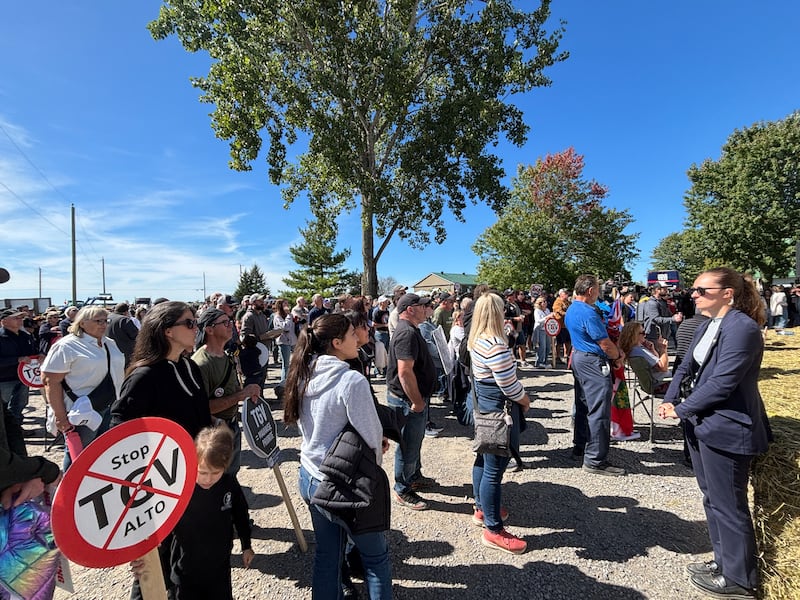
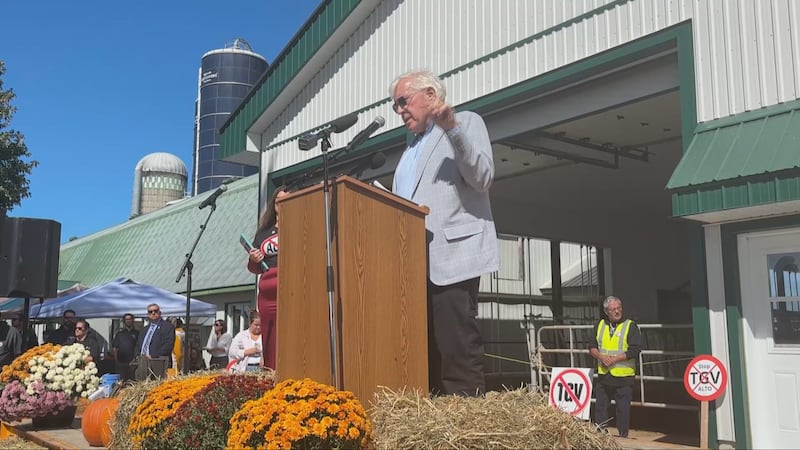
Hundreds of people came together Saturday afternoon in rural Quebec to push back against a proposed high speed rail line between Toronto and Quebec City.
Many in the farming community at the rally in Rigaud, Que. between Ottawa and Montreal say the project would negatively impact their way of life. It comes after Alto confirmed this week it has acquired a property along the proposed corridor.
Karine Bercier is a farmer who received letters in April to access her family property.
“We noticed that 3,000 acres that we have is actually in the corridor,” she said.
Bercier says it would be devastating for her farming business if the line was built.
“There’s so many things that we can’t control and the only thing that we can control is actually the acres that we have,” she said.
“It will bring us so many detours and so many additional costs to our operations, so it makes some farm’s viability very uncertain for the future.”
Alto is studying a high-speed rail line connecting Toronto and Quebec City, with possible stops in Ottawa, Montreal, Laval and Trois-Rivières. The first section would be built between Ottawa and Montreal.
“The Toronto-Quebec City corridor is Canada’s largest economic region, home to 17 million people, representing 41 per cent of Canada’s population and generating more than 40 per cent of the country’s GDP. These are the types of conditions where high-speed rail has proven successful around the world,” an Alto spokesperson said in an email.
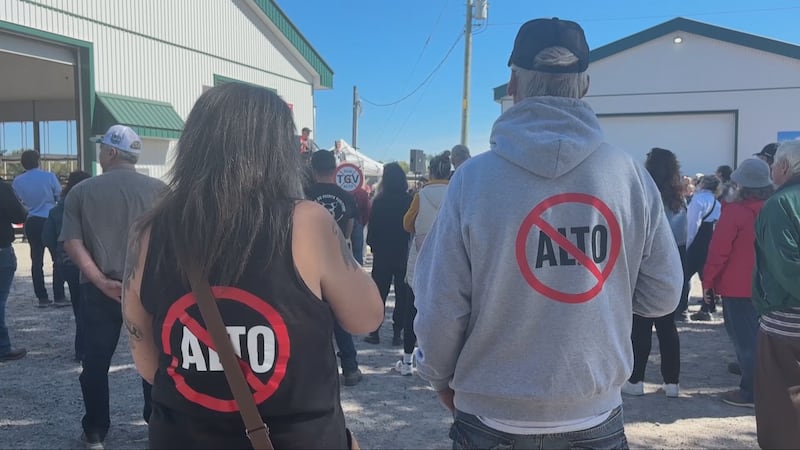
Speakers at this rally raised concerns over its impact to their properties and the uncertainty over the cost of the project.
“I think they’ve radically underestimated the capital cost using all the other projects that have been done in other countries,” said Ian Lee, an associate professor at Carleton University.
“Secondly, they’ve radically overestimated the number of people who are going to use this train, if it’s ever built.”
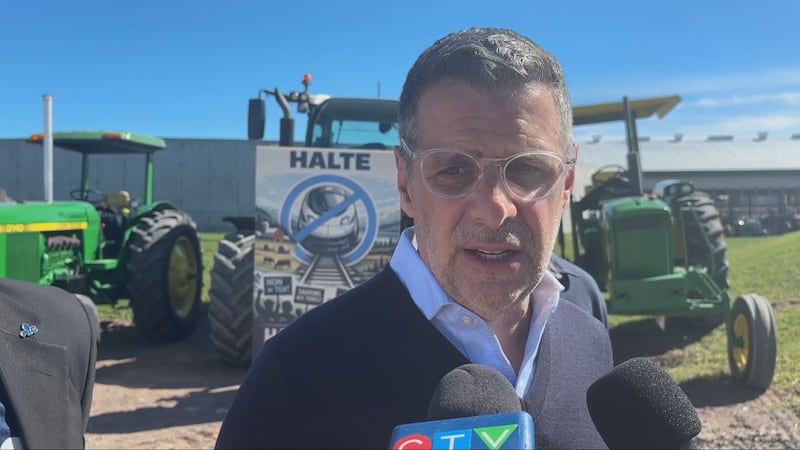
Conservative Party of Quebec leader Éric Duhaime also made a stop at the property and spoke in support of the demonstration.
“For our farmers, it’s unacceptable,” he said.
“It’s fertile farms that we are going to completely abandon if we move that way. Secondly, financially it doesn’t make sense.”
Alto says around the world, high-speed rail has helped major cities function as more integrated economic regions and says it intends to provide that same opportunity for Canada’s busiest and most economic important corridor.
The United Counties of Prescott-Russell council passed a resolution in June to refuse to grant access to county land for the studies required to assess the corridor route and declined to sign a non-disclosure agreement with Alto.
Last month, Alto signalled it was going to issue a request for proposals for a company to provide Alto with real estate appraisal services as it continues planning for the high-speed corridor.

