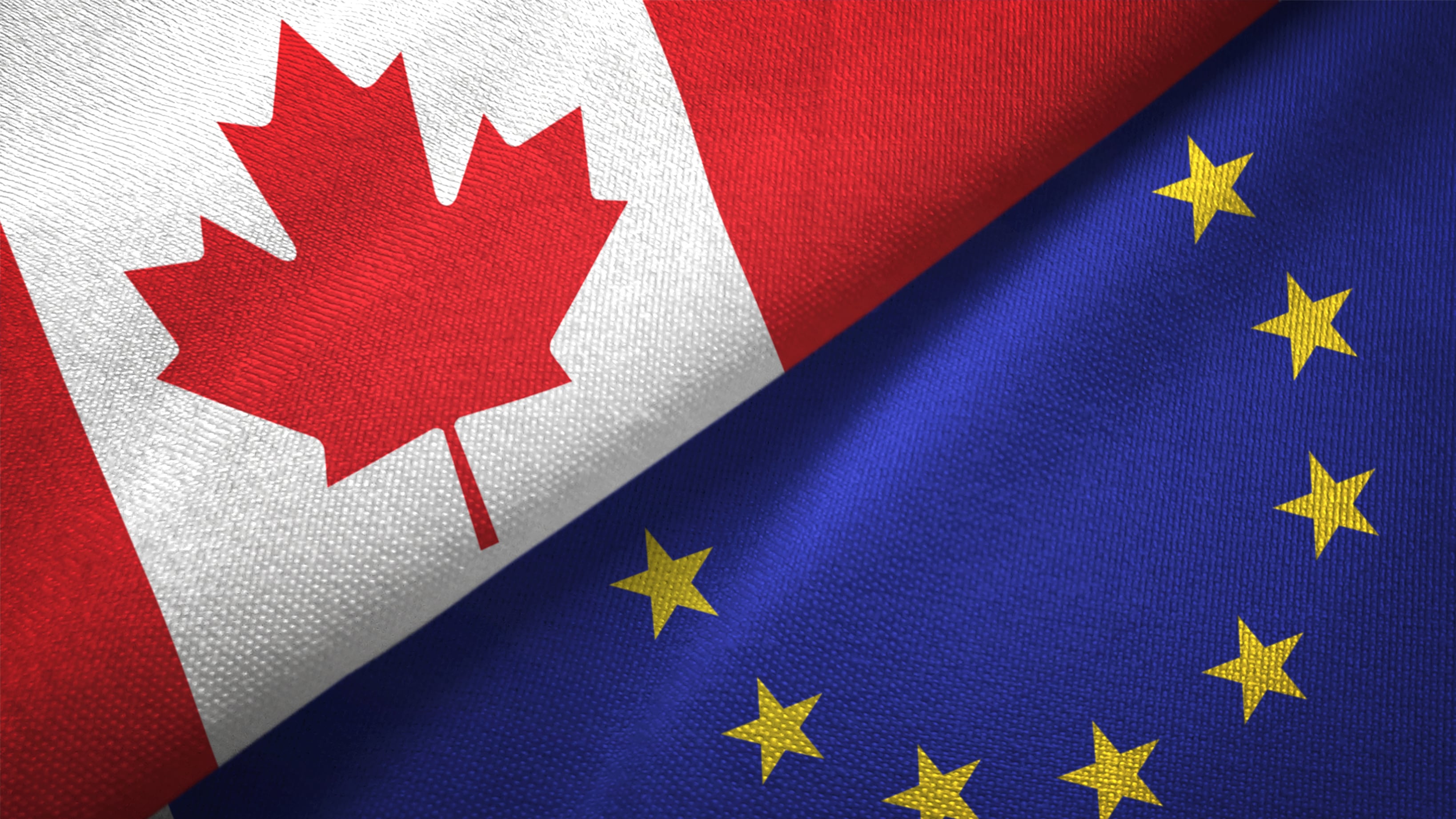
OTTAWA - Canadians may welcome the prospect of closer ties with the European Union, but pollster Nik Nanos says the issue could become a political minefield for Prime Minister Mark Carney.
On Wednesday, the EU made a historic overture to Canada, inviting the country to explore possible associate membership in the world’s largest trading bloc.
The proposal would not involve full membership. Instead, Canada could become the EU’s first associate member — a status that does not currently exist.
In extending the invitation, European Commission President Ursula von der Leyen pointed to shared values between Canada and the EU.
“We see the world with the same eyes, from AI to climate change, from the Arctic to geopolitics,” she said. “And we have stood together on Ukraine, on defence, on raw materials and supply chains.”
Above all, she said, Europe and Canada share a commitment to democracy.
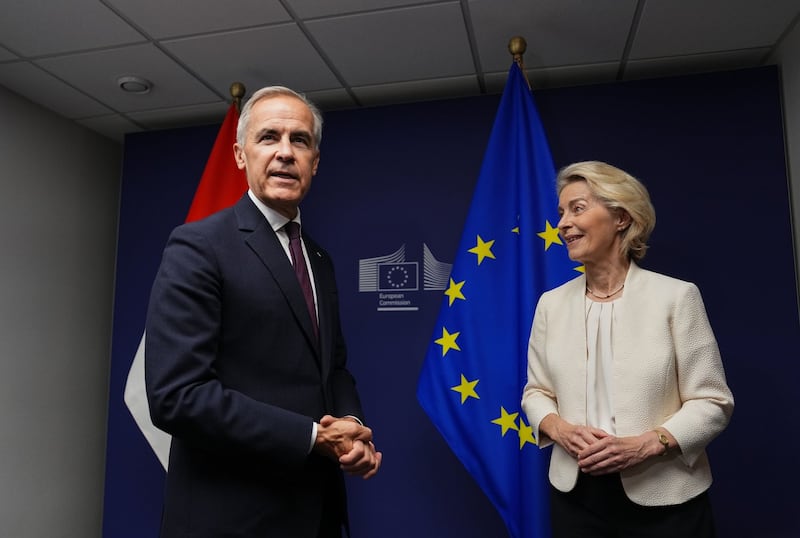
Carney welcomed the invitation on Thursday, but his earlier comments emphasized the possibility of a unique, collaborative partnership. He was also clear that Canada is not seeking full EU membership.
That may prove politically prudent, given that public support for closer European ties has limits.
In an interview with CTV News on Saturday, Nanos said polling conducted by his firm earlier this summer found broad support for greater economic co-operation with Europe.
“Support for strengthening economic ties with the European Union is exceptionally strong, at around eight out of every 10 Canadians,” Nanos said. “So right across the board, young, old, regardless of what part of the country that you’re from, you’re open to stronger economic ties.”
But that support falls to about five in 10 when EU membership itself is raised as a possibility, he said.
“Canadians are just not interested in exchanging dependence on the United States with dependence on another part of the world,” Nanos said.
That may help explain why the prime minister has been deliberate in his language around the EU.
“I think it explains why every time he talks about it, he uses the phrase ‘as long as it does not impact Canada’s sovereignty,’” Nanos said. “Because I think that’s the key question that Canadians would want to know: What are the details of what is potentially being discussed? How will it work, and what might it mean for Canadian sovereignty?”
There are also practical challenges Canada would have to consider, depending on how closely Ottawa pursued an associate relationship with the EU.
One of the biggest would be the adoption of European standards for Canadian exports, which could come at a significant cost.
“Truly aligning standards, codes and regulations with the EU, I think that’s further than most Canadian governments and most Canadians want to go,” said Brett House, a Canadian economist who teaches at Columbia University in New York.
Norway and Switzerland are not EU members but participate in the European free-trade area. To facilitate that relationship, both countries have had to harmonize legislation and regulations with EU rules in several markets.
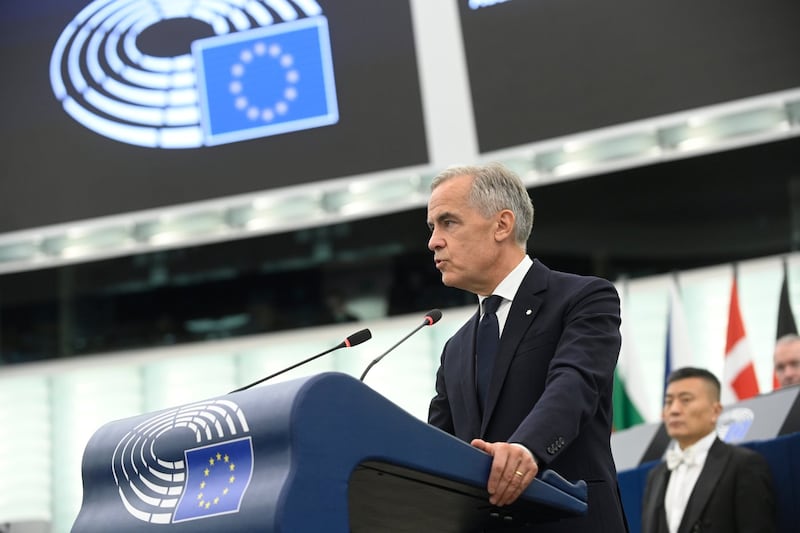
That is why House said the debate over whether Canada should become an EU associate member may be less important than the policy discussions that could result from exploring the possibility.
Those discussions could also encourage countries to make better use of the Canada-European Union Comprehensive Economic and Trade Agreement, or CETA, which is already in place.
“What really matters is that we take advantage of that existing trade agreement,” House said. “We enable Canadian companies to actually participate in it. We ensure that it covers all of the European Union, and we make it easy for Canadians to benefit from it.”
Still, the world is watching what happens next.
Australia, Wales, Scotland and Northern Ireland are among the jurisdictions seeking greater co-operation with the European Union. What emerges from Canada’s discussions could therefore be instructive for others considering closer ties.
U.S. officials are watching, too.
The U.S. president has warned the EU against moving forward with its Canadian proposal, saying it could be viewed as a “hostile act” by the United States.

