OTTAWA -- The governing Liberals used their first day back from summer break to introduce a new bill to speed up the construction of infrastructure projects as trade tensions with the U.S. hang over the country.
Buoyed by strong polling numbers and three recent byelection wins that narrowly expanded their governing majority, Prime Minister Mark Carney and his caucus began the fall sitting by introducing the Building Canada Strong Act.
The Liberals said the new Bill C-39, introduced Monday after question period, is aimed at speeding up approvals for major projects.
The legislation landed not long after Carney hosted an international investment summit that sought billions of dollars for infrastructure across the country, including data centres, ports, airports and energy projects.
The proposed law would also make substantial changes to a controversial provision of the Canada Labour Code.
Union leaders warned it could weaken the right to strike. Labour Minister Patty Hajdu strongly rejected that characterization of the bill on Monday.
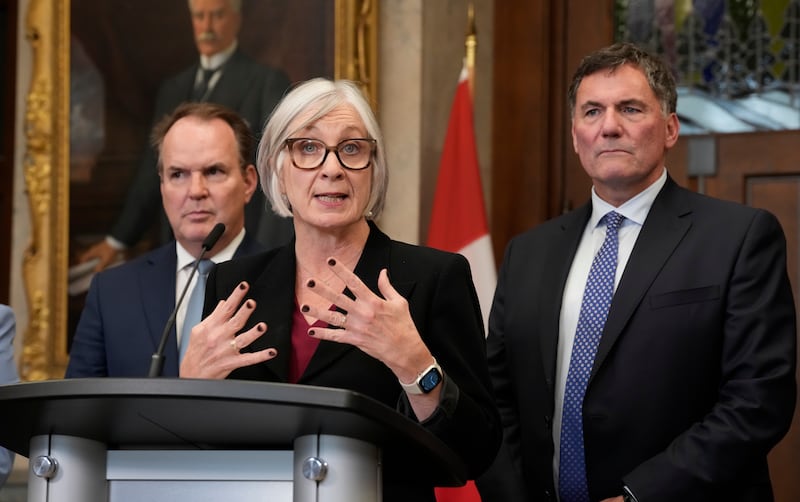
Carney’s government presented the legislation as another step in its campaign to shore up the economy and make it less reliant on the United States through new trade avenues to Europe and Asia.
The bill is sure to dominate much of the debate in the House of Commons this fall.
Monday’s question period began with Conservative Leader Pierre Poilievre calling on Carney to stand with him in support of the Jewish community and an injured police officer following a shooting at a synagogue in Belleville, Ont., on Sunday during Yom Kippur.
Carney replied there is no place for hate of any kind in Canada.
Shortly after that, the usual partisan tone returned as the federal parties sparred over Canada’s affordability crisis.
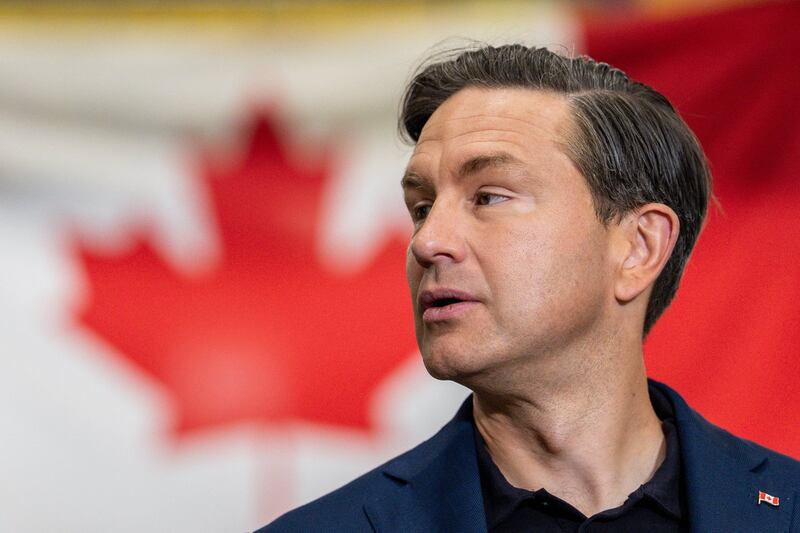
Poilievre picked up where he left off before the break, arguing government polices are driving inflation and saying grocery prices have reached “insane” levels.
He said Canadians can’t “eat speeches, summits or signing ceremonies.”
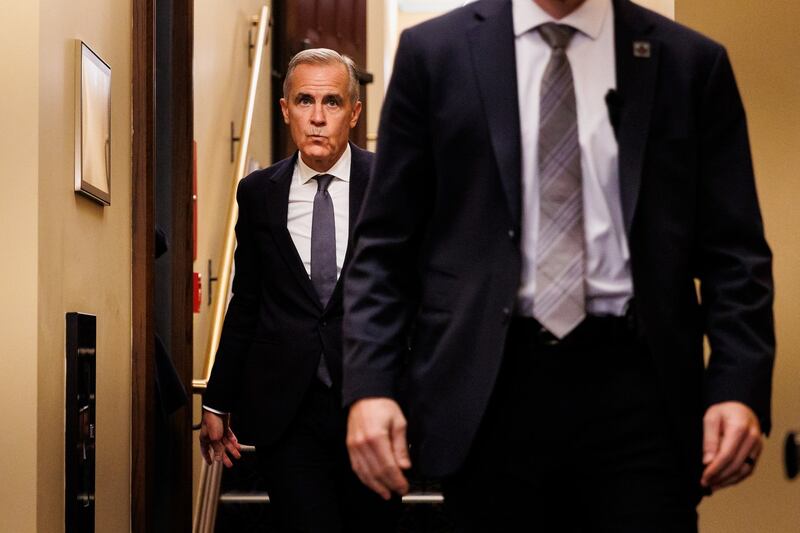
The prime minister pointed to three wars affecting Canadians right now: the trade war with the Americans, the U.S. war with Iran and Russia’s war on Ukraine.
“They are pushing up fuel prices. They are pushing up grocery prices. So we are providing immediate support to Canadians,” Carney said, pointing to the groceries and essentials benefit.
The prime minister said the government is working “tooth-and-nail to make Canadians’ lives more affordable.”
Finance Minister François-Philippe Champagne on Monday introduced a new bill to extend the excise tax break on fuel. The government promised the move earlier this month.
The first order of business for the House of Commons on Monday was for Speaker Francis Scarpaleggia to read off the list of seats which have become vacant in recent months.
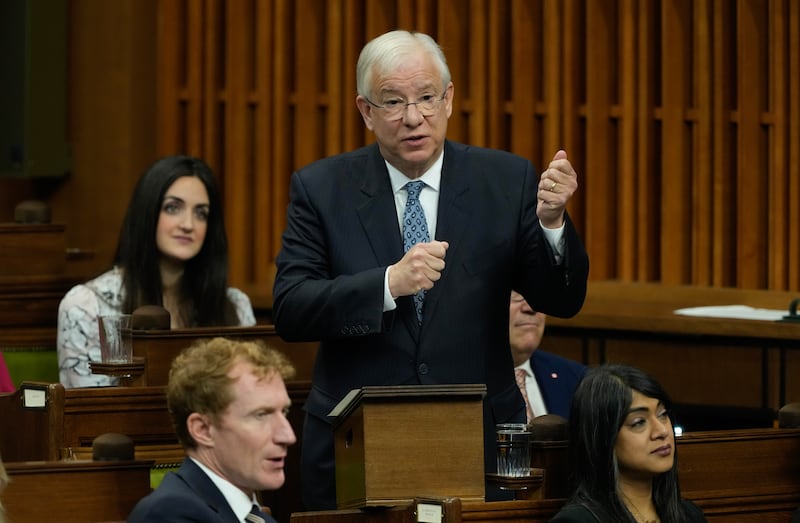
Since the House rose for the summer in mid-June, nine MPs have stepped down.
Three byelections have already have been held, which the Liberals swept. The governing party easily held ridings in Toronto and North Vancouver and snatched a seat away from the Conservatives in Quebec.
Carney was all smiles Monday as he accompanied his three new MPs into the House for the first time: his former deputy chief of staff Braeden Caley from North Vancouver-Capilano, former political staffer Tanveer Shahnawaz from Beaches-East York, and dairy farmer Daniel Gobeil from Chicoutimi-Le Fjord.
The six remaining vacant seats will require byelections in the coming months. They include two seats previously held by the Liberals, two previously held by the Conservatives and one each held by the Bloc Québécois and NDP after the last election.
The trade tensions with the United States will be a dominant theme of the fall sitting, as President Donald Trump’s White House cranks up the pressure on Canada and threatens its sovereignty.
Trump has threatened to escalate his deepening trade war with additional tariffs on steel and autos if the two sides can’t reach an agreement by the end of the year.
Canada’s negotiating team walked away from the trade talks in August at the 11th hour, saying it was a bad deal for Canada.
The trade conflict then escalated, with Trump imposing another volley of tariffs while Canada imposed its own counter-tariffs.
Trump also attempted to rebrand Lake Ontario as Lake America and sought to cut off certain Canadian imports to the United States.

Carney responded by stepping up his efforts to deepen Canada’s ties elsewhere. In a speech to the European Parliament last week, Carney welcomed European Commission President Ursula von der Leyen’s move to work on making Canada an associate member of the European Union.
What that status would mean has yet to be determined. More detail is expected to come out of a Canada-Europe summit in Montreal in October.
Carney met over the weekend with French President Emmanuel Macron in St-Pierre-Miquelon, France’s archipelago territory just off the coast of Newfoundland, and with Norway’s Prime Minister Jonas Gahr Store in Ottawa.
Carney will be in New York for meetings at the United Nations this week, though he is not scheduled to address the General Assembly.
The prime minister is expected to have more travel over the fall months, with several summits on the horizon.
This report by The Canadian Press was first published Sept. 21, 2026.
David Baxter with files Kyle Duggan and Craig Lord

