VANCOUVER – Just two years ago, B.C.’s Conservatives appeared to be on the verge of taking power.
John Rustad led the party to 44 seats in the 2024 provincial election, just three seats short of the NDP’s 47 seat majority. It was the Conservatives’ strongest showing in decades, a coalition of moderates and the more socially conservative, moving the party from the political fringe into the province’s official opposition.
Now, the party is fighting for its political survival after a damaging exodus.
Kerry-Lynne Findlay resigned as Conservative leader Sunday after less than four months on the job, following weeks of defections, expulsions and internal fighting that have divided the right.
MLA Lorne Doerkson was appointed interim leader Monday with Premier David Eby’s NDP poised to call an early election.
The turmoil is not simply the result of Findlay’s divisive leadership.
University of British Columbia political scientist Stewart Prest says the Conservatives are dealing with a deeper debate over what the party should actually represent.
“There is more that divides these two groups in many ways on some crucial questions than what brings them together,” Prest told CTV News Monday.
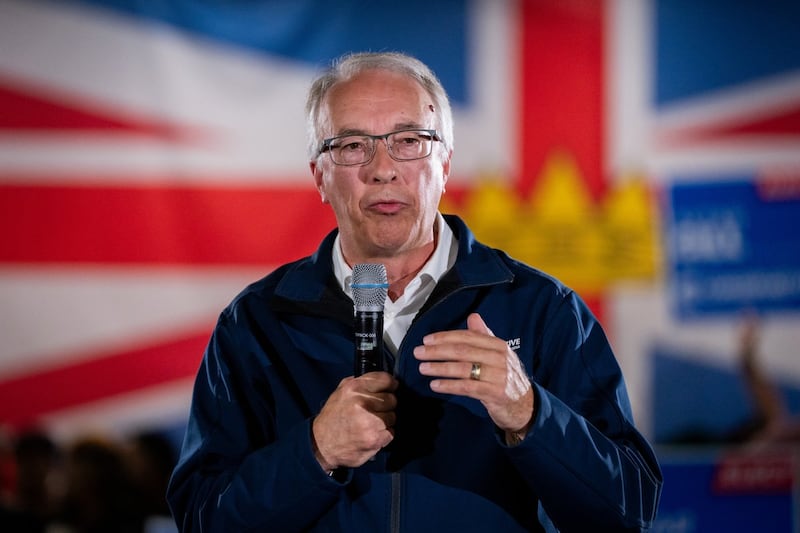
The Conservatives’ rise and the first cracks
The modern Conservative resurgence in B.C. began under Rustad, who joined the party in 2023 and helped turn it into the primary alternative to the NDP.
The party absorbed much of the vote that for decades went to the B.C. Liberals, who had unsuccessfully rebranded as B.C. United, then suspended its campaign during the 2024 election.
Leader Kevin Falcon urged supporters to back the Conservatives as several B.C. United MLAs crossed the floor to run for Rustad’s party.
Despite its stunning success, the patchwork Conservative caucus contained a wide range of political views and the tension became too difficult for Rustad to manage.
By December 2025, several Conservative MLAs had signed a letter calling for Rustad to resign. The party’s board attempted to remove Rustad after he initially refused to leave.
Rustad resigned the following day saying he wanted to avoid a civil war within the party.
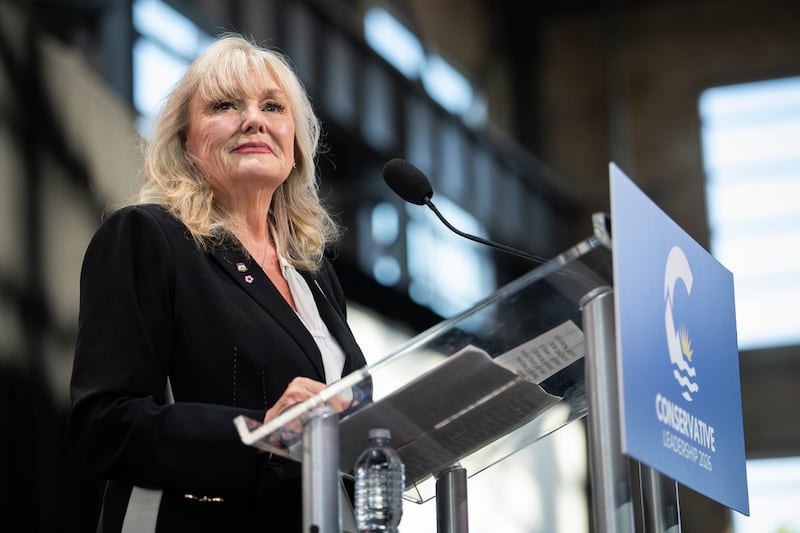
Findlay takes the reins post-Rustad
The party chose Findlay as its new leader in May 2026, but just barely. She won after a four-round leadership contest, receiving 51 per cent of the vote.
Findlay appealed to the right, promising a government guided by faith, family, and freedom.
But the new leader quickly faced resistance from members of her caucus. Beginning in August, MLAs announced they were leaving, with several citing concerns about Findlay’s leadership and the direction of the party.
“She said it’s my way or the highway. And a lot of members of her caucus chose the highway,” said University of British Columbia political scientist Hamish Telford.
Among the issues raised were reported connections involving members of Findlay’s team to Alberta separatism and disagreements over the party’s position on reconciliation.
By the middle of September, a total of 13 MLAs had exited or been kicked out of caucus.
Eight of them joined CentreBC, a party formed in 2025 that is now being led by Kamloops Centre MLA Peter Milobar, who left the Conservatives in mid-August.
CentreBC is now the B.C. legislature’s third-largest party. Milobar has said it intends to run candidates in all 93 ridings if an early election is called.
The divide may be bigger than Findlay
In the wake of Findlay’s departure, politicians on both sides say the door is open to a dialogue on reuniting the right.
Prest describes the current Conservative movement as two distinct factions: a more centrist group represented by CentreBC and a Conservative Party that has moved further to the right.
For more moderate voters, he said, some of the positions associated with Findlay and her supporters may be difficult to reconcile with their own political views.
“It would take a special kind of politician to find a way to bring those two groups together,” Prest said.
Telford doesn’t see the two merging. “I think in the short term at least, we’re going to have sort of two centre-right parties, competing against each other. And that’s why the NDP wants to call this election and take advantage of it.”
That creates a new political problem for the right: voters who once had essentially one major alternative to the NDP could soon have two.
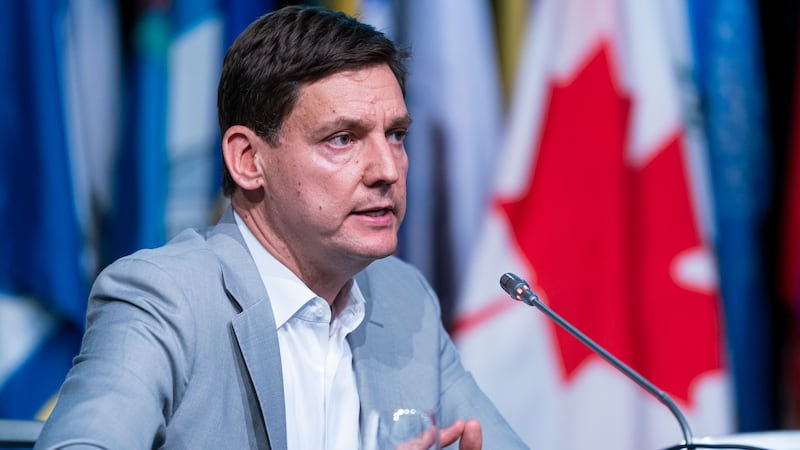
What is at stake for Eby
That division could have immediate consequences if Eby calls an election.
The premier has repeatedly said his government and Elections B.C. need to be ready for an election, while declining to announce when or if one will happen. The NDP currently holds a one-seat majority.
A provincial election would also overlap with B.C.’s municipal election campaign, which is already underway ahead of voting Oct. 17. Local government representatives have criticized the possibility of an early provincial vote.
For the Conservatives, an election would come with the party still led on an interim basis and without a permanent leader.
For that reason, Telford says an election call could be seen as dirty pool. “There’s long been a sort of a gentlemen’s understanding or agreement in Canadian politics that you don’t call an election when the official opposition party is without a leader,” he said.
Prest said the government could benefit from Conservative disorganization, but an early election could also remind voters that the NDP has chosen to seek a new mandate only two years after winning one.
“The NDP could run the risk of looking very much focused on their own interests, rather than voters’ interests,” Prest said.

