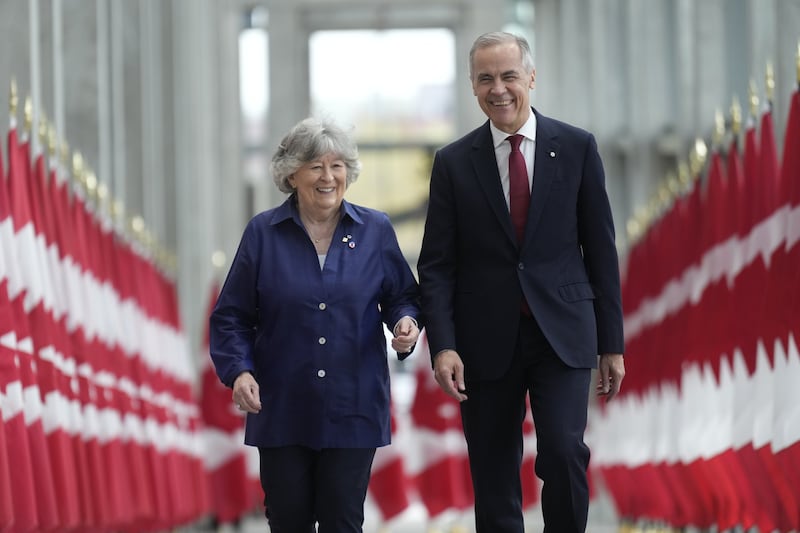
TORONTO – Less than four weeks before Albertans head to the polls in a referendum that could set in motion a future vote on the province’s independence from Canada, the Governor General says she believes the case for “unified, strong country … whether it’s economically, culturally, politically,” is “self evident, certainly from my point of view”.
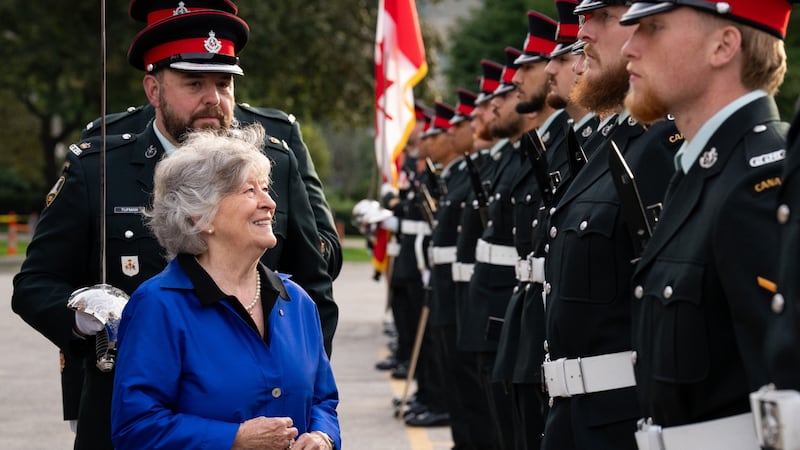
Gov. Gen. Louise Arbour made the comments in a one-on-one interview with CTV News while on her first official visit to Ontario, where she is meeting with government officials, community advocates, Second World War and Korean War veterans at Sunnybrook Health Sciences Centre, and students and faculty at York University for discussions about artificial intelligence and human rights.
“I think there’s an overwhelming majority of Canadians across the country that still believe that we’re much, much better together than apart. So, it’s not just a question of polls,” Arbour said.
“I think, individually, we can make the case for the level of liberty, security, prosperity that we enjoy individually and in our smaller communities inside a complicated federation, the vast territories, lots of different histories, lots of different understandings of history, as well.”
Arbour added that in a free country, “all this can come together,” and that today, Canada is in “as good a position as it’s ever been.”
“I don’t think there’s much to fear from pretty radical positions about the future of the country,” she said. “We are much, much better together than apart.”
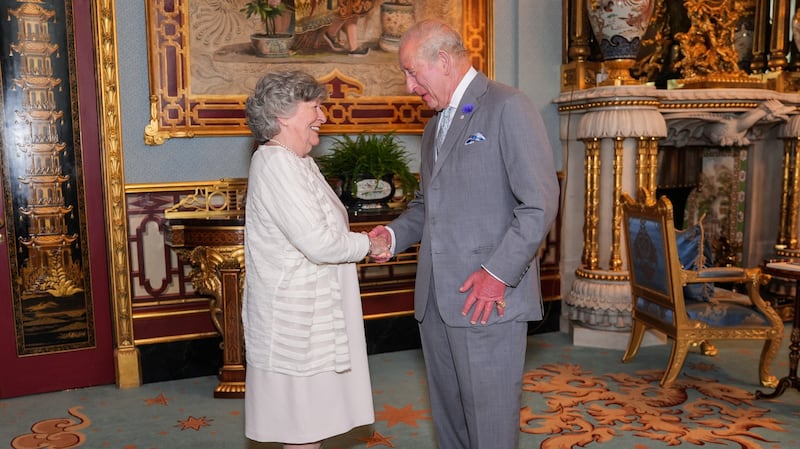
Arbour has been King Charles III’s representative in Canada for just over three months. In May 2025, in a rare royal address by a sovereign in Ottawa, the King delivered the speech from the throne, in which he said: “The True North is, indeed, strong and free.”
Charles’ speech echoed the words of the national anthem, which also indirectly sent a subtle jab to U.S. President Donald Trump during the Canada-U.S. trade clash and Trump’s persistent annexation threats.
While governments of the day write speeches from the throne to lay out their agenda, observers say those words carried extra significance coming from the King.
For her part, Arbour insists “Canada’s really at a critical part of its history,” and that she’s been struck by “how Canada is really coming together with a real sense of purpose and confidence” at a time of “the economic uncertainties, created in part by the tariff initiatives from our neighbour.”
The Governor General also noted an increase in global armed conflict, specifically in Ukraine and Gaza, have created “very challenging times” and that the world has become “very unglued.”
Despite that uncertainty, Arbour believes, Canada “will come out of it better nationally, (and in a) better position in the world.”
UN agencies ‘tired’ and ‘fragile’: Arbour
Arbour’s comments come as global leaders are gathered in New York for the United Nations’ General Assembly, at a time when some are questioning the organization’s ability to serve the needs of victims of what UN Secretary-General Antonio Guterres called Tuesday “cascading conflicts” in the Middle East, Sudan, Ukraine and Myanmar.
Arbour previously served as the UN High Commissioner for Human Rights, and chief prosecutor for both the International Criminal Tribunal for the former Yugoslavia and Rwanda.
She was the first to secure the indictment of then-Yugoslavian president Slobodan Milošević — the first indictment of a sitting head of State by an international tribunal.
“We are maybe not at the peak of our efforts in working towards a more just and equitable world. But I, I don’t think we’ve given up on it,” Arbour said.
“The planet is better educated, and we still have unconscionable inequalities. Our conflict management skills are nowhere near on par with our scientific insights.”
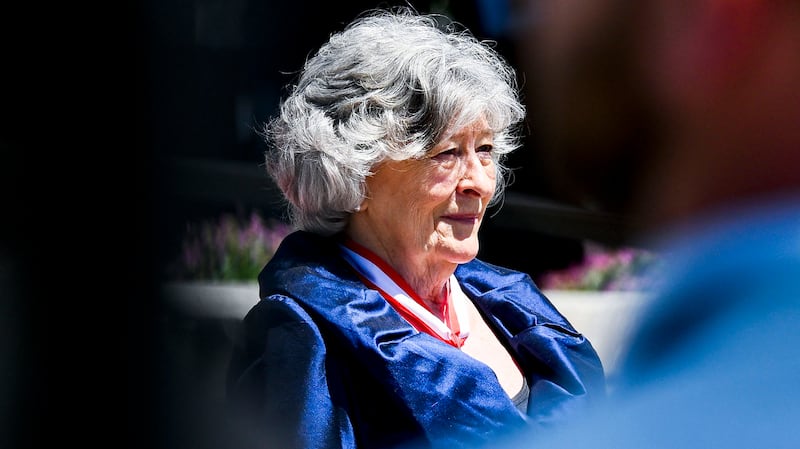
She said multilateral institutions, including the UN and its many agencies, are “tired” and “fragile.”
“First of all, they are less well funded than they were in the past … Resources currently are not on par to what they were maybe a decade ago. That’s a very big concern.”
Yet she admits “it’s very difficult to imagine something that would be fundamentally different than the United Nations” to get countries at the table, adding that reforms may be needed.
“Do we still want to live in a world where the power is in the Security Council, where five members of the veto that’s been the subject of a debate for years, at least, if not decades?” she asked, referring to the United States, United Kingdom, China, France and Russia.
“So, I think even if we can’t reform the framework of the United Nations, I think can countries like Canada can be very helpful in changing the culture of the institution.”
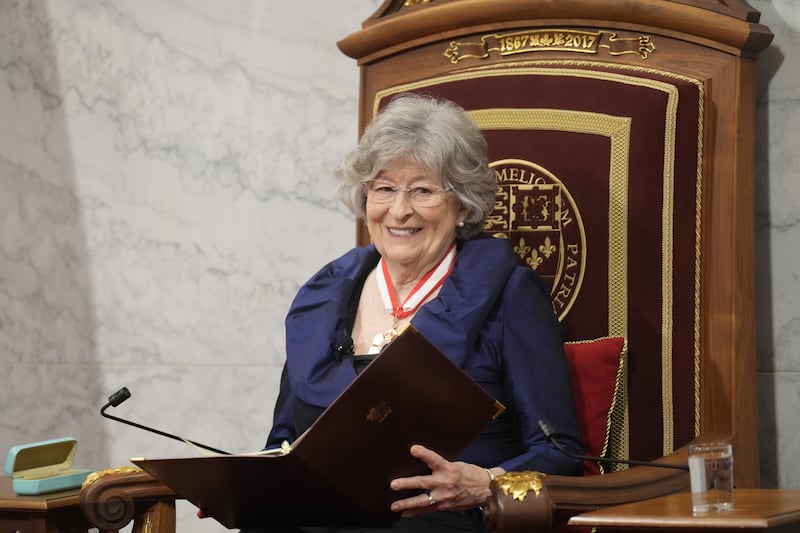
Impact of AI both ‘positive and negative’
Arbour, who is placing a strong emphasis on engagement around artificial intelligence in her mandate, has a balanced view on the future of AI. She says it would have fundamentally changed her work in her previous roles, had the technology existed then.
“And it’s both positive and negative,” she said.
“I mean, there are tools now of surveillance, of collecting information, of managing large volumes of information from imagery to access to signal intelligence to human intelligence,” she added. “At the same time, a lot of concerns about falsehoods, a lot of capacity to contaminate, to fabricate in an extremely credible fashion.”
Despite the economic and geopolitical headwinds facing Canada and the world, Arbour, who has prosecuted some of the most significant war crimes of the modern era, champions the human capacity for resilience.
But she stops short of calling it optimism.
“I don’t think it’s helpful to think about optimism. I don’t think you have a choice. You can’t. Otherwise, you’re totally paralyzed,” she said. “Humanity is very high maintenance. It’s just a fact of life.”