ST. JOHN’S — An elaborate police sting that led a man to confess to killing his wife in rural Newfoundland followed carefully prescribed rules set out by the country’s top court, according to a judge’s ruling.
Confessions from so-called Mr. Big operations are presumed to be inadmissible in any trial, since a 2014 Supreme Court of Canada ruling said they tended to be unreliable.
But Justice Vikas Khaladkar, of Newfoundland and Labrador’s Supreme Court, said the multi-year ruse established by the province’s RCMP produced an admissible confession from Dean Penney in the 2016 killing of his estranged wife, Jennifer Hillier-Penney.
“The confession is detailed. It contains information tied to independent evidence. It also includes practical details about the movement and disposal of the body that are difficult to regard as speculative or invented,” Khaladkar said in an oral ruling in March. The text of his ruling was released last week.
A jury ultimately convicted Penney in May of first-degree murder, ending nearly a decade of anguish driven by unanswered questions in a case that has gripped Newfoundland and Labrador. He was sentenced to life in prison earlier this month.

A Mr. Big sting typically involves a team of undercover police officers who convince a suspect they are part of an organized crime network. The suspect is then led to believe they are meeting with the boss of the crime outfit, who tries to get the suspect to confess to the crime in question.
In 2014, the Supreme Court of Canada said confessions extracted by Mr. Big operations tended to be unreliable, and they are presumed to be inadmissible in court. However, the court laid out careful guidelines for Mr. Big stings, including that the target cannot be coerced.
Khaladkar said Penney’s confession met the conditions.
Hillier-Penney was last seen on Nov. 30, 2016, in St. Anthony, N.L., a community of about 2,200 people on Newfoundland’s Great Northern Peninsula. She still has not been found.
She was married to Penney for about 18 years, but had recently moved in with her father, according to testimony at Penney’s trial in Corner Brook, N.L. He was arrested in late 2023.
Penney told the court he had gone out duck hunting and Hillier-Penney had gone to stay at their house in St. Anthony with their youngest daughter.
On the day she went missing, he said he returned home to pick up decoys and left again. The next morning, he said he got a call saying she was gone.
However, he told the fake crime boss that he struck Hillier-Penney with a “little mallet hammer” after she fell and hit her head in the garage, Khaladkar said in his decision about the Mr. Big sting, which is dated March 19.
Penney said he used the hammer to be sure Hillier-Penney was dead — he didn’t want to “wrap her up” only to have her regain consciousness, Khaladkar said.
“I mean, I’m not a monster,” Penney told the fake boss, according to the transcript Khaladkar included in his decision.

Penney described the blood, and the area of the ocean in which he left her body, revealing details Khaladkar said were specific and clear. Some, which were not publicly known at the time, were corroborated by independent evidence.
“They included practical and forensic particulars … and some volunteered without significant prompting,” Khaladkar said. “In my view, they materially strengthen the reliability of the confession.”
Penney had money troubles when he was offered the job captaining the crime boss’ yacht, but the judge said he didn’t feel they were severe enough to entice Penney to make a false confession. Nor was he ever threatened by the characters in the sting, the judge said.
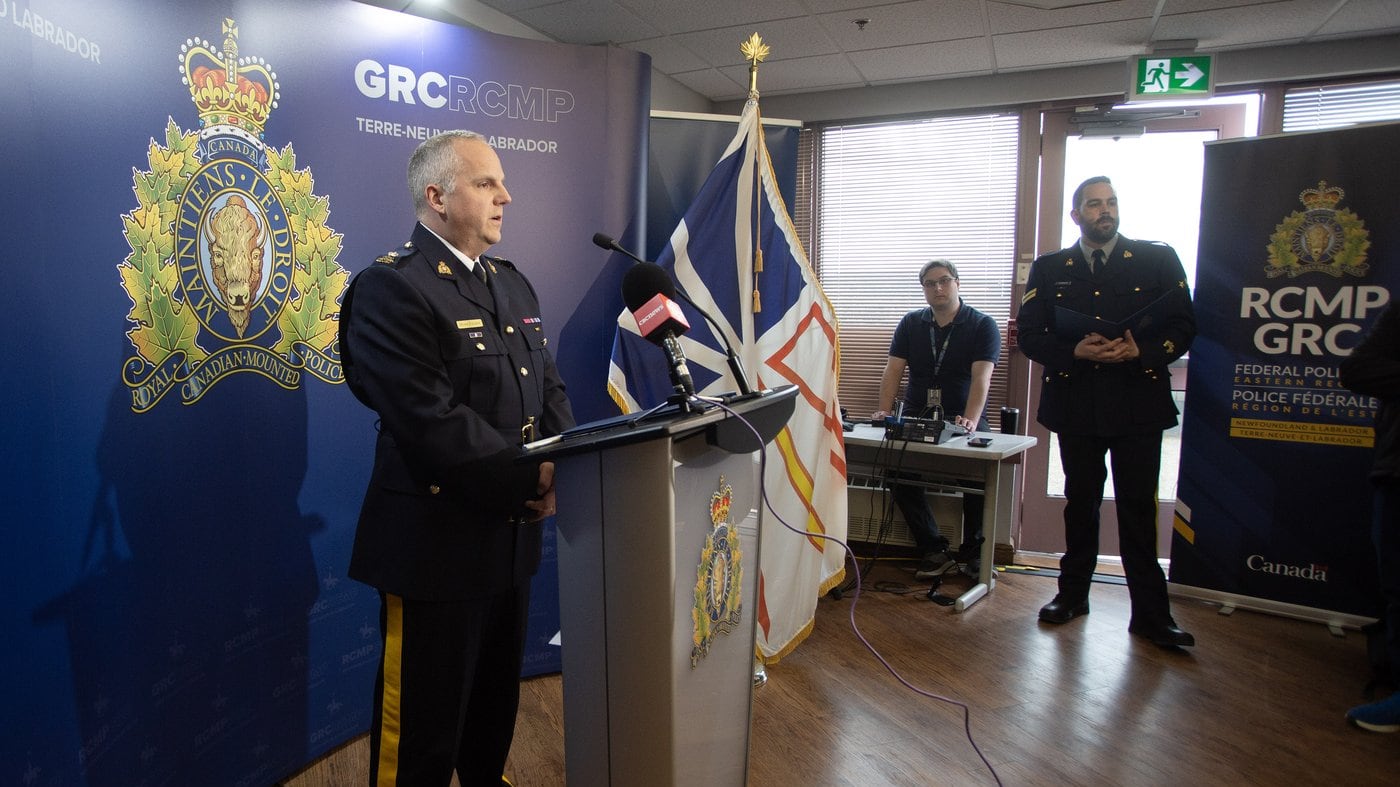
In May, on the day Penney was found guilty of first-degree murder, RCMP Insp. Adam Palmer said the Mr. Big operation police put together for Dean Penney’s case was one of the most expensive investigations ever launched by the force in Newfoundland and Labrador, and it involved about 100 employees of all ranks, some of whom slept on the floor in the St. Anthony detachment as they worked on the case
In his sentencing decision, Khaladkar said Hillier-Penney was a mother, daughter, sister and friend who was “irreplaceable” to the many people who loved her.
“Nothing this court can do can restore Jennifer Hillier-Penney to her family or undo the harm caused by her death,” he said.
This report by The Canadian Press was first published Sept. 22, 2026
Sarah Smellie, The Canadian Press

