TORONTO - When Jessica Korchowiec and Kai Helsdon began planning their wedding roughly two years ago, it was a different world with different costs for vendors and services.
At the time, they had a painstakingly budgeted plan that would have them spending no more than $25,000 on their big day. But between then and their wedding date on Sept. 5, of this year, everything changed.

Over the next two years, couples and vendors faced higher food and service costs, trade tensions and more recently, higher fuel and transportation prices.
Their original budget was thrown out the window.
“The initial budget for me was around $25,000, but we ended up spending close to $40,000 and that was partially due to added costs and increase in some of the things that we weren’t expecting,” Korchowiec told CTV News
“I wasn’t expecting a house wedding to be so expensive,” she added.
“I think that’s what caught me off guard was that I thought that I had the power to do things cheaper.”

Wedding planners tell CTV News that wedding costs have soared this year. However, couples are finding different ways to mitigate the financial damage.
“There’s that ripple effect of everything. Fuel costs go up, which means delivery fees are going up, then wedding fees are going up,” said Toronto-based wedding planner Trevor Frankfort of Trevents Planning.
“Getting all of the product for the wedding has now become so much more expensive than it was last summer.”
Frankfort said that he’s having more conversations with his clients about their budget and what couples can trim from the event.
“Are they willing to go with a cheaper venue, even though it’s not all the glitz and glamor? Or do they need to scale back on food quality or guests? Where are they making those compromises?” he asked.
“Guest count is the biggest hurdle these days because everybody wants to invite everybody, but it’s the easiest way to reduce the cost of your wedding, but keeping it elevated still.”
Data shows higher costs for couples and guests
Statistics Canada data shows several costs tied to both hosting and attending a wedding have climbed over the past year.
Prices for food purchased from restaurants, which is a category indirectly tied to catering and food-service costs, saw an increase of roughly six per cent over two years.
Prices for alcoholic beverages served at licensed establishments rose 3.5 per cent year-over-year in June, following a 3.3 per cent increase the previous year. Those costs were about 6.9 per cent higher than in June 2024.
Fuel costs are also putting pressure on businesses that transport goods and supplies.
Statistics Canada’s Industrial Product Price Index shows producer prices for diesel fuel were 75 per cent higher in August 2026 than in August 2025. That figure measures prices received by Canadian producers rather than the retail price motorists pay at the pump, but it points to significantly higher fuel-related input costs for industries that rely on trucking and deliveries.
“The majority of flowers in Canada are shipped from South America, from Europe, from Asia,” said wedding planner Roxy Zapala who runs Art of Celebrations.
“There are some homegrown florals, but a lot of them are shipped, so when the gas prices go up, the price of flowers start to skyrocket. When we’re talking about things like a single bouquet, maybe the price goes up by $5 and $10.”
Wedding guests have also felt a financial hit this year. Travel prices have surged and accommodation costs have also risen.
Gasoline prices were 22.8 per cent higher in August than a year earlier, while air transportation prices rose 15 per cent over the same period. Travel-tour prices were up 26.1 per cent year-over-year in August, along with the introduction of fuel surcharges amid higher jet-fuel costs.
Accommodation also became more expensive. Traveller-accommodation prices were 10.1 per cent higher nationally in June 2026 than in June 2025.
The increase was even larger in Ontario, at 19.4 per cent although Statistics Canada said the provincial jump was driven in part by higher demand in Toronto during the FIFA World Cup.
“All of those things are affected. It’s like a ripple effect, and all of a sudden everything becomes so much more expensive,” added Zapala. “So maybe guests are declining coming to multiple weddings and only choosing to go to one or two for the year.”
Micro-weddings make a comeback as couples cut costs
Wedding planners have told CTV News their clients have been gravitating less towards destination weddings and more towards micro-weddings to save money.
“Micro-weddings have an average guest count of 20 to 50 (people) and that’s just their favorite people,” said Tracey Manailescu with the Wedding Planners Institute of Canada.
“They’re must-have people, like friends and family. So maybe you’re going to a restaurant, maybe you’re having a really particular winery or venue that you really want to have this beautiful, elegant setting. Or maybe it could be in your backyard and just downsizing it but upgrading on the florals or upgrading on the things that are really important to them,” she added.
Manailescu says micro-weddings were common during the COVID-19 pandemic and now they’re seeing it “creep back again” so that couples can allocate their funds to other expenses.
“Then that money that we’re saving, let’s put it towards our house, let’s put it towards our honeymoon, and let’s go to Europe for a month, as opposed to let’s go a week somewhere else and let it go.”
When it comes to wedding expenses, Frankfort believes the worst is yet to come. Many couple were able to lock in prices when they booked last year, but those who are booking vendors now might be in for a shock when they see the prices.
“What I’m seeing down the road is these trade wars just keep happening, and it’s getting worse and worse in every industry, not just the wedding industry,” said Frankfort.
“If I saw such a huge difference between last summer and this summer, I can’t even guess what next summer is going to look like for people. It’s scary.”
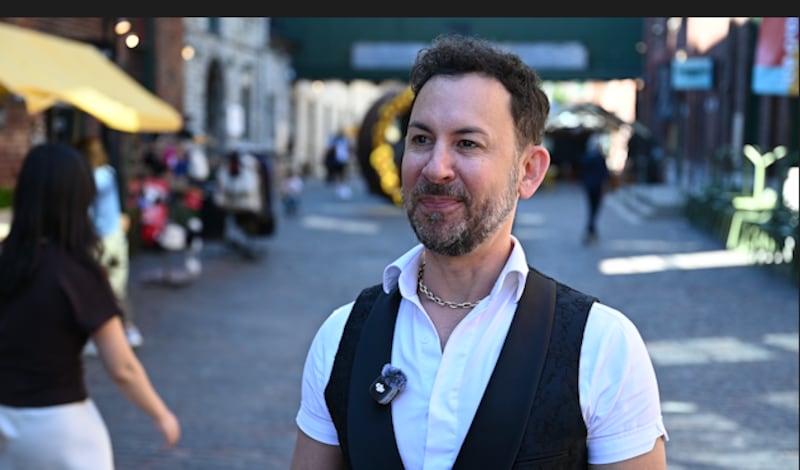
Frankfort adds that some vendors have been adding contract clauses to allow for price changes. Those clauses allow vendors to protect themselves in case prices for their supplies surge again.
“What I’m seeing is this wording changing, (vendors) anticipating costs to go up so that they aren’t affected by it as much. They can actually throw those costs off to the clients,” said Frankfort, who adds he hasn’t seen a clause of this nature in previous contracts.
“You’re feeling like vendors are protecting themselves against some of these astronomical costs.”
With files from CTV News’ Kristen Yu

