


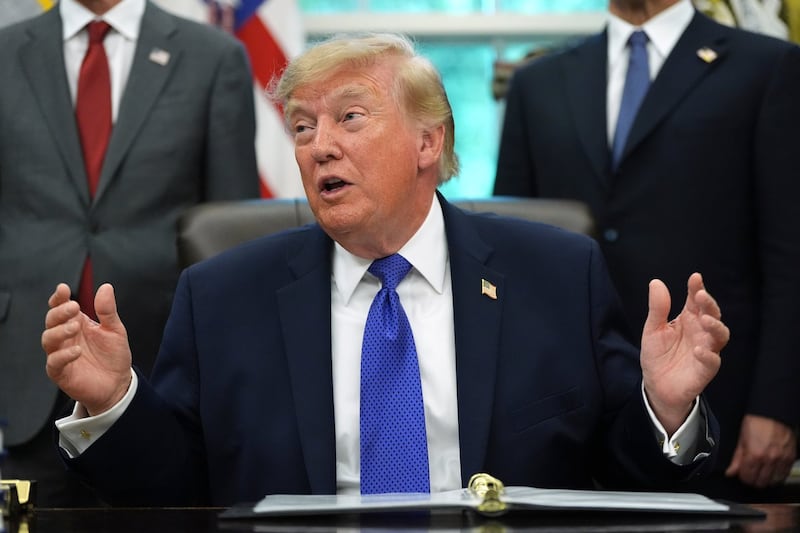
WASHINGTON — Just hours before import bans on certain Canadian goods were set to take effect, U.S. President Donald Trump said Monday he thinks he can make a trade deal with Canada in the coming weeks.
Speaking to reporters in the Oval Office, Trump said he thinks the Canadian side will contact him in the next three or four weeks and the United States will “win everything.”
“They’re gonna come in and they’re gonna say, ‘Sir, we are sorry,”’ Trump said. “They’ve treated the United States very, very badly. I think a deal will be made but it’s gonna be fair.”
Trump’s bans -- which mainly affect some alcoholic drinks, dairy byproducts and motorcycles -- are set to begin at 12:01 a.m. ET Tuesday.
It’s the latest escalation of the trade war since negotiations between the two countries ended acrimoniously last month.
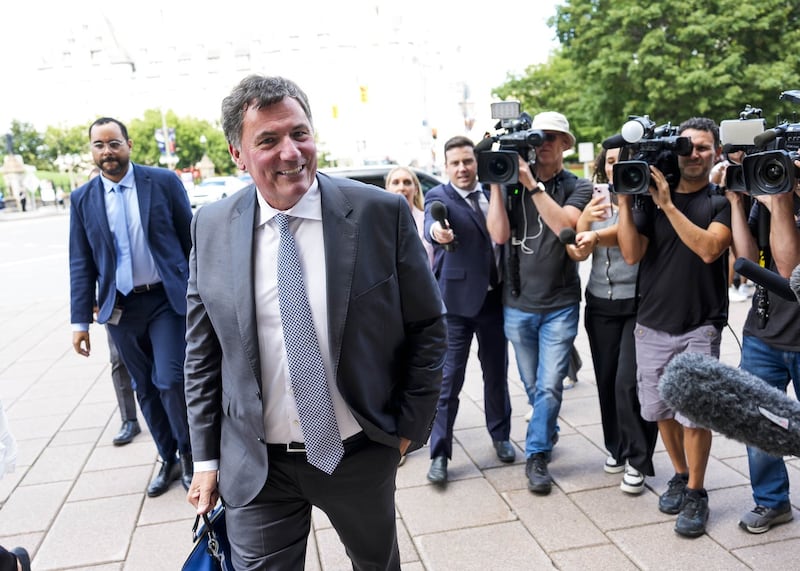
Canada-U.S. Trade Minister Dominic LeBlanc’s office said Monday that “we take note of the coming into force of the Administration’s previously announced trade measures.”
“As has been the case for the last 18 months, our first priority remains on protecting and supporting Canadian workers, farmers, families, and businesses from these unjustified actions,” said Gabriel Brunet, LeBlanc’s spokesperson.
“Our core focus is on what we can control: building strength at home, diversifying our partnerships abroad, and building Canada strong for all Canadians.”
While the trade restrictions on Canadian goods are unlikely to significantly affect Canadian economic growth in the near term, they represent the latest fracture in Ottawa’s relationship with the Trump administration.
Trump on Monday repeated his inaccurate claims about Canadian agriculture tariffs, as well his more recent allegations about Canada’s immigration system letting people in unchecked.
Peter Navarro, Trump’s senior adviser on trade, told reporters that Canadians were “the most difficult and arrogant of the traders.” He claimed Ottawa was “getting in bed with” Beijing -- despite the fact that Trump hosted Chinese President Xi Jinping in Washington last week.
United States Trade Representative Jamieson Greer said last week that “the reality is President Trump is comfortable where we are on Canada,” adding “there’s no urgency on our side.”
Trade talks with the United States fell apart in late August and both countries have claimed the other added last-minute changes to the deal.
Prime Minister Mark Carney has accused U.S. negotiators of attempting to restrict Canada’s ability to negotiate other trade deals and of attempting to curb Canada’s protections for language and culture.
In the hours after negotiations were frozen, the United States used Section 338 of the Tariff Act of 1930 to hit an array of Canadian goods with 50 per cent tariffs. Ottawa responded with its own tariffs a few weeks later.
Trump responded by signing an order directing some federal agencies to remove Canadian goods from procurement lists, and another to impose the import bans. BMO estimates the worth of those banned export products at about US$1 billion.
The president also signed an executive order to change the name of Lake Ontario to Lake America.
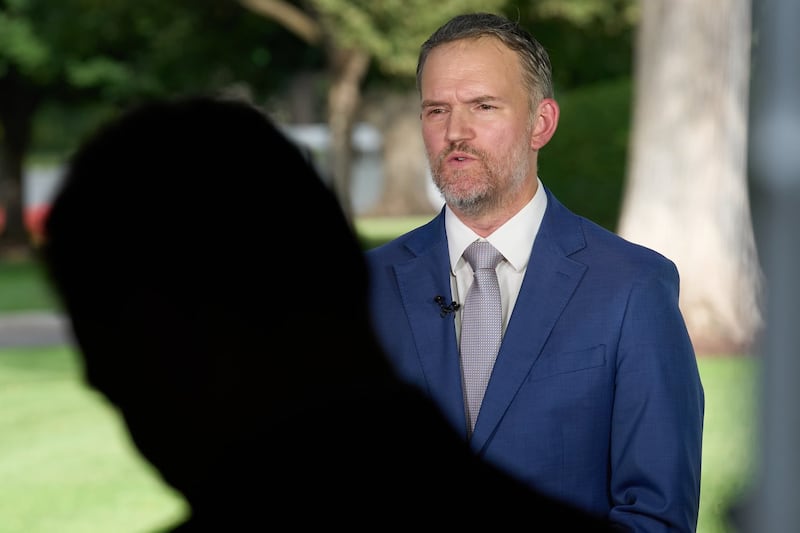
Alfredo Carrillo Obregon, a trade policy analyst at the Washington-based Cato Institute, said the Trump administration’s use of the Depression-era statute -- for the first time in history -- to impose tariffs and ban imports “indicates the continued deterioration of Canada-U.S. relations.”
While the impact may be limited in scope, Obregon said, “the action is symbolic insofar as it shows that the Trump administration is willing to leverage more of the trade policy tools at its disposal to obtain concessions from Canada in bilateral negotiations.”
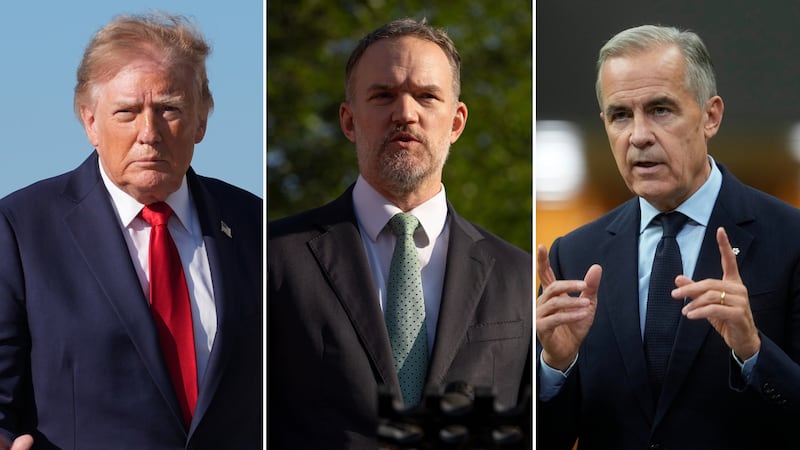
Obregon said that, despite Trump’s claims about the United States not needing anything from its northern neighbour, Canada is America’s second-largest trading partner and the North American market is highly integrated.
“I am hopeful that both sides will eventually negotiate a resolution to this dispute, but at the same time, reaching an agreement would likely involve both sides making concessions that they have publicly signalled they are unwilling to make,” Obregon said. “So the current status quo might persist for a while.”
Canada is also being hit with 10 per cent tariffs which the Trump administration claims are connected to forced labour in supply chains. Those duties do not apply to goods that comply with the Canada-U.S.-Mexico Agreement on trade, known as CUSMA.
And Canadian industries like steel, aluminum, automobiles and cabinetry are being slammed by Trump’s separate sectoral tariffs.
This report by The Canadian Press was first published Sept. 28, 2026.
Kelly Geraldine Malone, The Canadian Press

