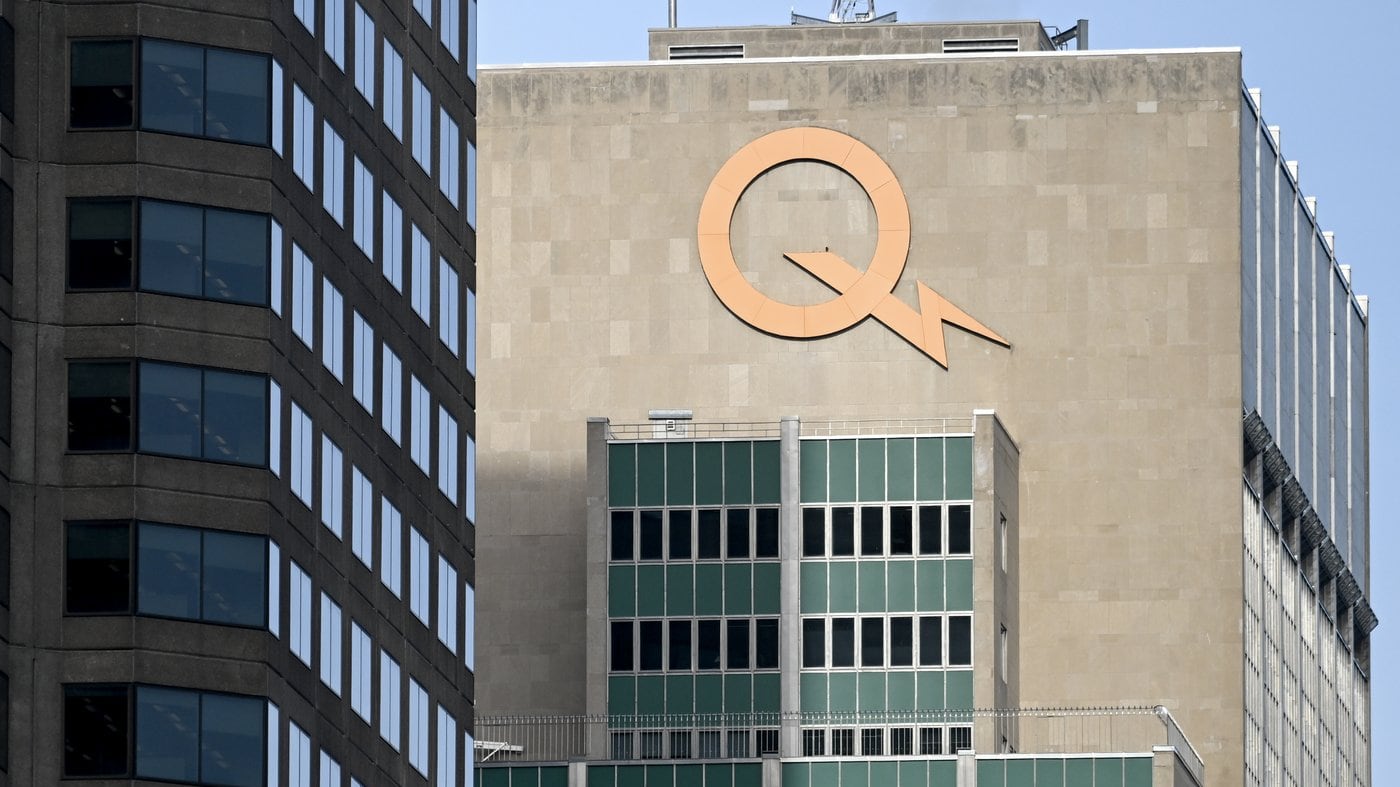
Analysts for Hydro-Québec made the case Thursday morning that the utility needs to act urgently to limit the impact of the growing data centre industry on energy costs for Quebecers.
In a public hearing in Montreal, the provincial utility called for a new energy rate that could double the cost of energy for data centres.
“I don’t think I will surprise anyone by saying that the context has changed deeply and that the era of energy surpluses is now behind us,” Sarah Trabelsi, chief of costs and pricing at Hydro-Québec.
This was part of the utility’s first presentation at a provincial energy regulator hearing. It is pitting Hydro-Québec against tech industry actors like Google as well as environmental advocates like Greenpeace.
Hydro-Québec is asking the Régie de l’énergie — the regulator — to consider a new electricity rate for data centres that require a capacity of over five megawatts.
The proposal would raise energy prices to an average of 13 cents per kilowatt hour. Data centres currently pay an average of 6.82 cents per kWh, according to Hydro-Québec’s calculations.
With the average cost of energy at around 12 cents per kWh and increasing, Hydro-Québec said it wants to ensure it does not keep selling energy to data centres at a discount that will leave other customers footing the bill.
“We’re proposing these rates in an effort to manage and mitigate, or control, the impact on our customer base as a whole,” said Trabelsi.
Hydro-Québec said data centres that would be subject to the new rate currently consume 190 MW at peak consumption and could reach 1,000 MW by 2035.
Energy costs for data centres in Quebec are much lower than in most other jurisdictions, said energy analyst Jean-François Blain in an interview.
“It creates an exceptional draw that benefits Quebec, as long as they can supply those companies,” he said.
The new rate would bring their rates closer to those of other areas.
READ MORE:
- Critics in Newfoundland slam power agreement with Hydro-Quebec as bad for province
- Newfoundland and Labrador votes in favour of Quebec energy agreement worth billions
The first part of the hearing is scheduled to last until Oct. 9, with a second part planned in December. The hearing will involve actors from several industries, such as the Canadian Federation of Independent Business and a coalition of environmental groups including Greenpeace and Nature Québec.
The provincial energy regulator will be reviewing whether a new rate for data centres is fair and sustainable.
---
Marieke Glorieux-Stryckman, The Canadian Press
This report by The Canadian Press was first published Oct. 1, 2026.

