Tom Mulcair served as leader of the federal New Democratic Party from 2012 to 2017. He is a political commentator for CTV News and a columnist for CTVNews.ca.
Monday’s election in Quebec, more than any other in a generation, could have a determining effect on the future of our lives together and on Canada itself.
I get it, just talking about a complex Quebec general election is enough to send people scrambling for the mute button.
But there really is something unique happening in the run-up to Monday’s vote in La Belle province that other Canadians should keep an eye on.
I guess that many of us just shrug our shoulders and say that the threat of separation has been background noise in Canada since the Parti Québécois was first elected exactly 50 years ago in 1976. Who cares, eh?
The Parti Québécois is set to win on Monday and its headstrong leader, Paul St-Pierre Plamondon (or PSPP as he is known), is promising a destructive push for a referendum and a unilateral declaration of independence, even if he only gets a minority.
That would fly in the face of the Canadian constitution and the Supreme Court ruling on secession, but that’s not the type of subtlety that will stop PSPP or the hard-bitten, right-wing nationalists who are the core of his team.
A primer
Only 30 per cent of Quebecers want a referendum and even fewer would actually vote for separation, so how did we get here?
Let’s begin with the weirdest part: there are five, count ‘em five, parties seriously vying for the favour of Quebec voters.
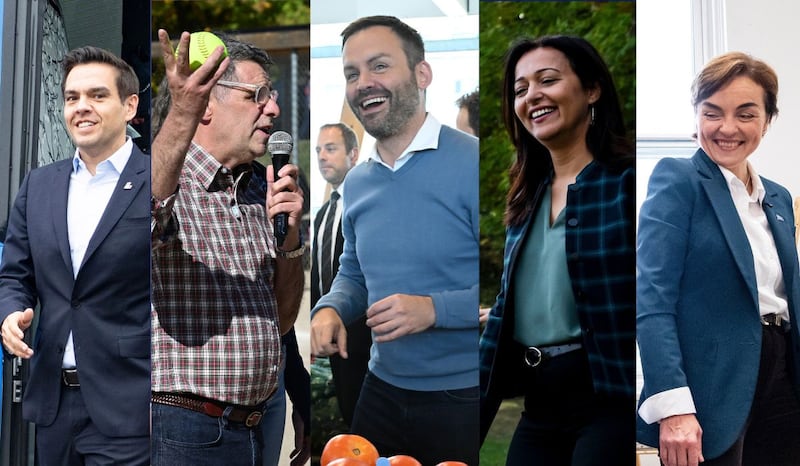
That type of atomization of the vote rarely occurs in British-inspired democracies with a first-past-the-post electoral system, but the divisions are very real.
They represent Quebec’s unique slicing and dicing that isn’t done merely on economic or social lines; it’s cross-hatched by the option: Do we stay or do we go?
Since one separatist party is never enough, there are two separatist parties: the very right-wing Parti Québecois (or PQ) and the very left-wing Québec Solidaire (QS).
QS spun off some 20 years ago, bringing together Quebec’s more progressive forces, the union movement, social groups and women’s rights groups. It was created at a time when the province’s dire economic situation and mammoth debt were leading to cuts in social programs and hurting those at the bottom of the socio-economic ladder.
Under PQ Premier Lucien Bouchard, the quest for ‘deficit zero’ had been brutal, and socially progressive separatists no longer felt at home with that party. Québec Solidaire’s small numbers were a strong voice for the underdog during the Jean Charest years and in the most recent legislature, they even achieved party status with 12 members of the National Assembly.
You don’t invite QS and the PQ to the same supper. But they will be on the campaign bus together if there’s another referendum.
The three non-separatist parties are the outgoing Coalition Avenir Québec (CAQ), the stalwart Quebec Liberal Party (QLP), and the up-and-coming Conservative Party of Quebec (QC).
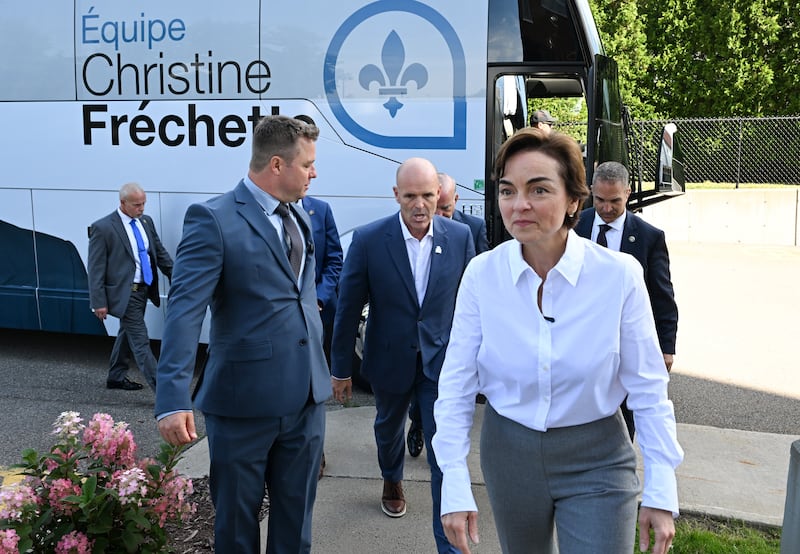
It’s worth noting that Premier Christine Fréchette has worked hard to distance herself from the memory of her predecessor, François Legault, going so far as to rebaptize the CAQ, adding ‘Équipe Christine Fréchette’ on the ballot.
Fréchette ran a stellar campaign for the first half of this contest. Then the wheels fell off. She had been assiduously (and successfully) courting English-speaking voters and voters whose first language is neither English nor French.
She then threw it into the dumpster after she refused to send bilingual election notices, the first time in Quebec history — a clear violation of the Canadian constitution. That was quickly corrected by the courts, which issued an injunction ordering the government to respect linguistic rights. But it was too late, and it brought back memories of the CAQ’s intolerance towards minorities. A dumb goal into their own net.
Fréchette also said that it didn’t matter whether she was a separatist or a federalist , which sent voters back to the Liberals in droves.
It began a downward spiral that Fréchette, despite her own exceptional abilities, was never able to control as other campaign difficulties piled up.
In a campaign that was the mirror opposite of Fréchette’s, QLP leader Charles Milliard had an abysmal start but is now enjoying a very successful sprint to the finish line.
The division of the vote is playing havoc with the party’s projected seat total, but they are fairly expected to remain the official Opposition, not something that anyone would’ve bet on just a few weeks ago.
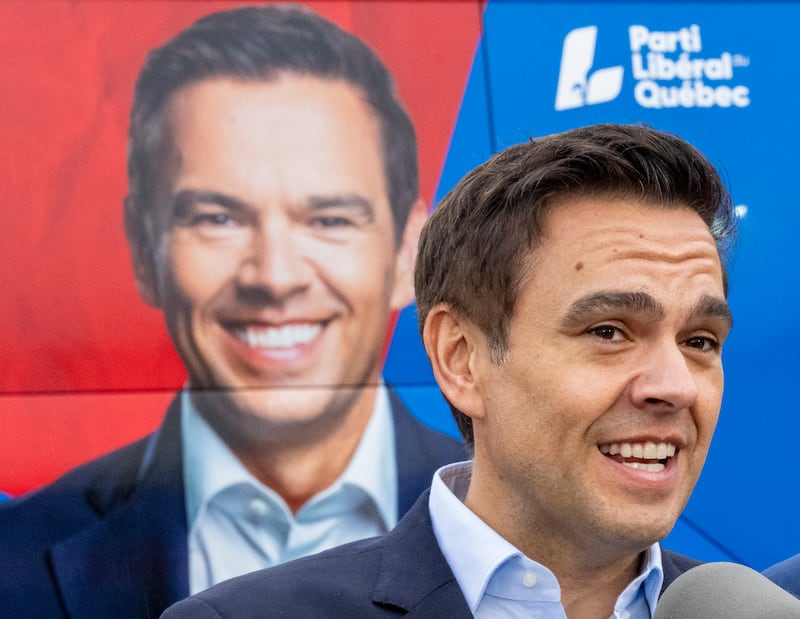
Milliard is the only true federalist in this campaign. Both Fréchette and Conservative leader Éric Duhaime have proudly said that they voted ‘yes’ to the breakup of Canada in the 1995 referendum.
As the real threat of Quebec separation posed by the PQ has finally begun to sink in, and with the collapse of the CAQ, the Liberals have reignited the voters’ interest as the only vehicle to stop a referendum.
Just about the biggest new news in this campaign, I safely predict, will be the election of the first Conservative members since 1936. Duhaime has run a focused and highly disciplined campaign and could well achieve party status if he wins 12 seats.
Separatist game plan
The PQ has a Soviet-like discipline when it comes to planning. And it has a plan.
First, never say ‘referendum’, say ‘a consultation’ or ‘democratic exercise.’ Put them to sleep with vocabulary.

But PSPP can’t help himself. He boasts on air of being pigheaded. That worked brilliantly for him when he and his two colleagues (yes, in the last election the PQ elected only three members) refused to swear the constitutionally required oath to the Crown.
Legault said they had no choice. PSPP said they would not swear an oath to the Monarchy, come hell or high water. Legault blinked and changed the law (it’s being challenged in the courts), and the PSPP legend was born.
Based on the admiration that grew out of that, PSPP, in the dying days of the campaign, has decided to try to get some of that magic back. Out of the blue, he now says that the lieutenant-governor will not be there for the opening of Parliament, and he will do away with the function.
There is a real problem with that last part because, like it or not, the signature of the Governor General in Ottawa and the lieutenant-governor of a province are required for an enactment to have the force of law.
PSPP doesn’t just strut his stuff. These are battles that he wants.
He says he will also enact a Quebec constitution. It is separatist catechism to say that the Canadian constitution and its Charter of Rights are illegitimate because Quebec never signed them.
PSPP’s Quebec constitution will state that only Quebecers get to decide on their political future and that bit from the Supreme Court about requiring qualitative and quantitative clarity in a referendum can be safely ignored.
He also believes that the Supreme Court’s opinion that there cannot be a unilateral declaration of independence is without force or effect. He strongly believes in a unilateral declaration of independence and will be gunning for it by including it in his Quebec constitution.
PSPP has said there will be no referendum while Trump is still in office. That was a sop to the deeply held fears of 70 per cent of the Quebec electorate.
But the whole game plan is to spend two years picking a fight and spending taxpayers’ money to blame everything on Ottawa. This week, PSPP was apoplectic because Prime Minister Mark Carney spoke of recommencing the admission of larger numbers of immigrants.
We’re back to the ‘winning conditions’ formula from years past: keep complaining that Canada is the gulag and trying to convince voters that they want to leave Canada.
PSPP has been accused of demonizing immigrants in a way that would make Trump proud. He can produce questionable statistics at the drop of a hat about the dire state of the French language and culture.
But the separatists have one big problem that goes way beyond constitutional considerations. It’s the fact that Canada is one of the wealthiest, safest and freest countries in the world. It is a place made even better by people from every corner of the world. Quebecers know it, and most know in their heart of hearts that we are truly blessed to live here.
Whatever else happens on Monday, that won’t change.
CTV News will have extensive live coverage of the Quebec Election on Monday across all platforms.

