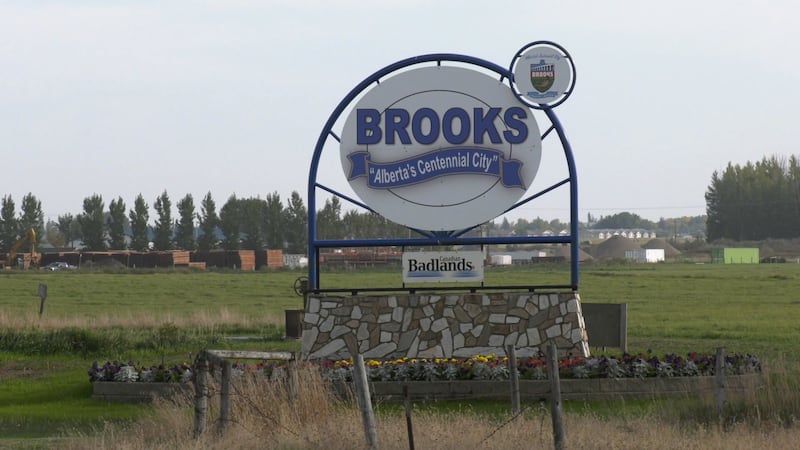
BROOKS, ALTA. -- In a southern Alberta city where immigration has helped fill jobs, attract doctors and reshape the local economy, a series of upcoming referendum questions is putting the province’s immigration policies — and the people who rely on them — in the spotlight.
Brooks Economic Development Officer Mitchell Iwaasa says finding skilled workers remains a challenge for businesses in the community.
“It’s not just about having the people, but having the right people for the job,” Iwaasa said.
Brooks was the first community designated under the Rural Renewal Stream of the Alberta Advantage Immigration Program, which helps rural communities recruit newcomers to address labour shortages.
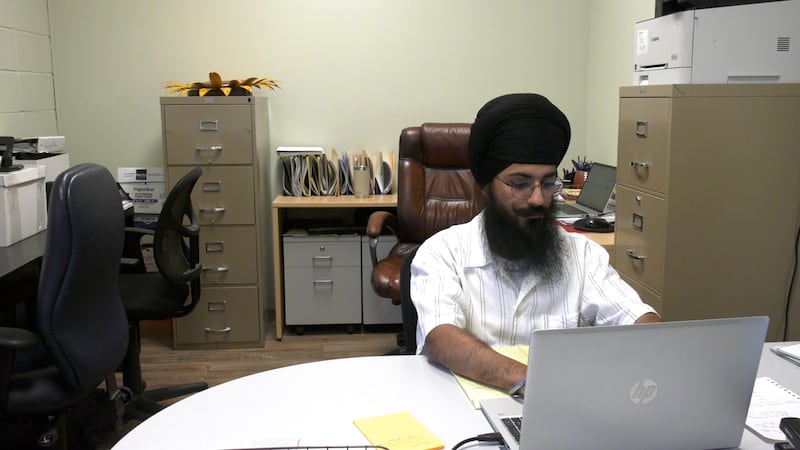
One of those newcomers is 25-year-old Jasmeet Singh.
Singh came to Canada from Delhi in 2023 and now works as an accounting technician at iThrive Bookkeeping in Brooks. He’s on a work permit and has been endorsed by the city through the Rural Renewal Stream to support his application for permanent residency.
“Canada seems more familiar. And people are nice over here. And it’s the land of opportunity if you have a skill,” Singh said.
His employer, iThrive Bookkeeping CEO Nancy Lassiter, said she struggled to fill his position locally.
“The Canadian people had jobs or just weren’t interested in working for such a small startup company,” Lassiter said.
Brooks has endorsed more than 300 candidates for permanent residency through the Rural Renewal Stream, according to Iwaasa.
But as the city continues using a provincial immigration program to address workforce needs, Albertans are being asked a series of referendum questions about immigration — including whether Alberta should seek greater control to reduce immigration to what the ballot calls “more sustainable levels,” prioritize economic migration and give Albertans first priority for new jobs.
It’s unclear what, if any, impact the referendum could ultimately have on programs such as the Rural Renewal Stream.
Iwaasa says Brooks has a lot riding on its ability to continue attracting newcomers.
“We see that immigration is important for our economic growth and our community’s diversity and growth,” he said. “Anything that might restrict immigration to our community wouldn’t be of a benefit.”
Immigration has been shaping Brooks for decades.
Nearly half of the city’s population identified as a visible minority in the 2021 census, while about 36 per cent was born outside Canada.
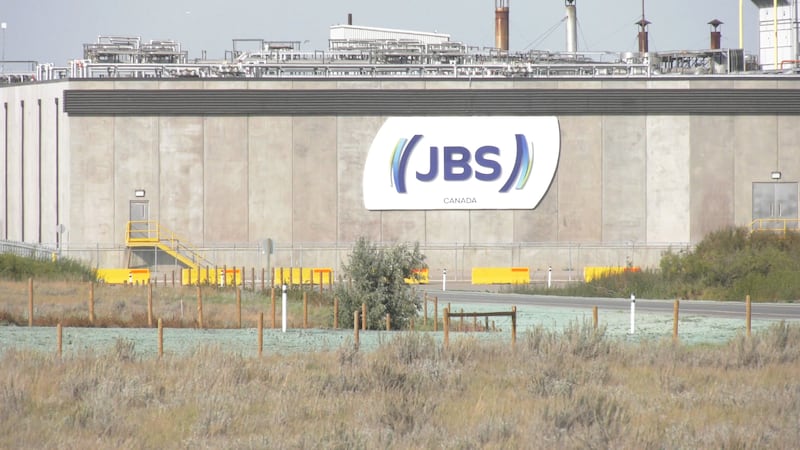
Much of that transformation, he said, can be traced to the city’s largest employer, the JBS meat-packing plant.
“The draw for immigrants to move to Brooks was driven by JBS,” Iwaasa said. “They have over 3,000 employees. So, in a community of 17,000, that’s obviously a huge effect.”
As the company struggled to find enough workers locally and elsewhere in Canada, Iwaasa said it increasingly looked internationally.
Over time, he said, many newcomers established lives in the community.
“The community has benefited from it because those people have stayed, grown, started their own businesses,” Iwaasa said. “Now it’s becoming a case where the draw for Brooks is its multiculturalism.”
Today, that diversity is visible across the community.
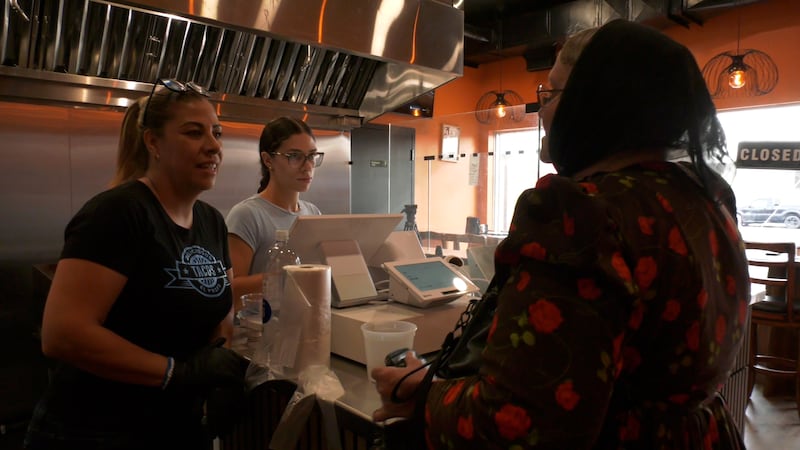
Deyanira “Dey” Fournier came to Canada from Venezuela more than 20 years ago with her sister, looking for what she describes simply as “a new life.”
After working several jobs, as she established herself in Canada, Fournier and her fiancé recently opened Tacos el Profe in Brooks.
“It’s been so busy,” Fournier said. “We are glad to be having that support from the community. Everybody’s coming, everybody’s happy, everybody’s enjoying the food.”
Fournier hopes to eventually expand the business to Calgary.
Restricting access
Albertans will vote Oct. 19 on 10 referendum questions, including one on the province’s future in Canada and five dealing specifically with immigration.
Along with the question about greater provincial control over immigration, Albertans will be asked about restricting access to provincially funded programs based on immigration status, requiring some temporary residents to live in Alberta for 12 months before accessing social supports, charging some temporary residents fees or premiums to use health and education systems, and requiring proof of Canadian citizenship to vote provincially.
On Wednesday, Premier Danielle Smith put a potential price on one of those proposals, saying the government is considering a health-care premium of about $1,900 for some temporary residents if Albertans support the referendum question. No final fee has been set, and the referendum itself would not automatically impose one.
“If there is somebody who has made a commitment to be an Albertan and a Canadian for a lifetime as a permanent resident, they’re going to be a lifetime taxpayer. They are entitled to the same programs as everybody else as a citizen,” she said. “But if somebody is here temporarily, they should really pay their own way.”
Smith said Alberta’s rapid population growth has put pressure on services and infrastructure, including schools and hospitals. She said roughly 600,000 people have moved to the province over the past five years.
Singh declined to comment on the referendum questions, but said he hopes to make his life in Alberta permanent.
“My goal is to live in Canada,” he said. “Alberta is a province where I live, I’ve been planning to live over here.”
His parents remain back home.
“They know I’m doing good. So, they are very happy and proud about all this,” Singh said.
Lassiter, meanwhile, said she understands the concerns behind the broader debate over immigration levels.
“I do think the balance was tipped a few years ago. And now we’re living the repercussions of that,” she said.
She said governments need to consider whether housing, health care and other infrastructure can keep pace with population growth.
“We definitely need to have the proper infrastructure in place,” Lassiter said. “But at the same time, once we’ve agreed to let them come over, if they are being upstanding citizens within our community, I think that we should welcome them.”
For Lassiter, the issue comes down to finding a balance between those pressures and the workers businesses still need.
“There’s definitely a role, absolutely, for immigration,” she said. “Our economy doesn’t grow if we don’t have immigration. … To me, it’s finding that sweet spot.”
Attracting doctors
The labour needs in Brooks extend beyond private businesses.
“Over the last two decades, Brooks hasn’t seen a Canadian-born physician move to our community. They’ve all been foreign-born,” Iwaasa said. “Without immigration, we would have trouble getting doctors. We still have issues with getting doctors.”
Fournier sees the referendum through the experience of someone who remembers what it was like to arrive in a new country and start over.
“I don’t think it’s fair, you know, because it’s hard for any immigrant, any person who comes to a new country,” she said.
Fournier remembers how difficult starting over can be.
“You have to get a different kind of job, a low pay, because you don’t speak the language,” Fournier said.
She said today’s high cost of living can make that transition even harder.

