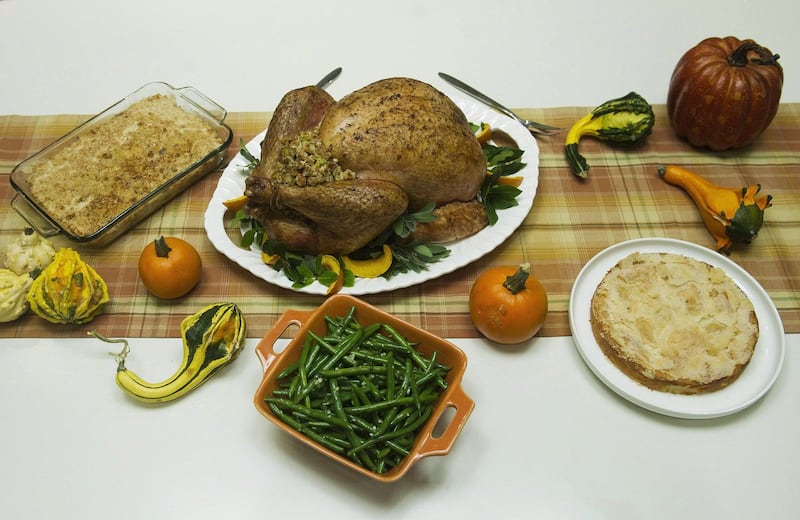
A slow-roasted turkey, buttery stuffing, root vegetables tossed in rosemary and olive oil, creamy mashed potatoes and a cranberry sauce forgotten in the fridge.
It sounds like a table set for Thanksgiving dinner.
A resurgence of patriotism among Canadians has some looking more closely at ingredients and product origins to make sure their festivities are really about celebrating the bounties of the country’s harvest — and whether it’s possible to serve that Canadian-sourced feast within a budget.
Experts say an all-Canadian meal on a budget isn’t hard, as long as it’s grounded in the abundance of harvest season and simple recipes.
“Thanksgiving is really a harvest feast or harvest festival and coincides with peak agricultural production in Canada,” said Paul van der Werf, adjunct professor at Ivey Business School at Western University in London, Ont.
“Canada produces lots of turkey, lots of potatoes. It’s the world’s second-biggest producer of cranberries,” he said.
Ontario alone produced 45 per cent of the country’s turkey in 2025, according to Statistics Canada. Meanwhile, the country hit an all-time high in potato production in 2024, it said in a separate report.
Van der Werf said a classic Thanksgiving meal is Canadian through and through.
“We’ve always had this real abundance of Canadian agricultural products of world-class quality,” he said.
“We’ve been reminded through geopolitical events that, ‘Hey, you know what, maybe we’ll want to think about that a bit more.’”
Renewed trade tensions with the United States have many shoppers once again examining labels for information about their origin and production. But defining what’s Canadian is not always easy with North America’s intertwined food supply chains.
For example, U.S.-based co-op Ocean Spray processes some Canadian cranberries into a jelly sauce.
Knowing what labels mean is important when zeroing in on Canadian-made items, whether that’s based on the origin of ingredients, manufacturing plants or who owns the brand, said Jeff Stewart, executive director of non-profit Food Day Canada, which promotes Canadian food culture.
He said convenience is often why people go for boxed or prepared foods, such as stuffing or a box of store-bought mashed potatoes. But it may be hard to know how much of that food is truly local.
Stewart suggested working backwards with a holiday menu to keep it local and within budget: walk around the grocery store or farmers market to see what’s in season. Then build a menu as you go.
“Whatever is in abundance is what you’re going to find the best prices on,” said Stewart, who is also a chef in Elora, Ont.
Farmers usually harvest a wide array of fresh produce in the fall — pumpkins, squash, potatoes, apples and pears. But if shoppers are looking for blueberries, which finished harvest season last month, they would likely pay more for the imported fruit.
The menu would also look different, based on where you live — mirroring what the region has to offer.
For Stewart, an Ontario celebration would mean a homegrown turkey. “(But) if I was in British Columbia with my brothers, probably there’d be some kind of fish.”
But pantry items can thwart attempts to serve a 100-per-cent-Canadian meal.
A pumpkin or apple pie without a tinge of cinnamon or nutmeg may not feel quite right, for example. But Canada doesn’t grow spices such as cinnamon and black pepper or produce olive oil.
“You can get the pumpkins here, you can get the flour here, you get all the ingredients of your pumpkin pie here except for cinnamon,” van der Werf said.
“Cinnamon probably makes up 0.1 per cent of the pie, so maybe that’s OK.”
Sugar is produced with imported sugar cane, and some brands such as Redpath are owned by American multinationals. But there are some substitutions to make it truly local, such as sugar beets that are grown in southern Alberta and processed at the Rogers factory in Taber, Alta., he said.
Stewart said grounding the menu in simpler recipes can also make the journey easier.
“I remember back to meals with my grandparents and the effort that was put into things a long time ago, when there weren’t options for this kind of convenience,” he said. “Maybe it’s time for people to think about simpler things in simpler times and go back to some of the ways that were maybe forgotten or maybe never learned.”
Serving a truly Canadian meal can take effort, Stewart said.
“If you choose to go 100 per cent Canadian, then you’ll find that you’ll get there, even if it’s a little bit difficult at first,” he said.
“If you make the commitment, then over time, it gets easier and easier.”
This report by The Canadian Press was first published Oct. 6, 2026.
Ritika Dubey, The Canadian Press

