

OTTAWA — The federal government plans to indefinitely exclude people whose sole condition is mental illness from accessing medical assistance in dying, Justice Minister and Attorney General Sean Fraser said Wednesday, adding the Liberals will table legislation this fall to that effect.
“Canada has made a decision not to move forward with the expansion that is scheduled in the Criminal Code of medical assistance in dying in circumstances where mental illness is the sole basis,” Fraser told reporters on Parliament Hill.
“While there is not a perfect consensus on this issue, we believe this is the correct approach at this particular time,” Fraser also said.
Certain Canadians have had access to MAID since 2016, with amendments made to the eligibility criteria in 2021. Further expansion of MAID to include mental illness as the sole factor, however, has been highly controversial, and in 2024, the federal government under former prime minister Justin Trudeau announced it was delaying the move until 2027, after the next federal election.
With the expansion set to come into effect in March next year, a special joint parliamentary committee took up the work of studying the issue, hearing from more than three dozen witnesses in the last year, and tabling a report in June.
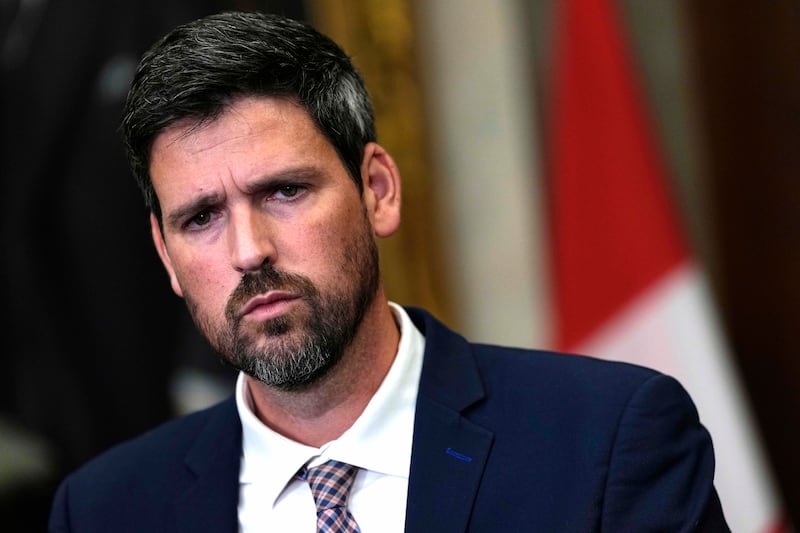
In an interview on CTV Power Play with Vassy Kapelos at the time, Fraser said he wouldn’t rule anything out and that he would wait to hear the committee’s recommendations. On Wednesday, he said the decision to indefinitely exclude people whose sole condition is mental illness from accessing MAID reflects the direction of the committee.
“But it also reflects the engagement that I’ve had, that my department has had over the course of my time in this particular position,” Fraser added.
“The reasons that justified (the committee’s) final recommendation included very real concerns about people who live in communities with inadequate access to mental health services,” Fraser also said. “It included testimony that we heard around a lack of consensus when mental illness is irremediable, and a series of other points that were articulated in the committee’s report and shared with our office.”
Despite more than three months having passed between the committee’s report and Fraser’s announcement, the minister said the government has just “very, very recently finally formalized its position.”
He insisted that position is not “based on where we believe the politics is going to land,” but rather “based on what we sincerely believe is right.”

Fraser said the Liberals don’t yet have a date to table the new bill, but added it’s in the process of being drafted, and promised it’ll happen this fall. There are seven sitting weeks left before the winter break.
“If I had a date for you today, I would share it,” Fraser said. “But we will be looking to move forward as quickly as possible.”
MPs, meanwhile, are also set to vote Wednesday on a private member’s bill, tabled by Conservative MP Tamara Jansen, which would amend the Criminal Code to “provide that a mental disorder is not a grievous and irremediable medical condition for which a person could receive (MAID).”
Fraser thanked Jansen for tabling the bill, but said the Liberals “have some challenges” with the bill on a technical level and will be voting against it.
Liberal legislation will include provisions for advanced consent
Fraser also laid out other elements of the yet-to-be-tabled Liberal bill related to MAID, namely that it will include provisions for people who make advanced requests for medical assistance in dying if they have been diagnosed with an illness that will cause them to lose capacity in the future.
“Canada has decided to include in its legislation a decision to grant access to medical assistance in dying to people who have provided consent at a time when they still have capacity, but know that they have been diagnosed with an illness that will take that capacity from them subsequently,” Fraser said. “These are not easy decisions, but we believe that they are the correct ones.”
Fraser said the provisions around advanced consent will have to comply with provincial legislation, and that several jurisdictions currently have differing stances on the issue.

