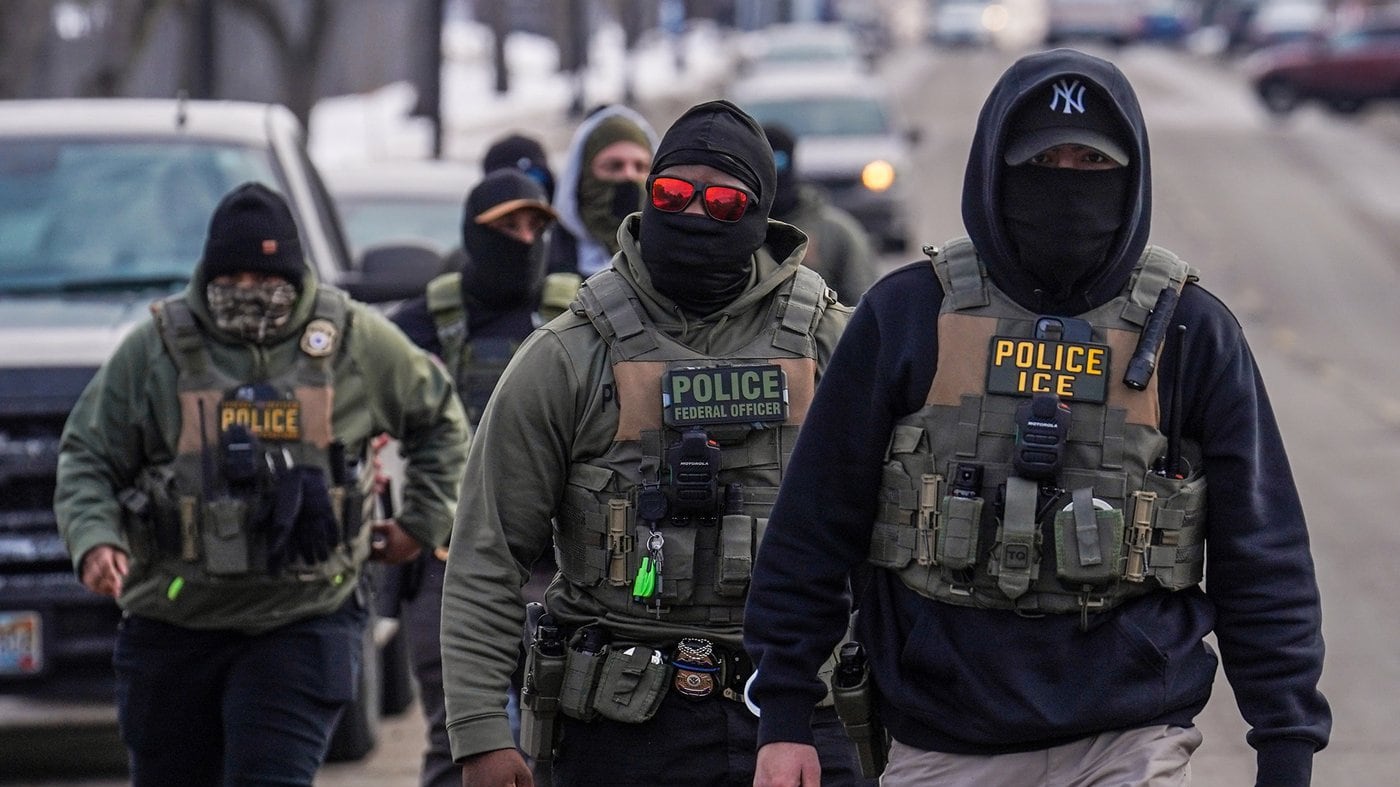
OTTAWA — Global Affairs Canada says the number of arrest and detention cases involving Canadians citizens in the United States jumped 60 per cent in the last fiscal year compared to the year before.
“A lot of Canadians are caught up in this dragnet,” said Len Saunders, an immigration lawyer based in Blaine, Wash., just south of Vancouver.
“These are not people that live in Canada and come shopping down here. These are people like me who live here, who work here and who have green cards, and they’re concerned about their status now.”
Global Affairs published its annual report on consular cases Thursday. It recorded 557 cases of Canadians arrested or detained in the U.S. between April 2025 and March 2026, up from 361 a year prior.
Over that same period, the number of visits by Canadians to the U.S. dropped 25 per cent, from 26.8 million visits in 2024-25 to 20 million visits in 2025-26.
The report does not explain what drove the increase in arrests and detentions.

U.S. President Donald Trump ramped up immigration raids after he returned to the White House in January 2025.
Since then, Canadians have reported facing uncomfortable questions from U.S. border officials and cases have emerged of Canadians being detained by U.S. immigration officials for minor infractions.
Saunders said most of his clients are Canadian and many facing deportation have been U.S. residents for decades. He said some of his clients are married to Americans or have American children, while some receive U.S. pensions.
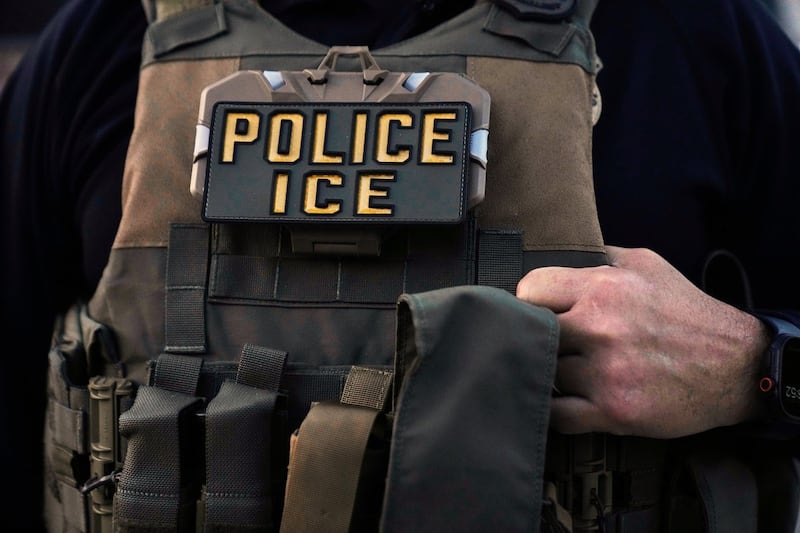
He said some of the people he represents thought they were legally residing in the U.S. until they got a visit from U.S. Immigration and Customs Enforcement agents.
Others drove up to Vancouver or Windsor, Ont., for a day and were flagged for questioning upon their return to the U.S., he said.
Saunders said he suspects the Trump administration has shifted from a focus on raids targeting illegal low-wage workers to using voting rolls and databases to identify people who might be deportable -- just as the Department of Homeland Security receives more funding.
He said Canadians might find themselves on a fast track to deportation because of decades-old sentences relating to assault, drug possession or drunk driving. Others, he said, have overstayed on temporary visas, sometimes for decades.
“In the past, a lot of these people immigration would just turn a blind eye (to), unless it really became something on their radar. But now you hear of ICE going out and scooping up these people, and some of them have lived in this country as permanent residents for decades,” Saunders said.
Many of his clients have voted illegally in the U.S., Saunders said, particularly in states like Washington where voters can make a self-declaration of eligibility.
“A lot of Canadians are naive and don’t realize that as a permanent resident, they actually can’t vote in the United States,” he said.
“I’ve been contacted by half a dozen Canadians in the last two weeks who’ve been put in deportation proceedings for past voting.”
In the past, he said, such people could seek American citizenship and sign a declaration acknowledging an illegal vote, expressing remorse and apologizing.
“There would be no problem and they would naturalize them as Americans,” he said.
Saunders said he now cautions clients to make sure they have no criminal convictions or immigration violations “because I don’t want to put someone in the position that they get deported over applying for U.S. citizenship.”
In Thursday’s report, Global Affairs tracked 1,981 arrests or detentions of Canadians around the world between April 2025 and March 2026 -- a one-fifth increase over the prior year and a 43 per cent increase over two years prior.
The number of arrests of Canadians in Thailand jumped threefold. The report does not explain this increase, though the number of direct flights between Canada and Thailand has scaled up in recent years.
The report also notes a 25 per cent jump in consular cases involving children and family over the past three years, with 804 cases involving things like custody disputes, forced marriage or surrogacy. Those cases most commonly involve the U.S., India and Pakistan.
Global Affairs Canada has warned in recent years that the growing frequency of wars and natural disasters is resulting in more complex and expensive consular cases.
Thursday’s report says the federal government fielded a total of 7,436 consular cases over the fiscal year, a 7 per cent increase over two years prior. Those cases ranged from car crashes to child abductions.
It notes that Cuba’s energy crisis -- spurred by U.S. attempts to cut off fuel supplies to the island state -- resulted in Ottawa working with airlines to return 28,000 people to Canada as companies cut their flights.
Cartel-related violence in the Mexican beach city of Puerto Vallarta and evacuations related to the U.S. war on Iran were other sources of consular demand, the report said.
The data also shows a rise in the number of Canadians voluntarily registering with the department when they go abroad, which helps Ottawa send safety advice and co-ordinate evacuations.
The department tracked an increase in registrations of 27 per cent over the previous fiscal year, resulting in 574,338 registrations.
This report by The Canadian Press was first published Oct. 8, 2026.
Dylan Robertson, The Canadian Press

