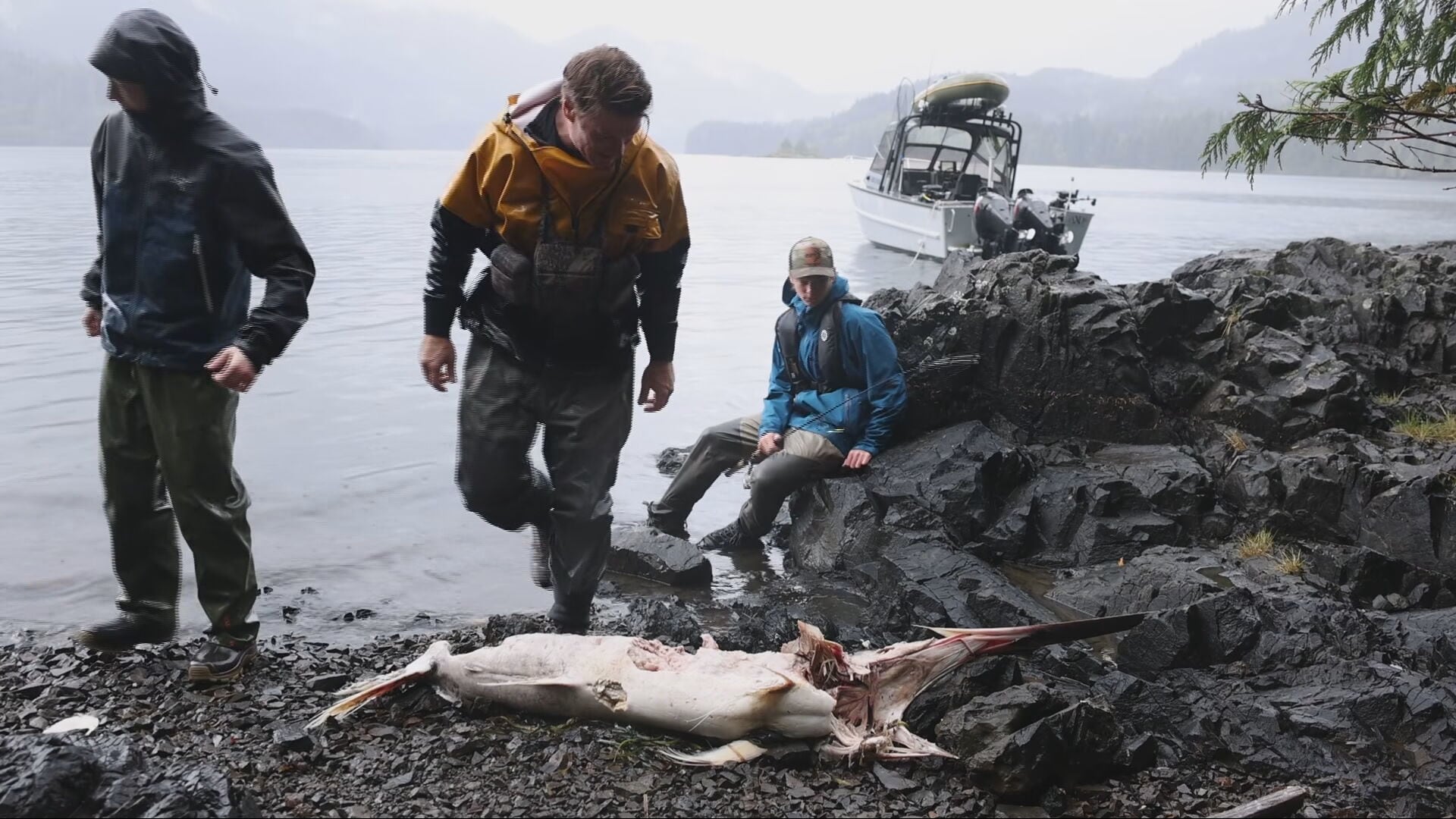
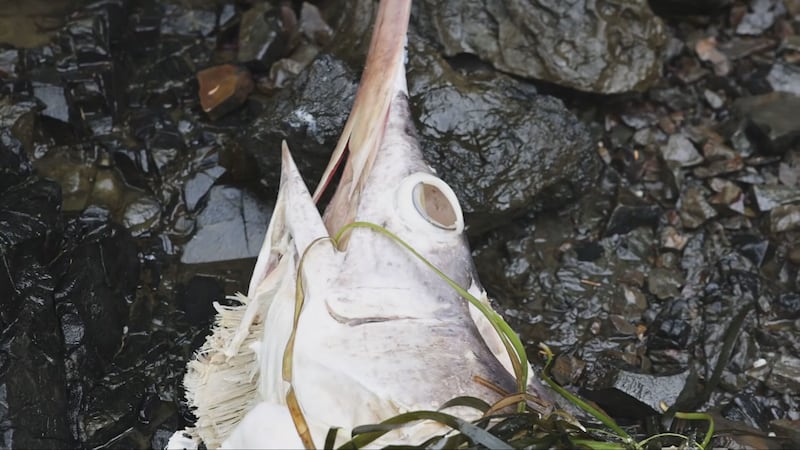
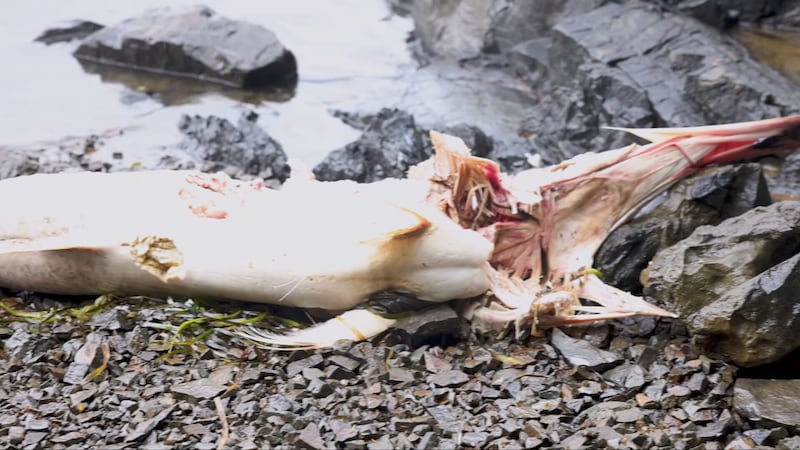
A six-foot swordfish has washed ashore on Haida Gwaii, a rare find that scientists say offers a glimpse into how changing ocean conditions can send marine species far beyond their traditional ranges.
The swordfish carcass was discovered on a Haida Gwaii beach last week by a filmmaker and fisherman, prompting questions about how a fish more commonly associated with warmer Pacific waters ended up so far north.
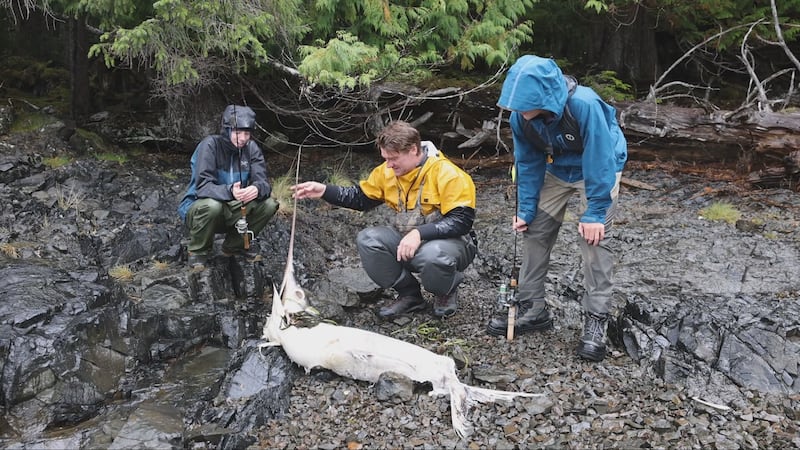
“It is totally not unexpected during a year like an El Niño year, or when we’re seeing marine heatwaves,” said Jordan Watson, acting science director for Ocean Networks Canada.
That does not mean swordfish are expected to be a regular sight in British Columbia waters. Their traditional range is generally much farther south, with swordfish fisheries established off Southern California and into Baja.
Watson said Central California would be closer to what is typically considered the northern edge of their range.

So how does a predator normally found that far south end up on a beach in Haida Gwaii?
Watson said it may have been following its food.
“A fish like a swordfish is a pelagic predator, and so it’s going to be roaming the open ocean looking for prey,” he said. “And if its prey are moving along, moving north along the coastline, then it’s just going to be moving in response to those prey.”
The species being followed can be much more sensitive to changes in the ocean.
Herring, anchovies and other forage fish respond to shifts in plankton, nutrients, oxygen and water temperature. Those changes can alter where food is available throughout the marine ecosystem.
“When the water warms, we often see a change in the upwelling of those cold, nutrient rich waters,” Watson said.
That can affect the smaller fish at the foundation of the food web, which can then affect the predators that depend on them.
Watson was part of a study examining how larger marine predators respond to different marine heatwaves. Researchers looked at species including sea lions, sharks and tuna.
The study found that different species responded differently depending on the type of heatwave, but several showed northward movements into different waters.
The movements of marine species can create challenges far beyond the occasional surprising discovery.
When a species crosses an international boundary, fisheries managers can suddenly have to account for animals moving into waters where they are not traditionally monitored or managed.
Watson said that creates broader questions around transboundary governance and resource management.
It can also affect the people who rely on marine species for their livelihoods, food and cultural practices.
“There’s an important value in being able to understand how the ecosystem changes for the sake of understanding nature and conservation, but also there’s large implications for resource management, for subsistence and cultural lifestyles that rely on certain species like salmon,” Watson said.
For Watson, the unusual discovery underscores why monitoring ocean conditions matters.
Scientists can use those observations to better understand how marine ecosystems are responding as conditions change, while communities and resource managers try to keep pace with the consequences.
“When changes to the climate happen, they impact all of us,” Watson said. “Ultimately, in the food we see, the fish we see and the food we eat.”
A swordfish on a Haida Gwaii beach is an extraordinary sight. But for scientists, it is also a reminder that the Pacific is a connected ecosystem, and changes in one part of it can ripple through the food web and move species into unexpected waters.

