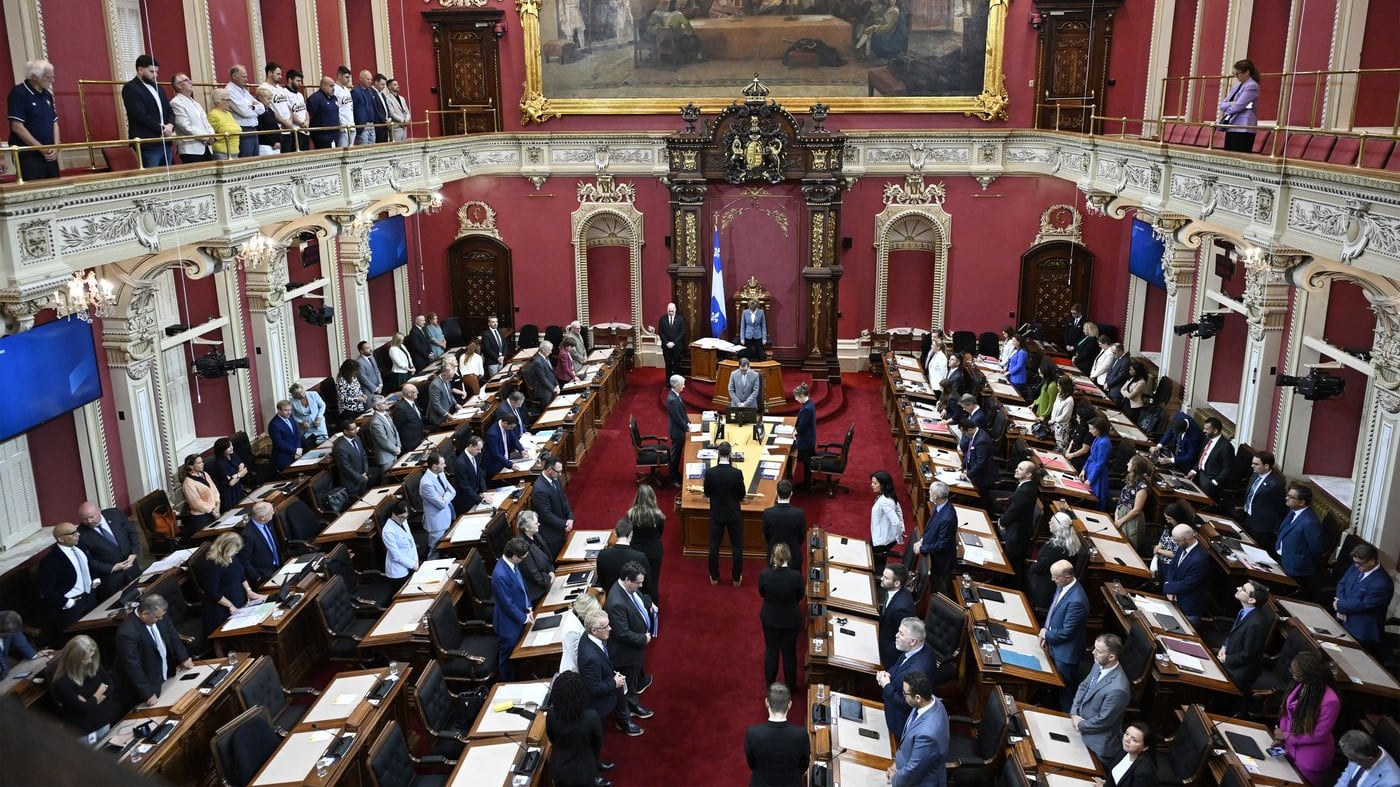
A request for an injunction that would force MNAs in Quebec’s National Assembly to swear an oath of allegiance to the King is scheduled to be heard in court before the new parliamentary session begins.
The lawyer who requested the injunction, Lawrence David, asked the court Friday to “put the case in priority” as lawmakers are weeks away from returning to the Quebec legislature to start their parliamentary duties following the Oct. 5 provincial election.
A judge was unable to set a date on Friday for the injunction to be heard due to scheduling issues, but agreed to provide a date to both parties next week. The hearing will be held sometime between Oct. 19 and Nov. 9.
The opening of the 44th legislative session is scheduled for Nov. 17.
David, a University of Ottawa law professor and founder of the Public Interest Litigation Institute, filed a legal challenge in August against a law adopted by MNAs in 2022 that made the oath to the King optional. He argued that the Quebec government exceeded its constitutional powers by passing the law, which was known as Bill 4 before it was passed.
The day after this week’s provincial election, David filed an injunction in Superior Court to ask a judge to immediately suspend the application of Bill 4 while the legal challenge is under judicial review. If granted, the injunction would reinstate the mandatory oath to the Crown.
The oath, David argues in his injunction request, is a constitutional requirement for anyone elected to a Canadian legislature, including Quebec’s National Assembly.
“An elected politician who refuses or otherwise fails to take the Oath of Allegiance is not lawfully entitled to take their seat in the legislature or to participate in parliamentary activities,” the court filing states.
According to the text of Bill 4, the law abolishes the mandatory oath to the King by amending the Canadian Constitution. However, David argues in his injunction request that the law is unconstitutional because Quebec cannot unilaterally amend the Constitution without the consent of the Parliament of Canada and of the 10 Canadian provinces.
The implications of the swearing of the oath extend beyond the walls of the National Assembly, David argues. The injunction says Quebecers’ right to effective representation would be violated since MNAs cannot legally carry out their work in the legislature without taking the oath of allegiance.
“This is because members are not allowed to vote or adopt bills without having taken the oath,” according to the document.
By allowing future bills to be adopted by a majority of Quebec MNAs who have not taken their required oath, “the National Assembly directly imperils and significantly undermines the rule of law in Quebec and Canada more generally,” and Quebecers will suffer “significant prejudice” if the law is not stayed on an urgent basis, the court document states.
Since being elected as Quebec’s next premier, Parti Québécois leader Paul St. Pierre Plamondon confirmed that he does not intend to take the oath to the King when he is sworn in. He has also said he is seeking legal advice on how to block the lieutenant-governor of Quebec from attending the swearing-in ceremony to open the parliamentary session.
David argues that, too, would be unconstitutional because Quebec cannot do that unilaterally without unanimous consent from Canada’s 10 provinces and the Canadian Parliament.
The office of the Lt.-Gen. Manon Jeannotte declined to comment on the premier-designate’s attempts to bar the official from participating in the ceremony.

