
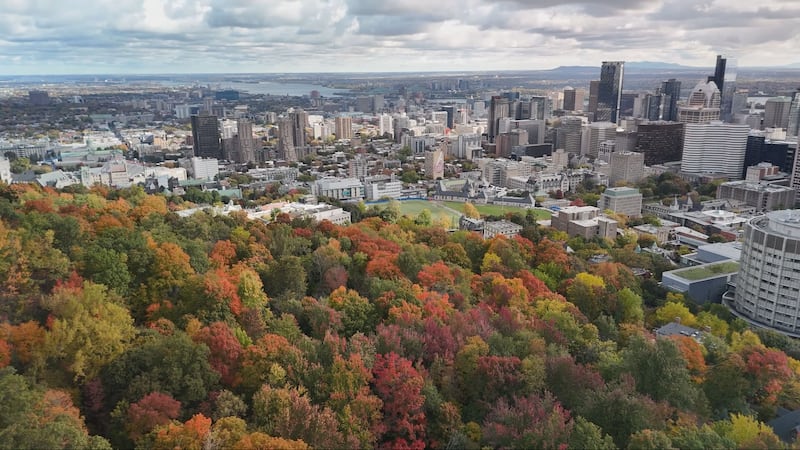
Every fall, southern Quebec’s forests shift from green to gold, orange and red. Quebec’s tourism site explains simply — it happens because there’s less sunshine each day.
What’s happening in the leaf
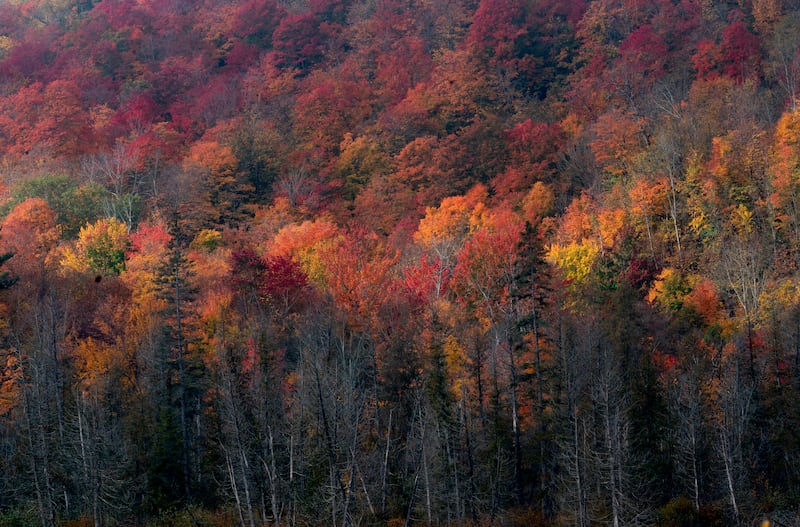
Montréal’s Espace pour la vie explains that green chlorophyll dominates in summer. Yellows and oranges come from carotenoids, which are in the leaf all year and only show once the chlorophyll breaks down. Reds come from anthocyanins, which the leaf makes in the fall, shortly before it drops.
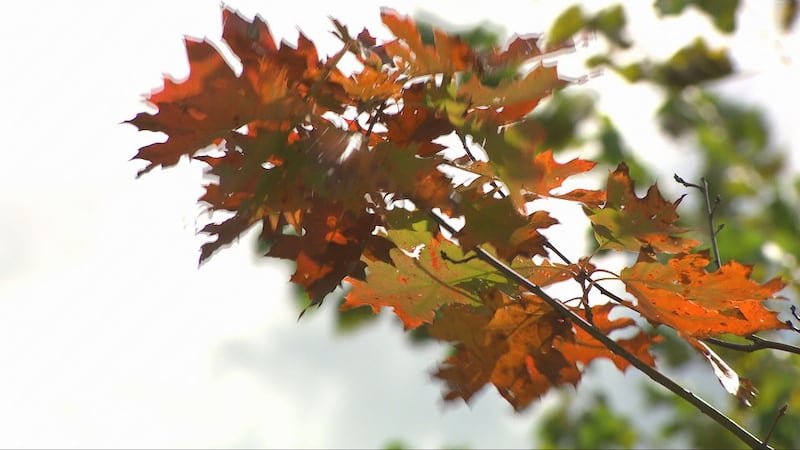
In maples, sugar builds up in the leaves and feeds the red pigments. Espace pour la vie says soil chemistry affects the shade, with acidic soil giving bright red and alkaline soil giving purple. Scientists still debate why the reds exist at all. One theory is that they shield the leaf from sunlight, and another is that they signal to insects.
- Send us your leaf-peeping photos! Email your best fall colour shots to montrealdigitalnews@bellmedia.ca and tell us where and when you took them.
Why Quebec looks the way it does
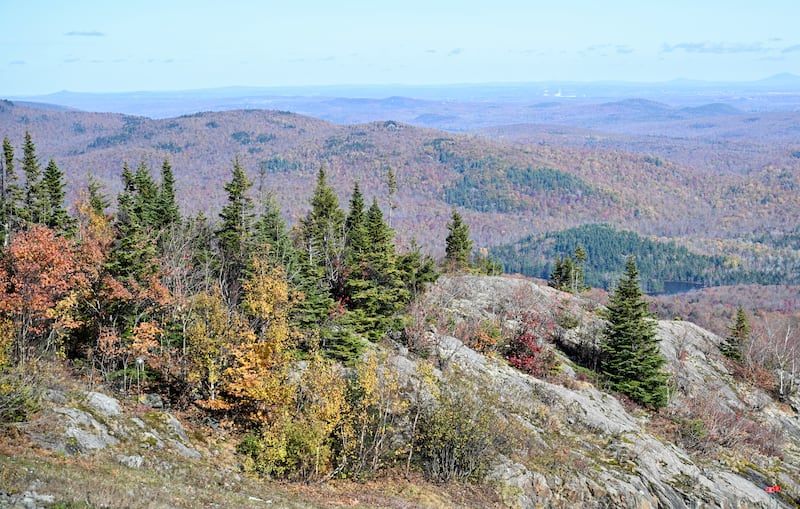
Espace pour la vie credits the array of shades with the province’s mix of species. Sugar maple dominates and turns fiery red. Red maple and American ash add purple, and white birch, yellow birch and American beech add yellow. Farther north, fir and spruce keep patches of green in the fall palette.
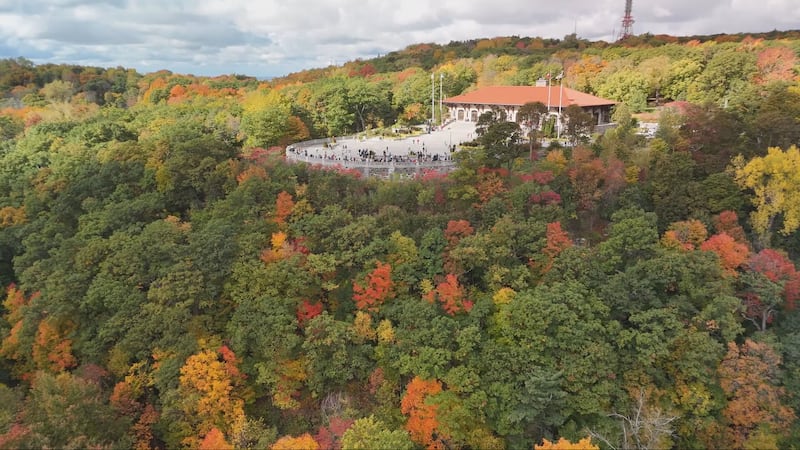
Check the official map
Bonjour Québec’s 2026 fall colours map tracks 62 parks, trails and outdoor sites on a six-stage scale. The stages run from “beginning soon” (mostly green) through “mid-point” (50 to 70 per cent coloured) and “peak” to “final glimmers” and “done” (mostly bare). It was last updated Thursday, and the next update is next Thursday.
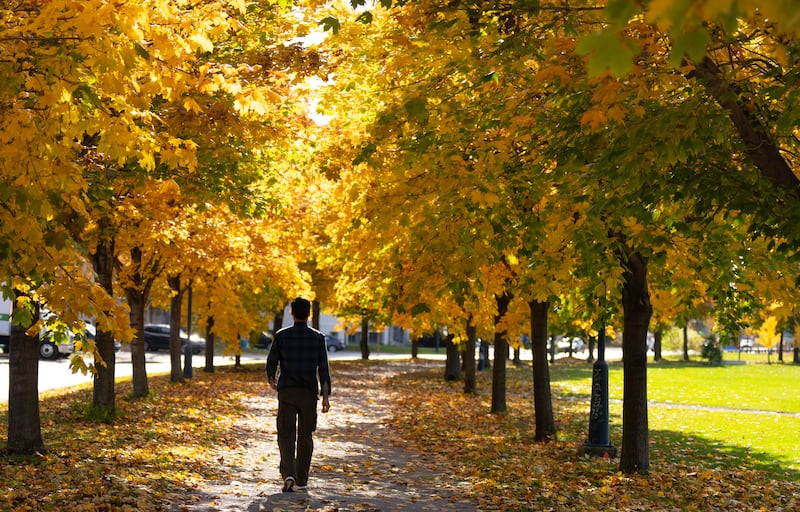
When each region should peak
Bonjour Québec’s 2026 forecasts, built on field data collected from 2023 to 2025, define “peak” as 70 to 100 per cent of the landscape in colour.
- First week of October: Abitibi-Témiscamingue, Québec City area, Chaudière-Appalaches, Lanaudière, Laurentians
- First to second week: Bas-Saint-Laurent, Gaspésie, Saguenay–Lac-Saint-Jean
- Second week: Charlevoix, Mauricie, Côte-Nord
- Second to third week: Outaouais
- Third week: Laval, Montérégie
- Third to fourth week: Montréal
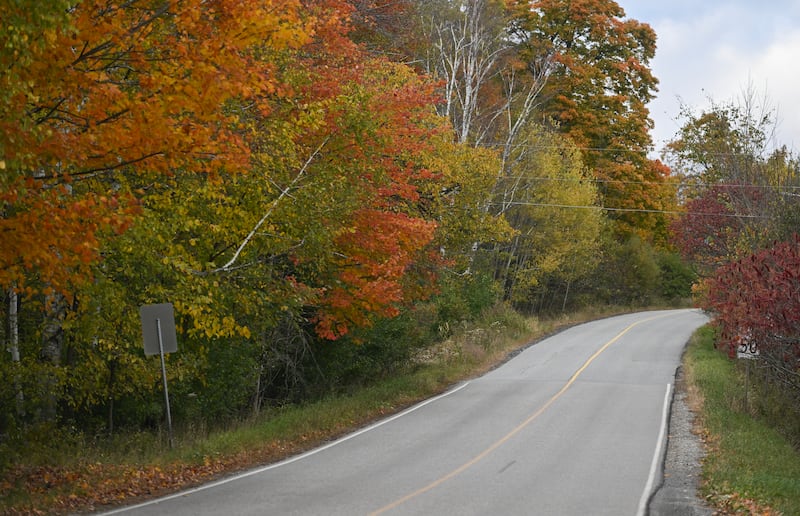
Some areas can vary quite a bit. Sutton and Mont-Orford in the Eastern Townships should peak around the third week of October, while Mont-Mégantic and Mont-Ham should peak in the first. Oka Provincial Park runs later than the rest of the Laurentians, with a peak around the third week.
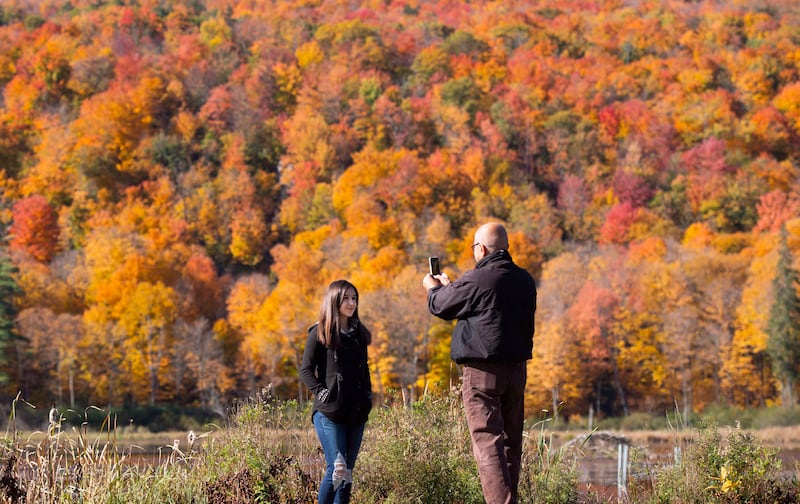
These are, of course, estimates and vary year to year. Bonjour Québec warns that wind and rain can bring leaves down quickly, putting us into stick season before the first snowfall.

