With federal funding set to expire in 2027, the sprawling Trans Canada Trail is calling on Ottawa to continue supporting what has become the longest multi-use trail system in the world.
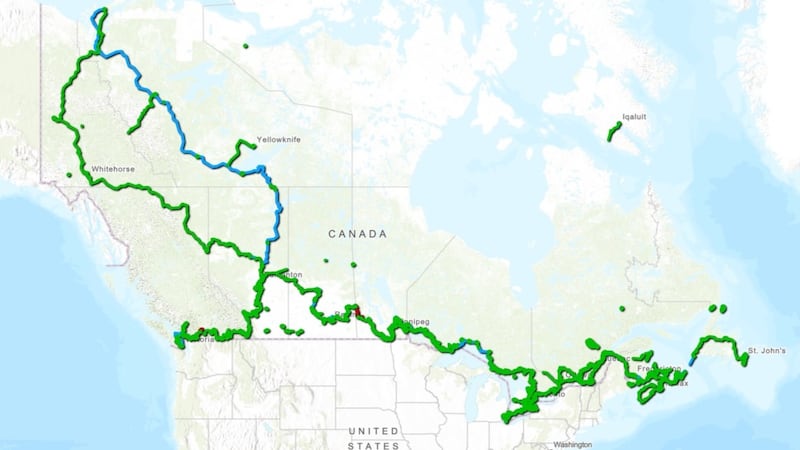
Spanning more than 30,000 km, the expansive trail network stretches across every province and territory and connects Canada’s Atlantic, Pacific and Arctic coasts. Used by an estimated 29 million Canadians every year, the trail system winds through wilderness regions, rural communities, small towns and even major cities like Montreal, Toronto, Calgary and Vancouver.
“What we’re saying to government is at a time when you’re investing in important things – like resource development, new export opportunities, Canadian defence – don’t forget about something that has been built by successive generations of Canadians over 35 years that now is part and parcel and central to Canadian identity,” Trans Canada Trail government affairs director Matt DeCourcey told CTV’s Your Morning on Tuesday.
While each section of the trail is managed by one of more than 650 local groups, the overall network is supported by the Trans Canada Trail registered charity, which receives funding from donors, provincial and municipal governments, as well as the federal government.
In the 2022 federal budget, Ottawa committed $55 million over five years to maintain, enhance and expand the trail network. That funding, which came via Parks Canada, is set to expire on March 31, 2027.
The Trans Canada Trail is now seeking another $55-million, five-year commitment in the next federal budget, which is expected to be tabled in November. Ottawa has so far invested $145 million in the trail since 1992, when the trail network was founded. The network achieved coast-to-coast-to-coast connection in 2017 to mark the 150th anniversary of Canadian Confederation.
“The federal government has been a key investor in the building and sustaining and building the quality of this trail over almost 35 years,” DeCourcey said.
“We see it as vitally important that they continue to be a seed investor at the table so that our organization can continue to go out and work with the many Canadians who have provided private donations over the years, as well as corporate partners and philanthropic organizations, to ensure that this trail stays connected, stays sustainable and accessible for future generations.”
Without renewed government funding, a recent report from the Trans Canada Trail estimates that 11,000 km of the trail could fall into disrepair and become impassible by 2045, which could result in a projected 78 million fewer trail visits and $2 billion in lost tourism spending per year.
“Largely that’s in small centres, remote and wilderness communities that don’t have the local resources there to ensure that this trail is kept up and sustainable and accessible for future generations,” DeCourcey said.
While DeCourcey describes the group’s conversations with Ottawa as “constructive,” the network is still awaiting a final funding decision from Parks Canada, which did not immediately respond to a request for comment.
“This is something that can keep us connected,” DeCourcey added. “This is something that adds economic vitality to communities right across the country, and this is something that connects us to the thing that is central to our identity as Canadians, that being nature.”