OTTAWA – Immigration Minister Lena Diab is signalling immigration levels could be going up, as Canada’s population growth has seen a significant slowdown over the past two years.
In September, Prime Minister Mark Carney told The New York Times that Canada will eventually resume a “controlled increase” in its population once the immigration system remains fully under control.
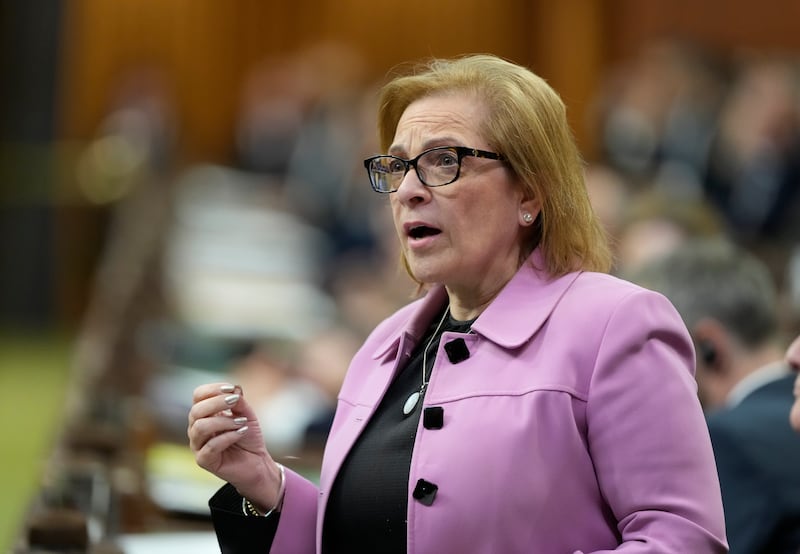
Asked Friday at a press conference in Kitchener, Ont. about why immigration could soon see a boost despite housing affordability remaining a concern, Diab pointed to the country’s slow population growth and the federal government’s “ambitious agenda.”
“We’ve taken a step backwards on immigration. Our population increase. It was the slowest population growth since World War II. Again, that’s not me saying it. That’s the numbers,” Diab said. “We have an ambitious agenda. We are going to want to drive growth. We do need people.”
While Diab would not provide specifics, she said Carney has been clear about the federal government’s economic agenda.
“As the prime minister said, we want to have our economy be the best in the G7, and in order to do that, I need to use the levers that I have in my role as immigration minister,” Diab said.
Pressed about why the prime minister unveiled that policy shift in an American media outlet first, Diab would only say the updated plan is coming “in November as it’s scheduled.”
Federal government began reducing immigration levels in 2024
After seeing a significant increase in immigration in the early 2020s, the federal government under former prime minister Justin Trudeau began shifting its own policies in 2024 by reducing immigration levels in response to pressures on housing and social services.
Then in 2025 during last year’s federal election, Carney campaigned to “return immigration to sustainable levels.”
The Carney government has since lowered and stabilized permanent resident admissions to 380,000 per year for 2026 to 2028, down from the Trudeau government’s target of 500,000 per year. The 2025 federal budget also unveiled a goal to lower temporary residents in 2026 by 43 per cent.
Last month, Toronto-based think tank, the C.D. Howe Institute, recommended annual permanent-resident admissions of 380,000 in 2027, 350,000 in 2028 and 340,000 in 2029.
Conservative MP Michelle Rempel-Garner, meanwhile, has previously said Canada’s immigration targets need to go “way down” following Carney’s “controlled increase” comments to The New York Times.
According to Statistics Canada, the country’s population reached an estimated 41,798,407 people on July 1, 2026, an increase of 189,425 people or 0.5 per cent from July 1, 2025. That marked the lowest July-to-July growth in total population size since 1944-45.
Analysis from the Bank of Canada in October has also concluded that Canada’s aging population and declining immigration is “reshaping” the economy by shrinking the workforce and shifting what people are consuming.

