Once upon a time in Edmonton, a tunnel was built.
The Rathole was used by downtown commuters for over 70 years, and eventually the city outgrew it and the tunnel was removed.
This story uses footage from the CTV News Edmonton archives and a current interview with a member of the City of Edmonton’s heritage planning team to explain why it’s important to remember historical landmarks like the Rathole.
A reminder of the past
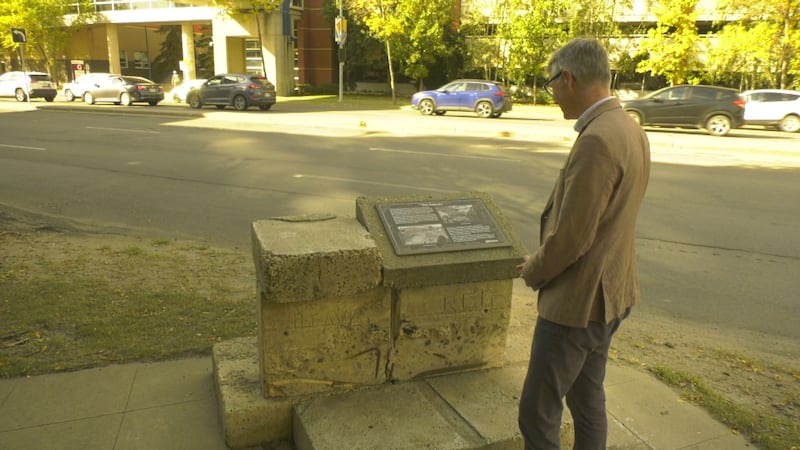
Erik Backstrom stands on the side of 109 Street in downtown Edmonton. It’s a warm fall morning and traffic is flowing at a steady rate. Beside him is one of two markers. Placed on either side of the street and engraved with the date 1927, they are the original keystones that sat above each entrance to a tunnel most commonly referred to as the Rathole.
“Cities evolve and that evolution is natural, but we can do things to preserve the memory of features that are quirky or interesting.”
He says it’s important to remind people of the things that make a city unique, even if those things are gone.
Pre-Rathole
Backstrom, who works for the City of Edmonton, describes downtown in the 1920s.
“There was a big railyard on the north side of downtown right where Grant MacEwan campus is today and Rogers Place.”
Even back then, he says 109 Street was a main road that bordered on the western side of downtown but ended suddenly at the Canadian National (CN) railyard. The land north of CN was owned by the Hudson’s Bay Company (HBC). It was a dangerous spot to try to cross.
“There weren’t any crossings in this area, you had to go over to 101 Street on that side of downtown or all the way over to 116 Street and so the city engineers and planners of the day decided something needed to be done.”
Backstrom explains that HBC wanted to develop its land and create more access, eventually holding talks with the city in 1925 that ended with a plan to tunnel under the railyard.
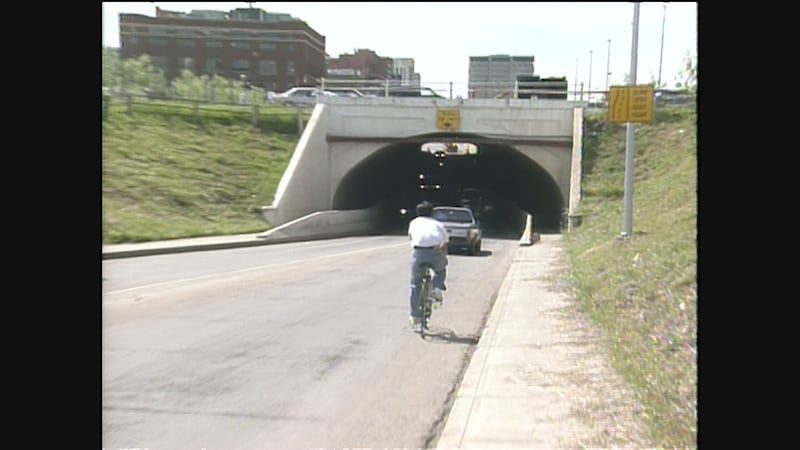
Officially named the 109 Street Subway, construction on the tunnel began in 1927 and opened Oct. 19, 1928.
The total cost of the project was $178,000, according to Backstrom, with $30,000 coming from HBC, $25,000 from the federal government and the rest from the city.
People loved to hate it
“The Rathole was a distinctive landmark in Edmonton, just something that people loved and sort of hated to love.”
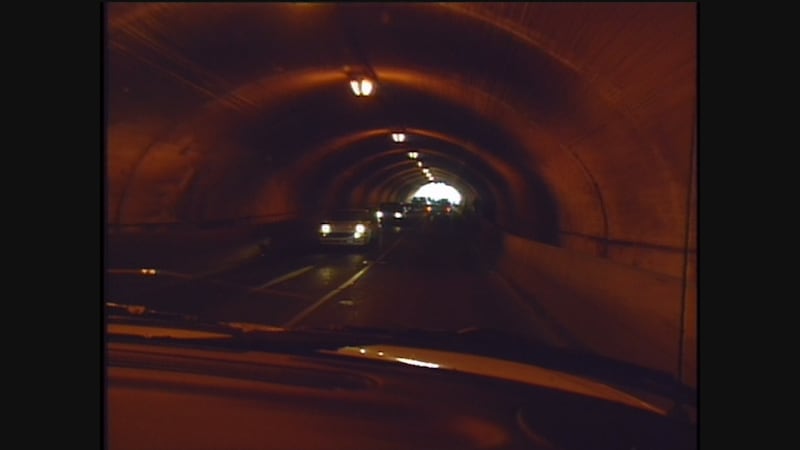
Described as dark and narrow, with a blind spot and a tendency to flood, its ceiling was scarred with scrape marks from all the trucks that were too big to fit through. Backstrom recounts how drivers would turn on their left signal light in the tunnel so oncoming traffic could see where the edge of the lanes were.
“If you look at historic newspapers it’s always called the 109 Street Subway, and it was a glamorous thing to begin with. The city was very proud of it but after World War II in newspapers you start to see it called the Rathole.”
No one can say for sure where the name Rathole came from, but it is commonly accepted that it was a city councillor who first used the term to describe the subway.
Backstrom believes in later years people began to have higher expectations of city infrastructure and the gloomy tunnel didn’t fit their ideas of “grandeur.”
“The Rathole stuck and it was just a term of endearment, at least for us a term of endearment.”
He says this is why the noisy tunnel that often vibrated with the sounds of honking horns and roaring engines, the murky subway that sometimes felt too narrow to fit through, is remembered by many with such fondness.
“It was part of who we were, like we had a rathole and it had a fun name. We didn’t have any rats, but we had a rathole.”
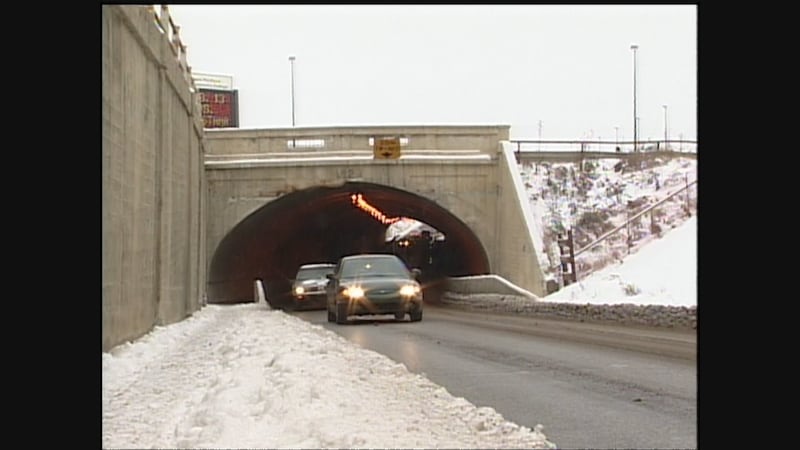
Bottleneck
As the years passed and the city grew, the way people travelled changed. After the Second World War, Backstrom says vehicle traffic began to increase.
109 Street remained a main road connecting to the High Level Bridge and the Rathole with its single lanes in each direction became a bottleneck.
Several different solutions were discussed by city engineers, he said, including making the tunnel two lanes in each direction. But in the late 80s when the railyard eventually shut down and the area began to be redeveloped, the 109 Street Subway no longer made sense.
In 1997, business owner Jock Bell called the Rathole “a danger and a hazard,” telling CTV News Edmonton he didn’t think it was a very inviting entrance to downtown.
By the late 90s the Rathole was averaging 25,000 vehicles per day.
“Just about everybody in the city has driven through it at least once in their lifetime,” Wayne Wood with the City of Edmonton Transportation said in 2000.
“This is where planning comes into account,” Backstrom said. “Planners looked holistically at what would make downtown work better and they said, ‘Let’s spend some money to get rid of the Rathole and let’s build a street.’”
It had meaning
“It’s great to have historic things in Edmonton.”
Ron Foley, who said he used the Rathole every day in his commute, showed up to take pictures days before it was shut down. He told CTV News Edmonton that he felt it had “outlived its usefulness.”
April 2, 2000, was the last day the Rathole was open to traffic.
Thousands came to bid farewell. The sounds of honking horns and revving engines filled downtown Edmonton as drivers took a last pass through the tunnel. Others lined the street to take pictures and watch a procession of cars that began with a 1927 Ford, followed by a car from each era the Rathole had existed. The last car to go through was a 2000 Mustang carrying then Mayor Bill Smith.
Ed Solkowski was among the Edmontonians who came to say goodbye.
“We used to come in as teenagers with our cars with dual exhaust, put your foot on the clutch and just goose it,” he recalled.
Some even took a final walk through the Rathole, among them Avona Worrell, who laughed about being light-headed from all the fumes when she got to the other side.
“It imparts meaning to the city when we celebrate things that are unique,” Backstrom said of the farewell parade.
Rathole no more
Officially closed, the machines moved in to start the process of removing the tunnel.
“It was done really quickly, the Rathole closed on April 2 of 2000 and by July it had all been demolished, all filled in and the new road was done and reopened so it was a really bang bang project,” Backstrom said of the demolition.
In fact, the project was finished two months earlier than planned and about $1 million under budget. It was even awarded the North American Public Works Prize for best road project under $10 million.
Business owners and commuters were pleased with their new intersection.
“No more detours through Future Shop,” Greg Stechishin declared.
And Bob Shultz was happy to be able to turn right off 104 Street onto 109 Street.
“It was kinda difficult before.”
Backstrom says he was among those who asked the city to preserve the Rathole’s keystones.
“Sometimes when things have to go you can still do things to preserve their memory and that’s why I love that they kept these stones here.”
Post-Rathole
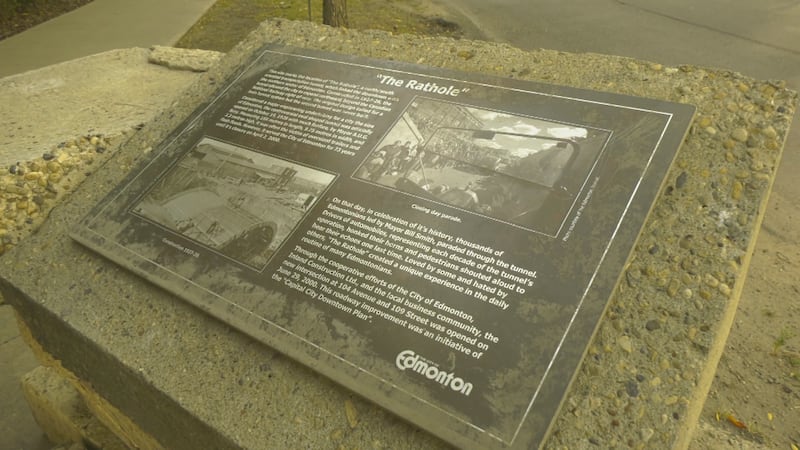
The late morning sun glints off a delivery truck that rumbles past as Backstrom looks down at the plaque. It’s been almost 100 years since the Rathole was built and 26 since it was torn down.
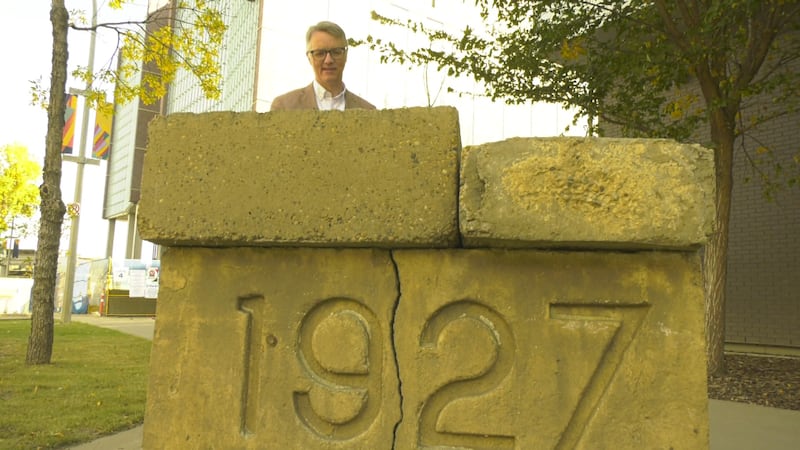
He points to one of the pictures on the memorial and wonders if his grandfather, who worked on the construction crew, is among the men shown in the old photo. People walk past without even glancing over.
“When we live in a space we can just go by and not even think about where we are and who we’re with but sometimes you can celebrate things,” he said.
He thinks the monuments are “a beautiful little way” of reminding people of the Rathole.

