Albertans heading to the polls Monday will face an unusual voting process, with 10 separate ballots, 10 corresponding ballot boxes and the possibility of long lineups in a referendum that includes a question about the province’s future in Canada.
“Everybody wants to have their say,” said Brian Champagne, who cast his ballot during advance voting in Calgary. “I just want to be a part of it.”
More than one million Albertans had already voted, including those who cast special ballots, representing roughly one-third of the province’s approximately three million eligible voters.
For comparison, about 1.8 million people voted in Alberta’s entire 2023 provincial election.
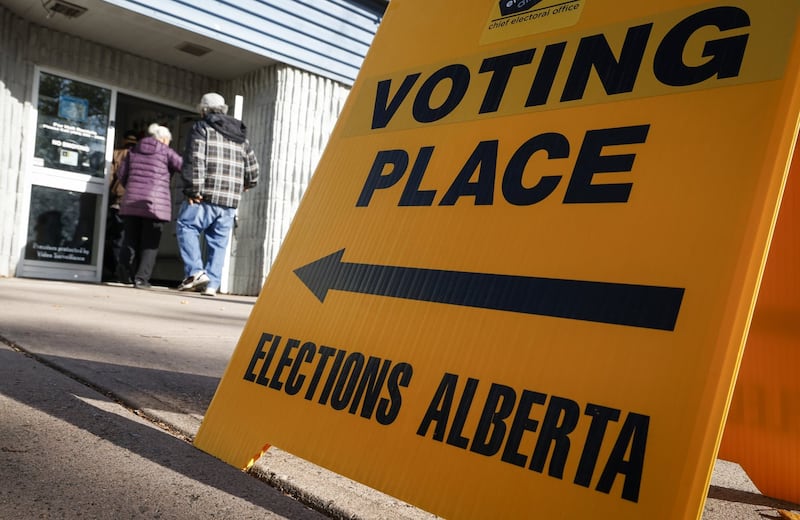
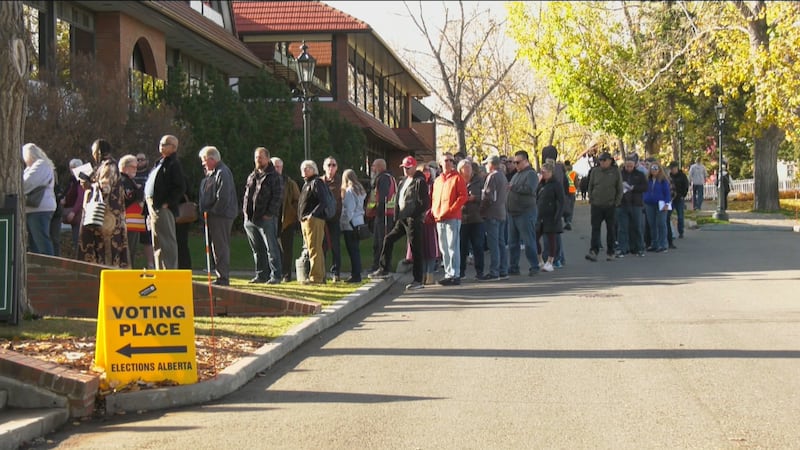
The surge in participation has produced lengthy waits at some advance polling stations, including in Calgary, where lineups stretched around buildings.
Keith Archer, a former chief electoral officer of British Columbia, said the referendum presents an extraordinary logistical undertaking.
“It’s unprecedented in size. To have ten questions posed in a referendum, particularly on ten separate ballot papers, brings in all kinds of challenges,” he said.
With another busy day expected Monday, Elections Alberta is urging voters to prepare before heading to the polls.
Here’s what Albertans need to know.
Where do I vote?
Unlike advance voting, when electors had more flexibility in choosing where to cast their ballots, voters on Monday must attend their assigned polling station.
Michelle Gurney, a spokesperson for Elections Alberta, is urging voters to confirm their location before leaving home.
“It’s really important that you check to see where your voting location is. And so you can go on our where to vote tool,” she said, adding that people can also check the Where to Vote card mailed to registered voters.
Polls are scheduled to be open from 9 a.m. to 8 p.m.
What identification do I need?
Voters must bring acceptable identification confirming their identity and current residential address.
That can include an Alberta driver’s licence or two pieces of accepted identification, both showing their name and at least one showing their current address.
“They’ll be checking your ID, so make sure you’ve brought your accepted ID with you, and they’ll make sure you’re on the registry. If you’re not on the registry, you’ll have the chance to register to vote, but that does include signing a declaration, and you’ll be given your ten ballots,” said Gurney.
A complete list of accepted identification is available here.
How do the 10 ballots work?
Each voter will be offered 10 separate, numbered and colour-coded paper ballots.
The first nine questions ask voters to select ‘yes’ or ‘no’ on issues ranging from immigration and access to provincially funded services to voter identification requirements and constitutional reform, including changes to judicial appointments, the Senate and federal-provincial powers.
The 10th asks whether Alberta should remain a province of Canada or begin the legal process required to hold a future binding referendum on separation.
After receiving their ballots, voters will mark their choices privately behind a voting screen.
“They just gave me about ten pieces of paper, answer each question, and then put each in the ballot box. Separate ballot box for each question,” said Champagne, describing his advance voting experience.
How can I avoid long lineups?
Elections Alberta recommends reviewing all 10 questions before arriving.
Gurney said the time required to read and mark the ballots has contributed to delays.
“What we know is that it’s marking the ballots that takes the most time,” she said.
During advance voting, Elections Alberta recorded spikes in turnout when polling stations opened at 9 a.m. and again around dinnertime.
“If you do have flexibility, we’d encourage you to look at can you go to the voting location earlier in the day? Just to see if that can help you with your wait time in line” Gurney said.
However, wait times will vary by location, and there is no guarantee that arriving at a particular hour will mean a shorter lineup.
What happens if I’m still in line at 8 p.m.?
Anyone already in line at 8 p.m. will still be allowed to vote.
Those arriving after that time will not be permitted to join the lineup.
That means some polling stations could remain open well past their scheduled closing time.
“On the advance vote, there was one night where we did keep some voting locations. One location was open until 11 p.m. So if a voting location stays open much later on the 19th, you won’t see any reporting until all voting locations close, and then you will see the results trickling in and you can drill down on those results,” said Gurney.
Why could results be delayed?
All referendum ballots must be counted by hand.
Legislative changes prohibit Elections Alberta from using electronic vote tabulators, meaning workers must manually process the ballots.
Elections Alberta printed 45 million ballots for the referendum, although not all are expected to be cast or counted.
The separation question will be counted first, followed by the remaining nine questions.
Gurney said votes will be verified in batches.
“You have two people counting double checking one another’s count, and then at 150 ballots, those are counted again to be verified,” she said.
Scrutineers appointed by political parties will also be able to observe the count.
Elections Alberta has been recruiting thousands of workers to administer the referendum and count ballots around the clock.
“This is a huge election event. The size and scope we haven’t seen in Alberta. I don’t believe we’ve seen this in Canada before,” Gurney said.
Election workers are expected to count in shifts, 24 hours a day, with a target of completing the unofficial count within 48 hours.
Gurney declined to predict when the first results would become available.
“It’s really hard to predict. So I can’t speculate on when those numbers will come out because I just simply don’t know when the voting locations will close,” she said.
Archer questioned whether the 48-hour deadline is achievable, particularly given the recruitment demands.
“It’s unlikely, unless they’ve been more successful than they have reported thus far in their recruitment efforts,” he said.
Unofficial results will be posted on Elections Alberta’s results website once reporting begins.
Official results are scheduled to be announced Oct. 29.

